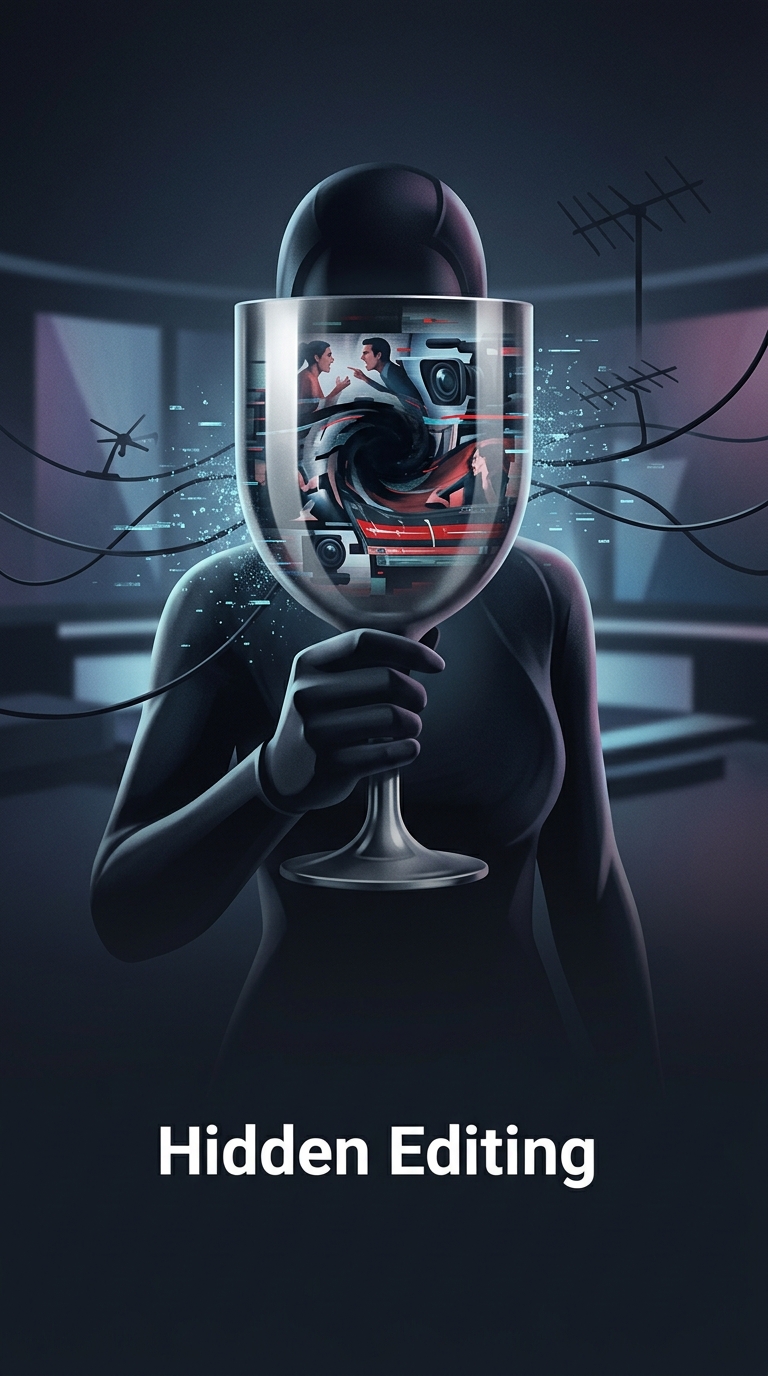
The reality-TV sentence that never happened
A common reality-TV editing tactic is “Frankenbiting”: stitching together fragments of a person’s recorded speech so they appear to deliver a cleaner, sharper, or more consequential line than they said in one uninterrupted take. An editor might remove pauses and filler words, or join separate phrases into a sentence that sounds continuous.
The pieces may come from different moments in a long shoot. Because the conversation was recorded, editors can search through hours of footage for words that fit a scene’s story. A cutaway shot, reaction, or shift in background sound can help disguise the join—or make a comment seem to answer a question that came earlier or later.
How a cut changes the story
The edit can preserve the speaker’s actual words while changing their meaning. Removing a qualification such as “I guess,” dropping the context around a joke, or rearranging remarks can make someone sound more certain, hostile, or foolish. Viewers usually experience the finished scene as a continuous exchange, not as a reconstruction assembled from separate takes.
That makes Frankenbiting different from simply shortening a conversation: it can alter what the audience thinks a person meant or when they meant it. It is useful to producers shaping a sprawling shoot into a clear, dramatic story, but the same technique can turn a real participant into a character defined by a line they never delivered in that exact form. The scene may sound spontaneous; its most quotable sentence may be an editorial construction.