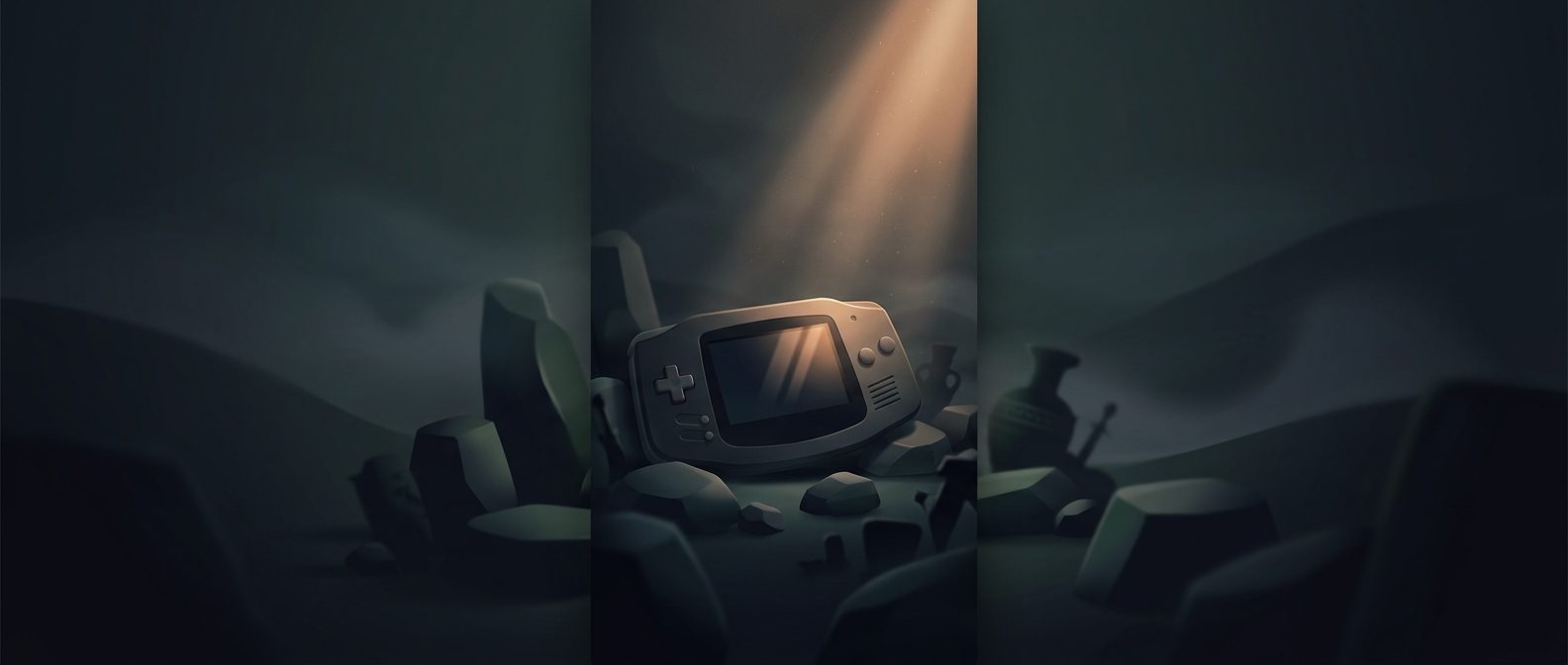
Why the Game Boy Advance Needed Light From Outside
The original Game Boy Advance used a reflective LCD: instead of shining light through or onto its pixels from inside the device, the screen relied on light from the room or the sun bouncing back to the player’s eyes. In bright daylight, that could make the display easy to see. In a dim room, there was little light to reflect, so the picture became difficult to make out.
This design kept the handheld simpler than one with built-in screen lighting, but it made visibility depend on where—and when—you played. Turning up the screen’s brightness was not an option; the original model had no illuminated display to adjust.
The Workaround Was an Accessory
Players could clip or plug in small add-on lights, often called worm lights because of their flexible necks. The light aimed at the screen from the front, letting the reflective display bounce enough light back to the viewer. It was a practical fix, but it added another object to carry and position, and battery-powered models needed their own power.
The contrast between sunlight and a dark room was therefore built into the hardware: the same screen that worked well outdoors could become nearly unusable indoors at night without an accessory.
Lighting Changed the Handheld
Nintendo’s Game Boy Advance SP, released in 2003, added a front-lit screen. Its light shone across the display rather than relying entirely on the surroundings, making play in low light much more convenient. That small change removed a familiar extra step: instead of finding a lamp or attaching one, players could open the handheld and see the game.