Why the cheapest place was the least comfortable
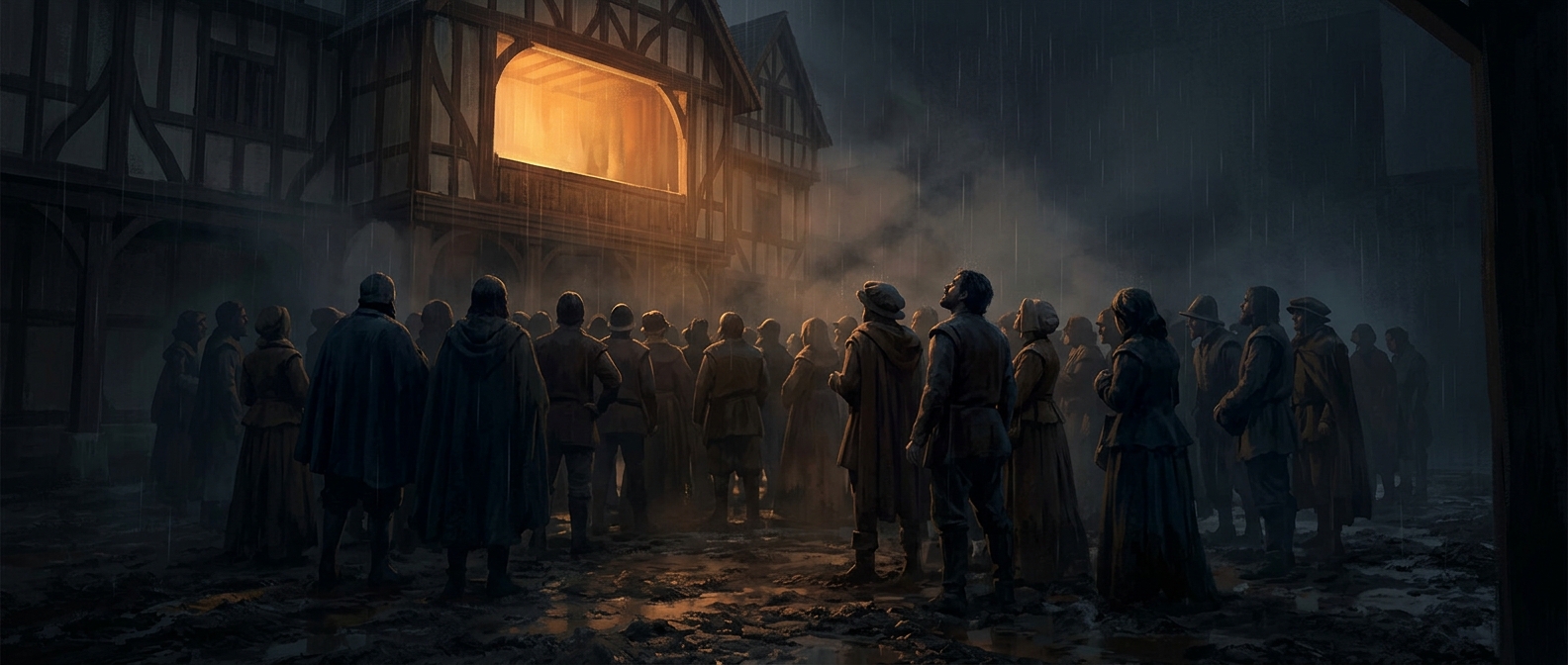
In open-air theaters, the space in front of the stage was not an empty aisle. It was an audience area, packed with standing spectators who paid less than those who could afford seats in the galleries. The arrangement made the theater’s basic economics visible: a low ticket price bought access to the performance, but not a place to sit or shelter.
Because the pit was open to the sky, a show could mean hours on wet ground when the weather turned bad. The crowd also stood close to the stage and to one another, with little protection from the mess that could come from above. The experience was communal, but it was physically demanding.
The crowd was part of the theater
That closeness shaped the performance. Actors played to people only a short distance away, while the standing audience could respond immediately—laughing, calling out, or shifting around. The pit was not simply a cheaper version of a seat; it put spectators in a different relationship to the stage, more exposed to the elements and more immersed in the crowd.
The tradeoff was plain: the lowest price bought the closest access, but none of the comforts of a seat or a roof. For a play lasting several hours, the weather and the packed, muddy ground were part of the ticket.