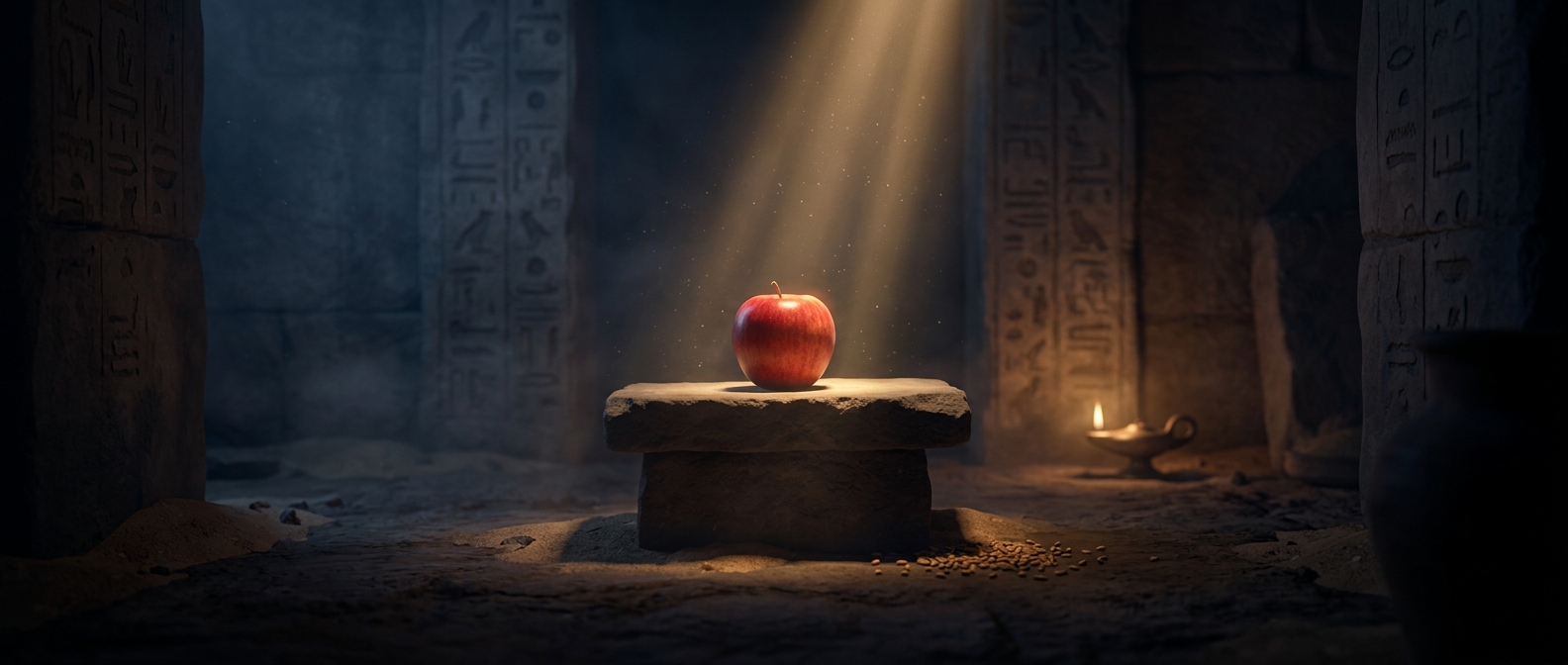
Why Tomb Fruit Can Last for Centuries
A buried apple does not stay edible simply because a tomb is sealed. Sealing can limit airflow, but it does not stop decay: bacteria, fungi, and the fruit’s own enzymes continue breaking it down when warmth and moisture allow them to work.
The crucial difference is often how much water remains. In a dry burial environment, an apple can lose moisture and shrivel. With too little available water, many microbes cannot multiply, so the fruit may persist as a dried, darkened remnant. Cool conditions can slow deterioration further. The result may still resemble an apple, but its color, texture, and chemistry have changed; a recognizable outline is not evidence of freshness.
A Burial Offering, Not a Time Capsule Snack
Food placed in a tomb could serve as an offering or as provisions for the dead, depending on the culture and burial practice. Its presence tells us that people treated food as meaningful in death as well as in life. What survives, however, is shaped by the tomb’s conditions: dampness can destroy organic material, while unusual dryness may preserve it.
That is why an ancient fruit can be both strikingly recognizable and profoundly altered. The tomb preserves a trace of the offering—not the meal as it was when it was placed there.