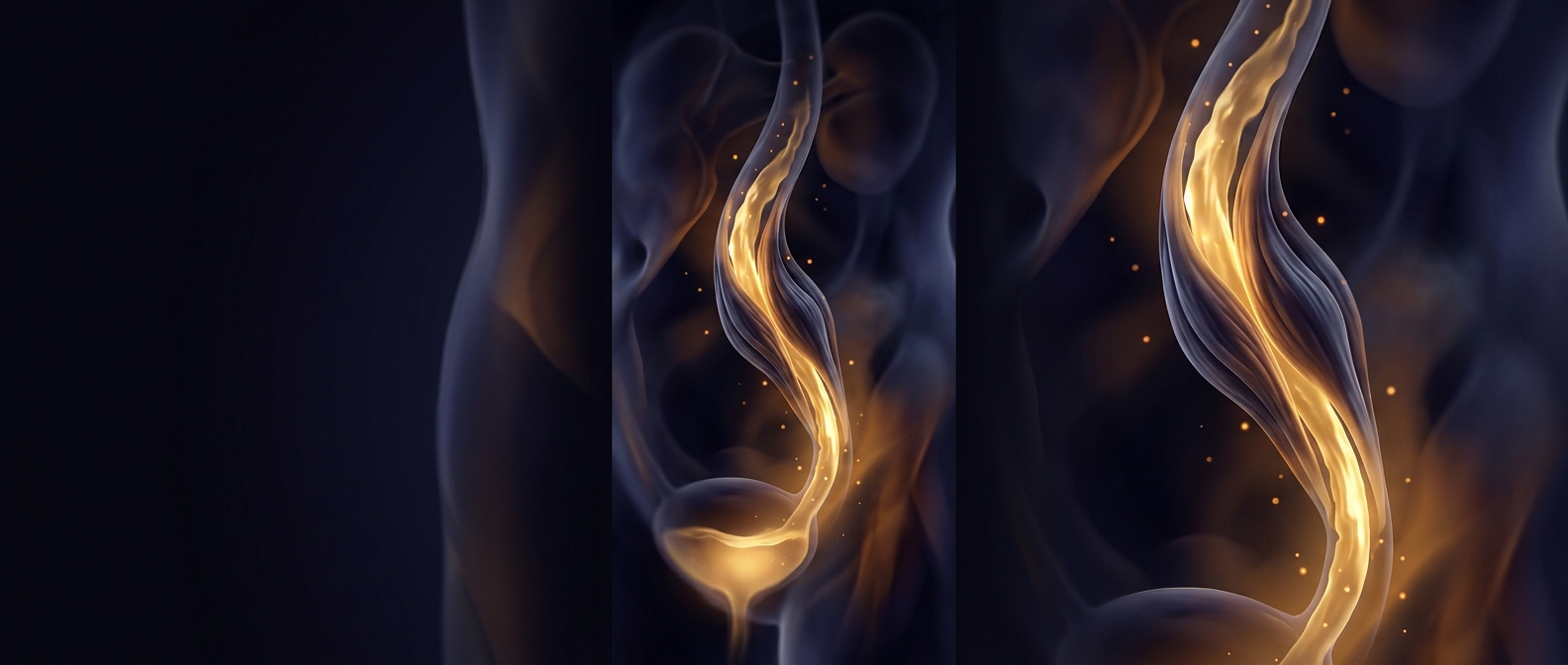
How the Bladder Switches From Storage to Emptying
The bladder is not simply a bag that squeezes when it gets full. Its wall contains muscle, while two ring-shaped sphincters help keep the outlet closed. One sphincter is largely under automatic control; the other can be tightened voluntarily, which helps a person delay urination until a suitable moment.
As the bladder fills, nerves report the stretch to the spinal cord and brain. The brain can postpone emptying by maintaining the storage mode: the bladder muscle stays relaxed and the outlet stays shut. When it is appropriate to urinate, signals reverse that arrangement. The bladder muscle contracts, and the sphincters relax so urine can pass.
Timing Matters as Much as Strength
These actions are coordinated, not independent. A strong bladder contraction cannot empty the bladder effectively if the outlet remains closed; an open outlet alone does not provide the push needed to move urine out. The nervous system has to shift both parts into the right state at roughly the same time.
That coordination also explains why urination is partly voluntary but not entirely a matter of will. A person can often delay the reflex, but emptying depends on signals traveling among the brain, spinal cord, bladder, and outlet muscles. If those signals or muscles do not coordinate properly, the bladder may not empty fully—leaving urine behind even after the urge to go has been strong.