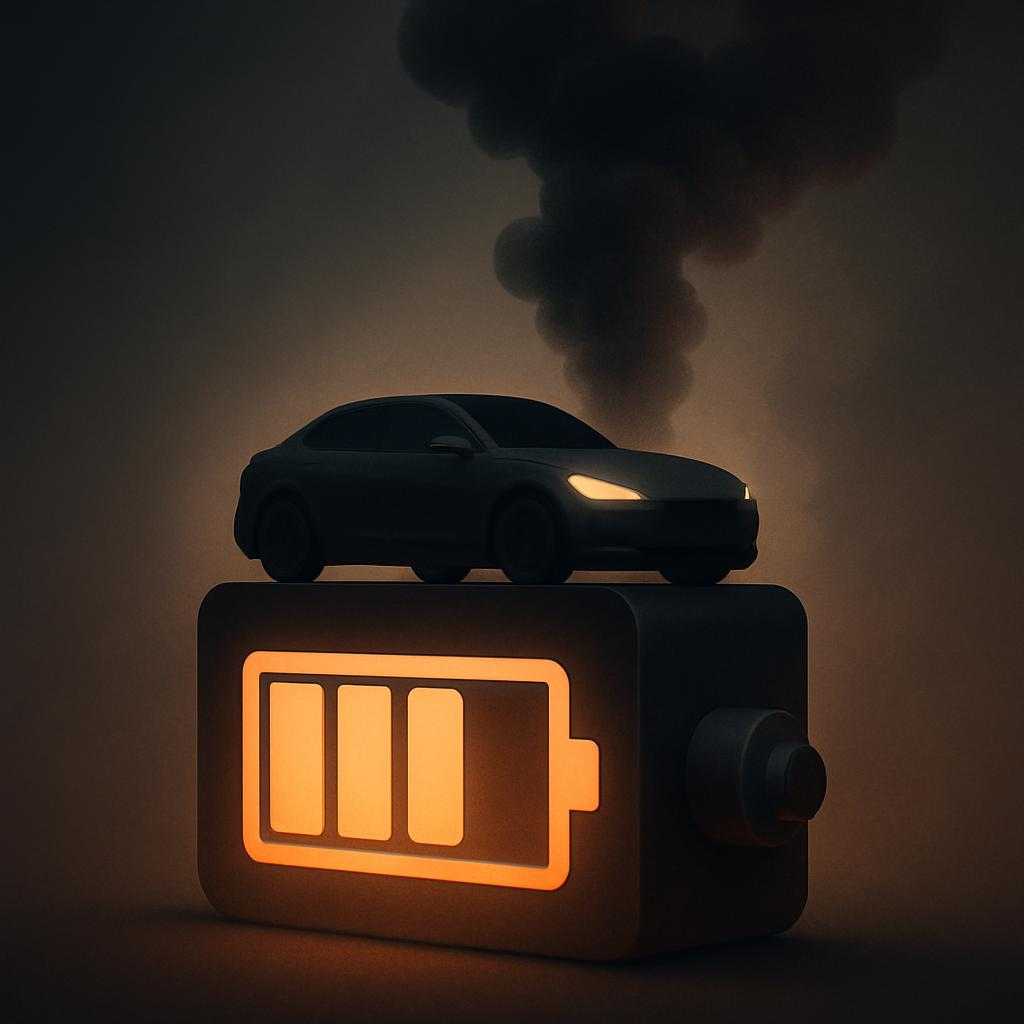
The battery supply chain is the main environmental pressure point
An electric vehicle has no tailpipe, but building its large battery requires energy and materials before the car reaches the road. Mining and processing lithium, nickel, graphite, and other battery materials can disturb land, use substantial water, and create pollution if poorly managed. Battery factories also consume energy, so their climate impact depends partly on how that electricity is generated.
These effects are concentrated early in the vehicle’s life. That makes battery production and mineral sourcing the part of an EV’s lifecycle that draws the sharpest environmental concern—not because every mine or factory has the same impact, but because the supply chain can impose significant local costs before the vehicle delivers any benefit.
Why the concern does not settle the comparison
A lifecycle comparison also counts the electricity used to charge the car and the fuel burned by a gasoline vehicle. As an EV is driven, it avoids tailpipe emissions; the climate benefit grows when charging electricity comes from lower-emission sources. The battery’s manufacturing footprint is therefore an upfront cost, while the avoided emissions accumulate over time.
The tradeoff is especially clear around mining: a battery can help reduce pollution from driving while its materials create pressure on water, habitats, and nearby communities where extraction and processing occur. Better sourcing, cleaner factory power, and battery recycling can reduce those burdens, but they do not make the supply chain impact-free. The key environmental question is not just how an EV runs, but how its battery was made—and what happens to it when the car is retired.