How an echidna turns a dig into a shield
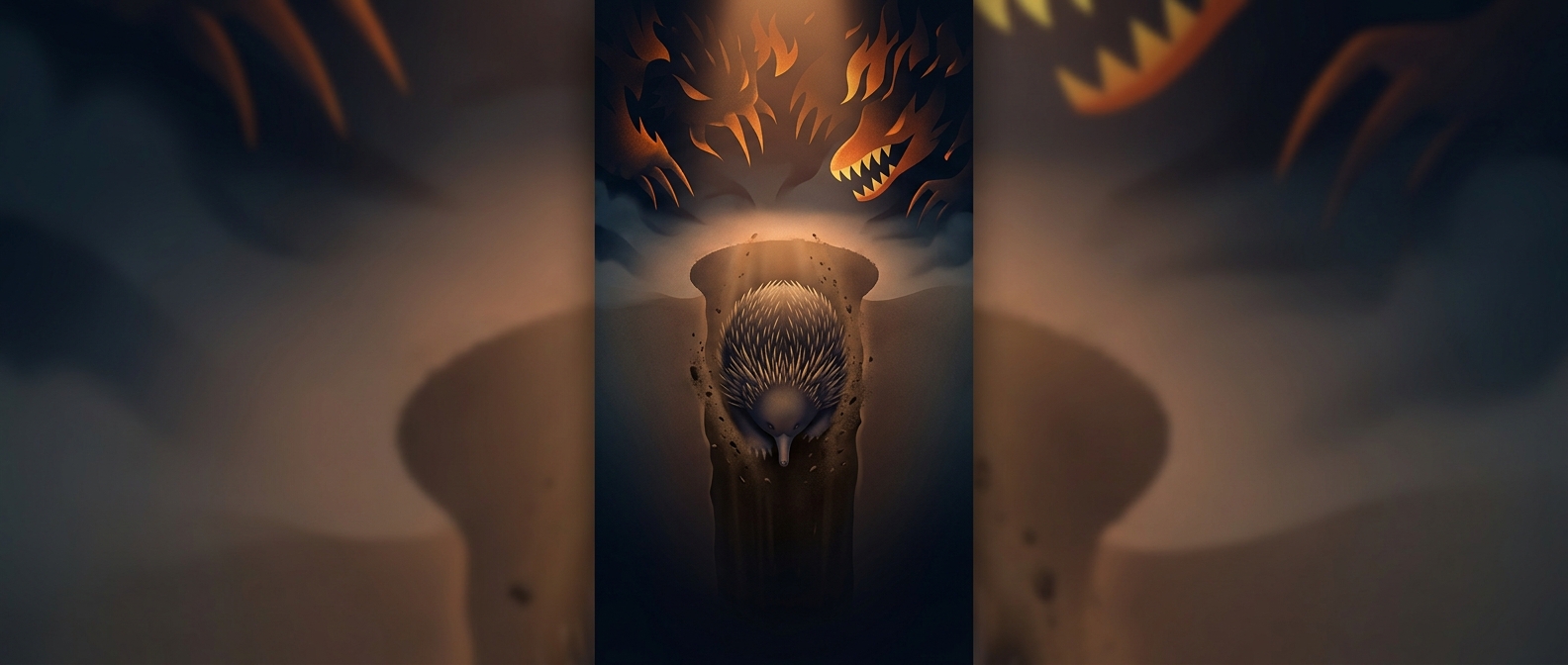
An echidna’s defense works by changing what an attacker can reach. Its strong forelimbs and long claws let it scrape soil away beneath its body. As the animal sinks, its soft underside becomes harder to get at, while its spiny back remains exposed.
Those spines are stiff, hair-like structures made of keratin—the same material as human fingernails. They discourage a predator from grabbing the exposed part, while the packed earth blocks access from below. The echidna is not simply disappearing underground: it is using soil and spines together as armor.
The ground is part of the defense
This tactic depends on there being diggable ground. Where the surface is too hard, an echidna may instead curl up or press itself against a solid feature, such as a rock, so an attacker has fewer ways to reach its vulnerable underside.
That makes the animal’s response more than a choice between fleeing and hiding. By digging, it can rapidly reshape the encounter: the predator faces a bristling back, while the earth closes off the easier approach. The echidna’s best shield is partly built from whatever lies beneath its feet.