Why a Skull Would Change the Show
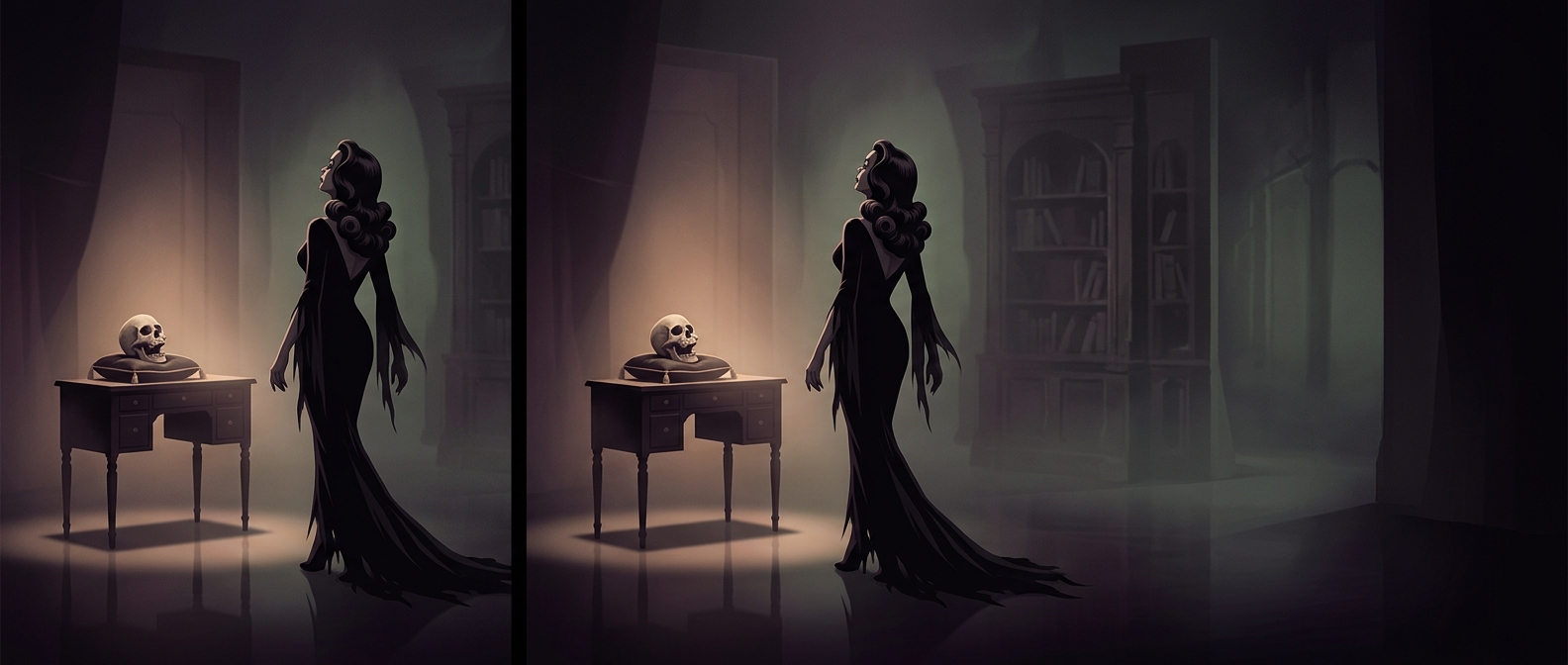
Vampira’s appeal depended on more than a frightening costume. Maila Nurmi built the character around a poised, eerie presence, with a style that recalled silent-film melodrama: pauses, expressive gestures and a sense that the host belonged to a shadowy world of her own. A talking skull would have added a second performer—and a stream of dialogue—to that carefully controlled atmosphere.
The proposed sidekick also pointed toward a different audience. A chatty skull could make horror hosting feel more like a children’s comedy, with jokes and exchanges softening the mood. That might broaden the show’s appeal, but it would also redirect attention from the character Nurmi had created.
A Creative Choice With a Job Attached
Television performers did not always control the format around them. Network executives could press for changes they believed would attract viewers, while the performer had to decide whether those changes still served the act. In this case, the disagreement was not simply about whether a skull was funny; it was about whether Vampira should remain a solitary, unsettling presence or become part of a more conventional comic pairing.
Nurmi refused the addition, and the network fired her rather than preserve the silent-movie-inspired approach. The consequence was immediate: protecting the character’s tone meant losing the job. The episode shows how a small production choice—a sidekick who speaks—can alter not just a scene, but the identity a performer is hired to bring to the screen.