The freeze begins at the edges
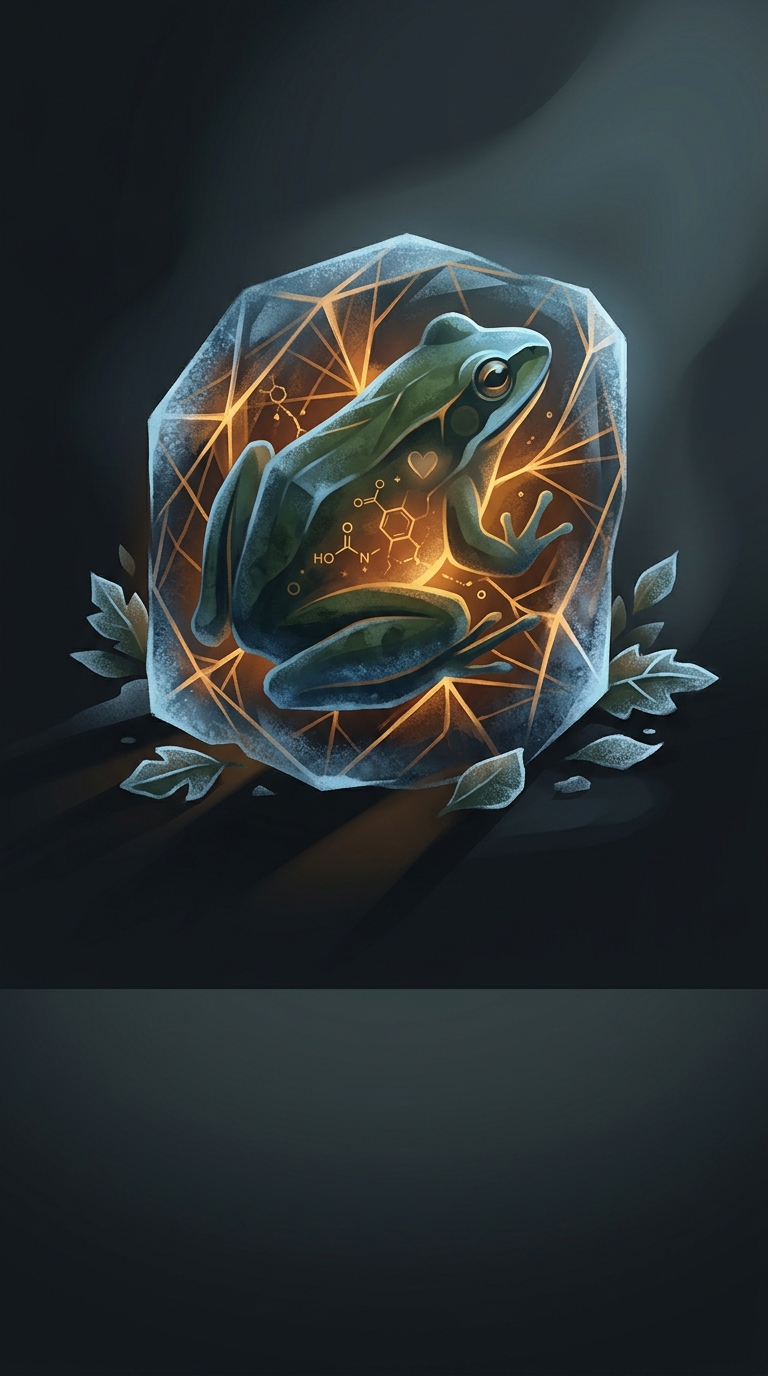
A wood frog does not simply cool down until its body freezes. Ice usually starts in wet places outside the cells, such as beneath the skin or in the body cavity. As that ice grows, it draws water out of nearby cells. The cells shrink, but avoiding ice crystals inside them is crucial: crystals forming within a cell can tear its delicate internal structures.
The frog’s body also helps control where ice forms. Ice-nucleating substances in its tissues encourage freezing outside cells, rather than leaving the process to chance. That makes the freeze less like a sudden solidification and more like a carefully managed change in where the body’s water sits.
A rapid chemical response
Freezing triggers the liver to break down stored glycogen and release large amounts of glucose into the blood. The sugar travels to organs and tissues, where it helps cells withstand the loss of water and protects their membranes and proteins from the stresses of freezing. This is not fuel for a body that keeps functioning normally: the frog’s heartbeat and breathing can stop, and its metabolism slows dramatically.
The protection has limits. Too much water loss, ice in the wrong place, or damage during freezing and thawing can be fatal. Survival depends on the rate and pattern of freezing, as well as the frog’s ability to get protective glucose where it is needed.
Thawing reverses the shutdown
When temperatures rise, ice melts and water returns to the tissues. Circulation and other functions resume, while the frog gradually uses or stores the glucose that helped it survive. In nature, a thaw need not be a one-time event: a frog may freeze and thaw more than once during winter, so its defenses must work through repeated interruptions.
The remarkable part is not that a frog can function as an ice block. It is that its cells can endure a long pause in circulation and then recover—provided freezing stays outside them and the thaw comes before the damage becomes irreversible.