A railcar built from a bamboo platform
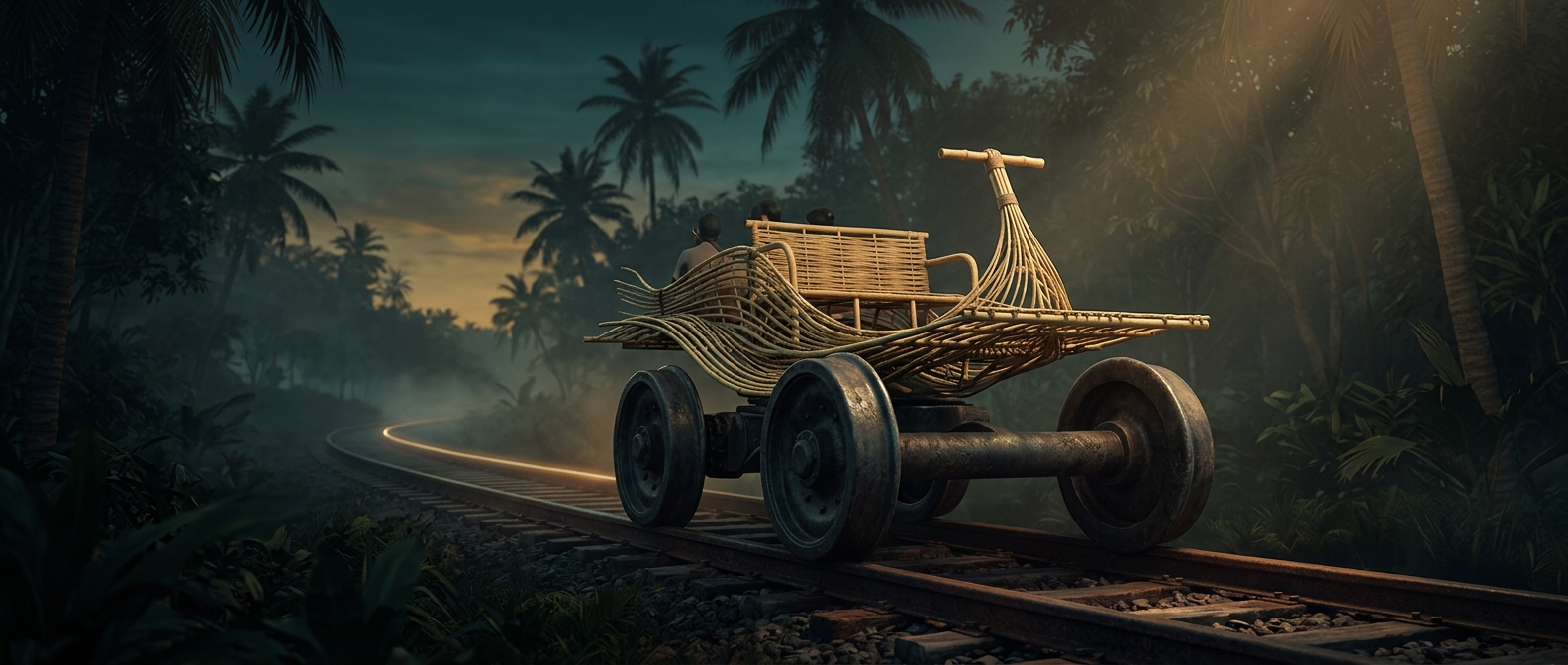
Cambodia’s bamboo train, often called a norry, is a stripped-down way to use existing railway track: a low, rectangular bamboo platform sits on two wheelsets, and a small engine drives it along the rails. In some versions, the engine comes from a motorboat. A belt transfers power to an axle, turning the wheels; the driver controls speed with the engine rather than from a conventional locomotive cab.
The light construction is practical. The platform can carry passengers or goods without the weight or complexity of a full train, and it can be lifted off the rails by hand. That flexibility matters on a line where the track is rough and the vehicles are simple.
One track, one passing rule
A single track cannot let two carts pass side by side. When they meet, the operators decide which cart should give way, then remove its platform and wheelsets so the other can continue. The pieces are small enough to be taken apart manually; afterward, the dismantled cart is put back on the rails.
That improvised procedure turns a meeting on the line into a brief roadside operation. It is also a reminder that the bamboo train is not a miniature version of a modern railway: its operation depends on the ability to clear the track quickly, not on signals and passing sidings.
The track sets the pace
Warped rails make a simple ride less predictable than a polished tourist attraction might suggest. The cart’s light frame and direct engine drive leave little between passengers and the movement of the track beneath them. Its appeal lies partly in seeing how a working vehicle has been adapted to local constraints: a boat engine, a bamboo deck and removable wheels can keep a rail journey going where a conventional train would need a more substantial system.