Why a Roof Became a Public Danger
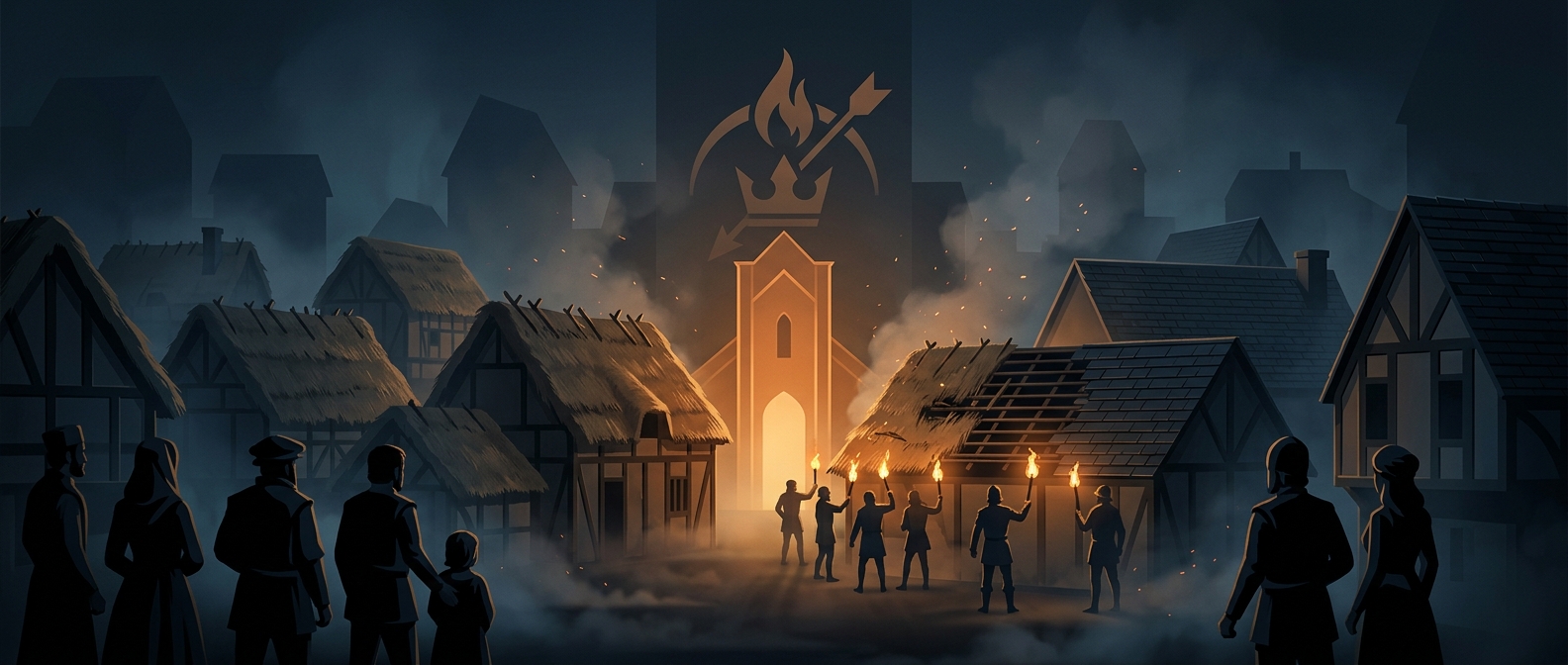
In a densely built neighborhood, a thatched roof could turn an ordinary house fire into a threat to the whole block. Thatch—bundles of dried plant stalks layered over a roof frame—was combustible, and neighboring roofs were often close enough for flames and windblown embers to carry fire from one building to the next. Once several roofs caught, narrow streets and limited firefighting capacity could make the blaze difficult to contain.
Banning the Material Changed Who Could Build
Authorities could not easily prevent every fire from starting, but they could try to limit how far one fire traveled. Banning thatch aimed to remove a highly flammable link between closely packed homes. Roofs made with tile were less likely to ignite and pass flames onward, making them a form of neighborhood-level fire protection—not merely a private building choice.
That protection came at a cost. Tiles and the labor to install them were more expensive than thatch, so the rule raised the price of building or replacing a roof. For residents with little money, compliance could mean a serious burden; for officials, allowing cheaper roofs meant accepting greater risk to nearby homes as well.
A Building Rule With Consequences Beyond One House
The policy treated fire safety as a shared problem: one household’s roofing material could endanger everyone living nearby. It also shifted some of the cost of preventing a disaster onto individual residents. The practical tradeoff was stark: pay more for a roof less likely to spread flames, or preserve an affordable material that could help a single fire become a neighborhood-wide emergency.