The joke has to land before the next attempt
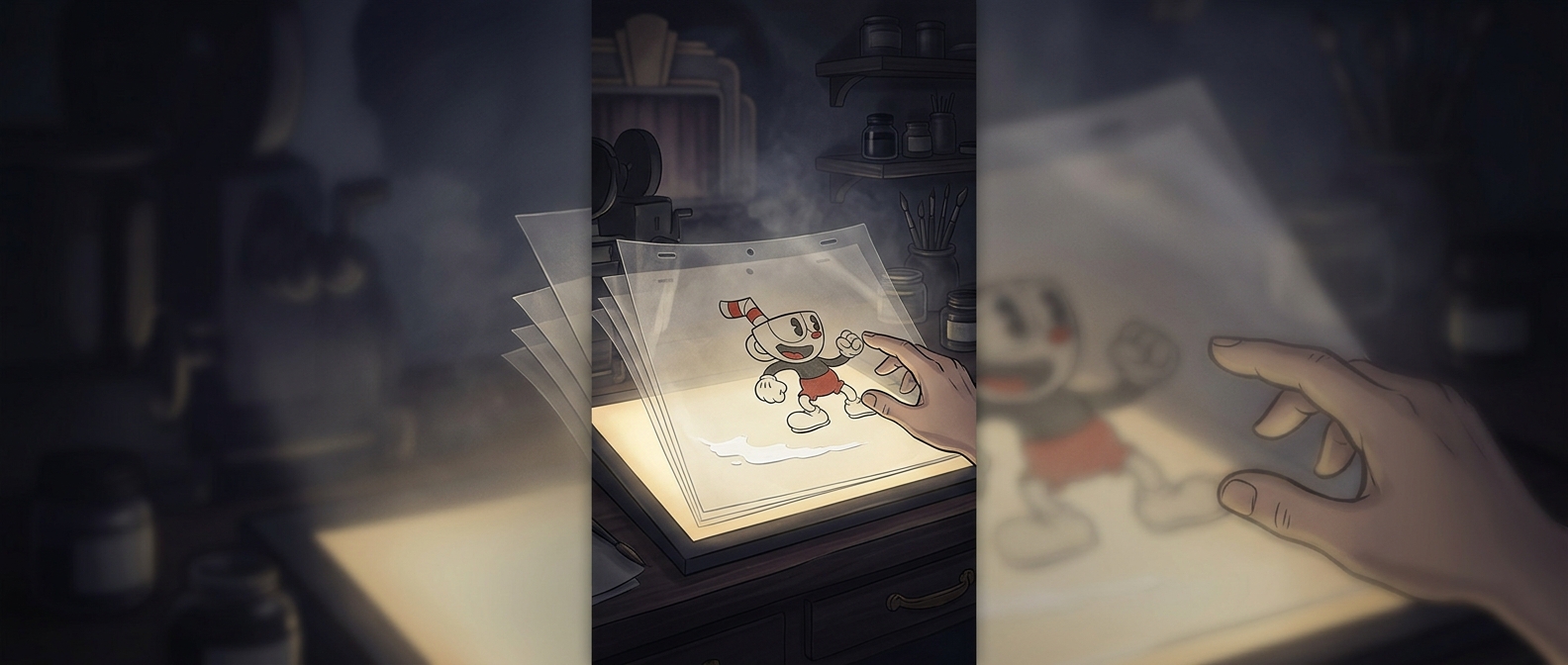
Cuphead’s bosses can fill the screen with hazards, but their attacks are not meant to arrive as an unreadable blur. The game’s cartoon style gives each move a visual setup: a character winds up, stretches, or pauses before striking. In animation, that preparation is called anticipation. It helps an audience understand what a character is about to do—and gives a player a moment to react.
The exaggerated poses also make enemies easier to read against busy backgrounds. A boss may behave like a vaudeville performer, but its theatrical movement doubles as a signal: watch the windup, identify the attack, then move. Studying vintage cartoons offered the developers a way to make those signals expressive without making the action feel visually plain.
A loss becomes a beat, not a dead stop
When a player loses, the game quickly reports how far they got in the fight. That small interruption gives the attempt a clear ending and a concrete measure of progress. Instead of leaving the player at a blank failure screen, Cuphead turns the pause into part of the performance, with the defeated character’s fate treated like a cartoon punch line.
That matters in a game built around repeated attempts. Each try has a beginning, escalation, and finish; after a loss, the player can return with a better sense of the boss’s patterns. The comic presentation does not remove the difficulty, but it can make the reset feel less like a technical error and more like a deliberate part of the rhythm.
The animation carries gameplay information
The result is a useful overlap between style and function. A dramatic windup can be funny to watch while also warning that an attack is coming; a quick, pointed death screen can soften the pause without hiding whether the player improved. In Cuphead, the cartoon is not just decoration around the challenge. Its timing helps players read the challenge, absorb a setback, and decide to try again.