Eight zeroes and the problem of readiness
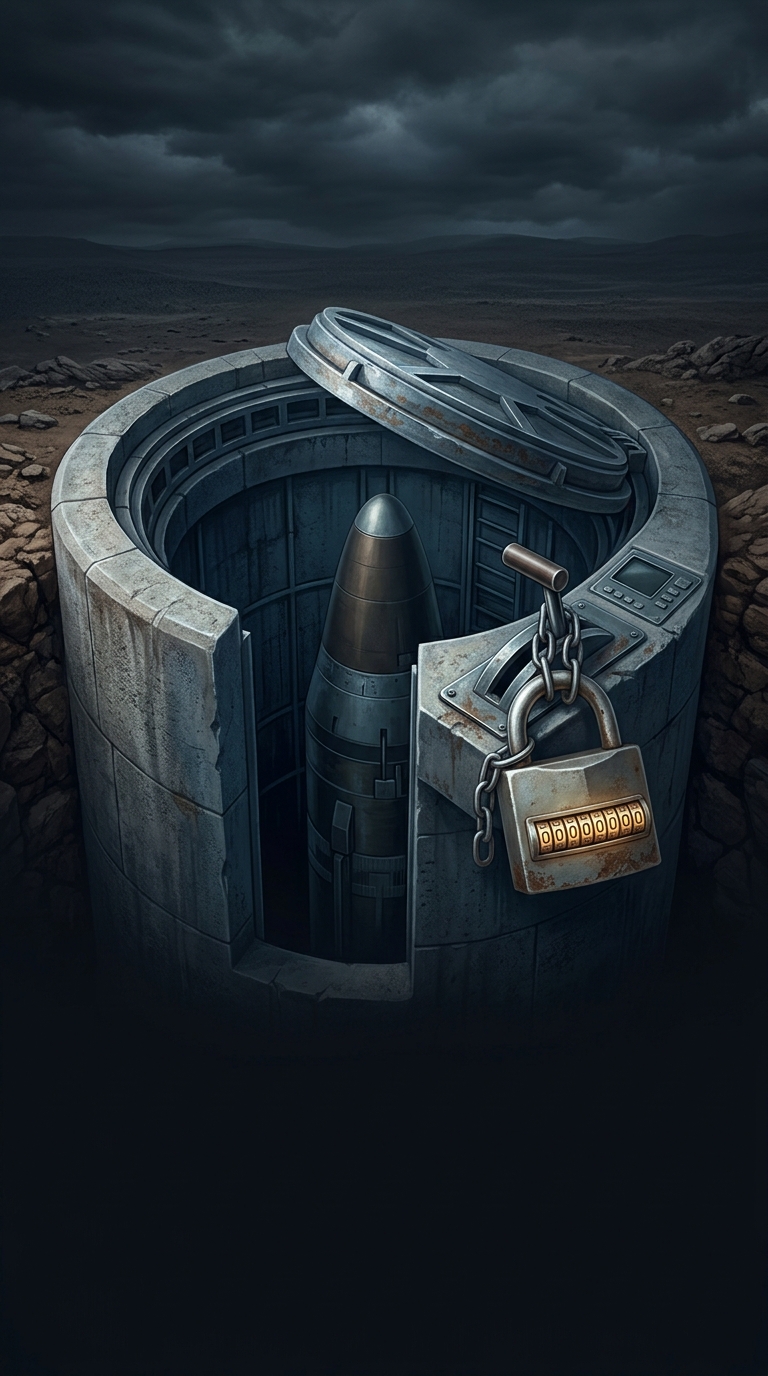
A launch code is meant to keep an unauthorized person from turning a weapon’s controls into an authorized order. But during the Cold War, Strategic Air Command chose a code for Minuteman missiles that was strikingly easy to remember: eight zeroes. The rationale described for the choice was practical and grim—if an emergency came, crews should not be delayed because they had forgotten the code.
That choice exposed a tension built into nuclear command systems. A safeguard can prevent misuse, but it can also add a step between a commander’s decision and the crews expected to carry it out. In a crisis, military planners prized dependable execution; making the code memorable favored speed and reliability over secrecy.
A code was only one part of a launch
The sequence was not itself a command to fire a missile. Minuteman launch involved crews at control facilities following prescribed procedures, with multiple checks intended to ensure that an order was valid. The code mattered because it was part of the system controlling access to the launch process—not because entering eight zeroes could independently set a missile in motion.
That distinction makes the episode more revealing, not less. Security depends on how safeguards are configured and used, not merely on whether a keypad or lock exists. A code that is easy for authorized people to recall may also be much easier for others to guess.
The tradeoff lasted for years
The zero sequence remained in use from 1968 until 1977. For nearly a decade, a system built to manage the most consequential order imaginable relied on a code chosen partly to avoid forgetting it. The detail captures the pressure at the heart of nuclear readiness: the same system had to make a launch possible in an emergency while making an unauthorized launch extraordinarily difficult.