A ration problem, not a culinary luxury
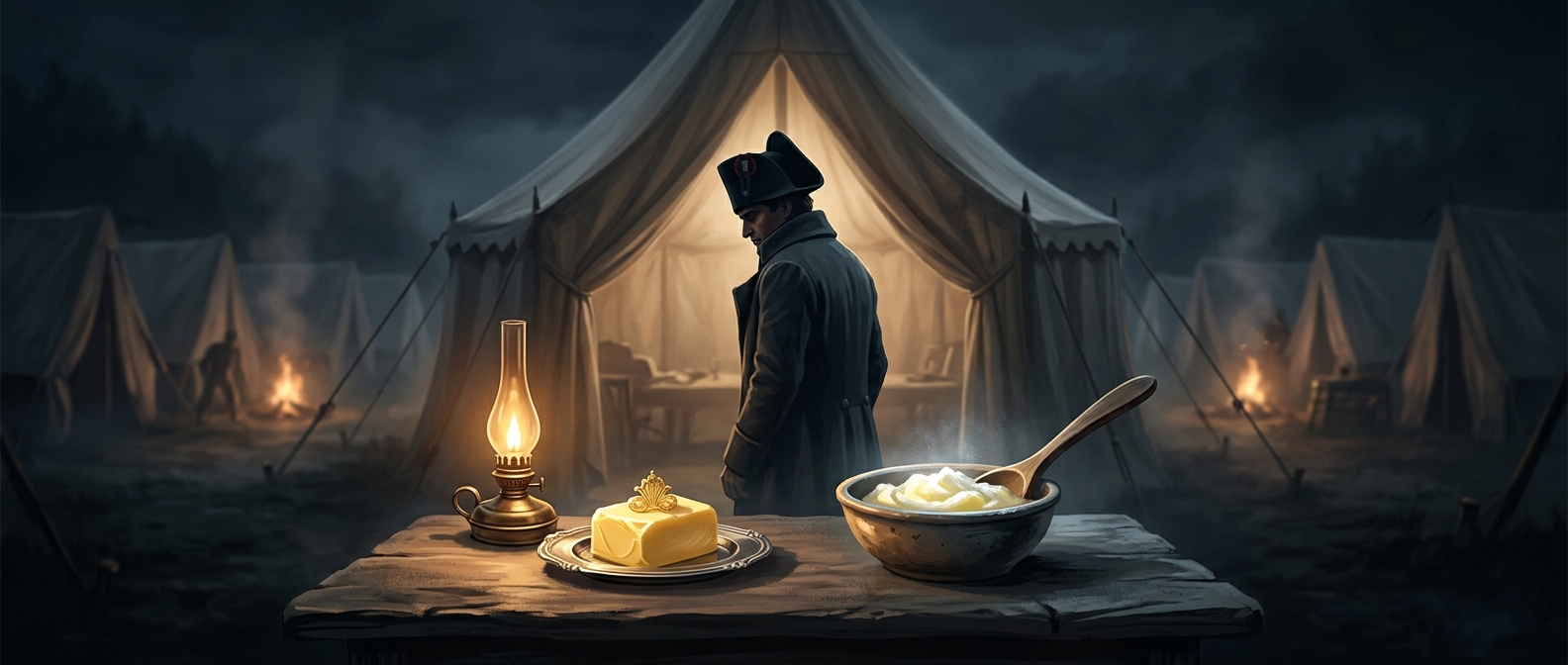
Butter was useful to an army but awkward to supply: it cost money, could spoil, and depended on a steady supply of milk. Napoleon III’s prize aimed to produce a cheaper substitute that could travel with troops and keep longer. The target was practical food for soldiers—and a less expensive option for people who could not afford butter.
Turning beef fat into a spread
French chemist Hippolyte Mège-Mouriès worked with beef tallow, the hard fat rendered from cattle, and skim milk. The milk contributed moisture and milk solids; the fat supplied most of the calories. Blending them made a butter-like food from ingredients that were cheaper or more available than cream.
The challenge was more than mixing two ingredients. Fat and watery milk naturally separate, so the mixture had to be worked into a usable, consistent spread. The result became known as oleomargarine, an early form of what would later be called margarine. It was not identical to butter, but it offered a way to make a familiar food without relying on butter’s main raw material: cream.
A military solution with a wider purpose
The prize linked food technology to logistics. A substitute that cost less and kept better could ease pressure on army provisioning, where spoiled supplies were of little use even if they were cheap. The same qualities also made the idea relevant beyond the barracks.
In other words, the goal was not simply to imitate butter’s taste. It was to make a portable, affordable fat that could serve where fresh butter was difficult to obtain—turning a military supply problem into a new kind of everyday food.