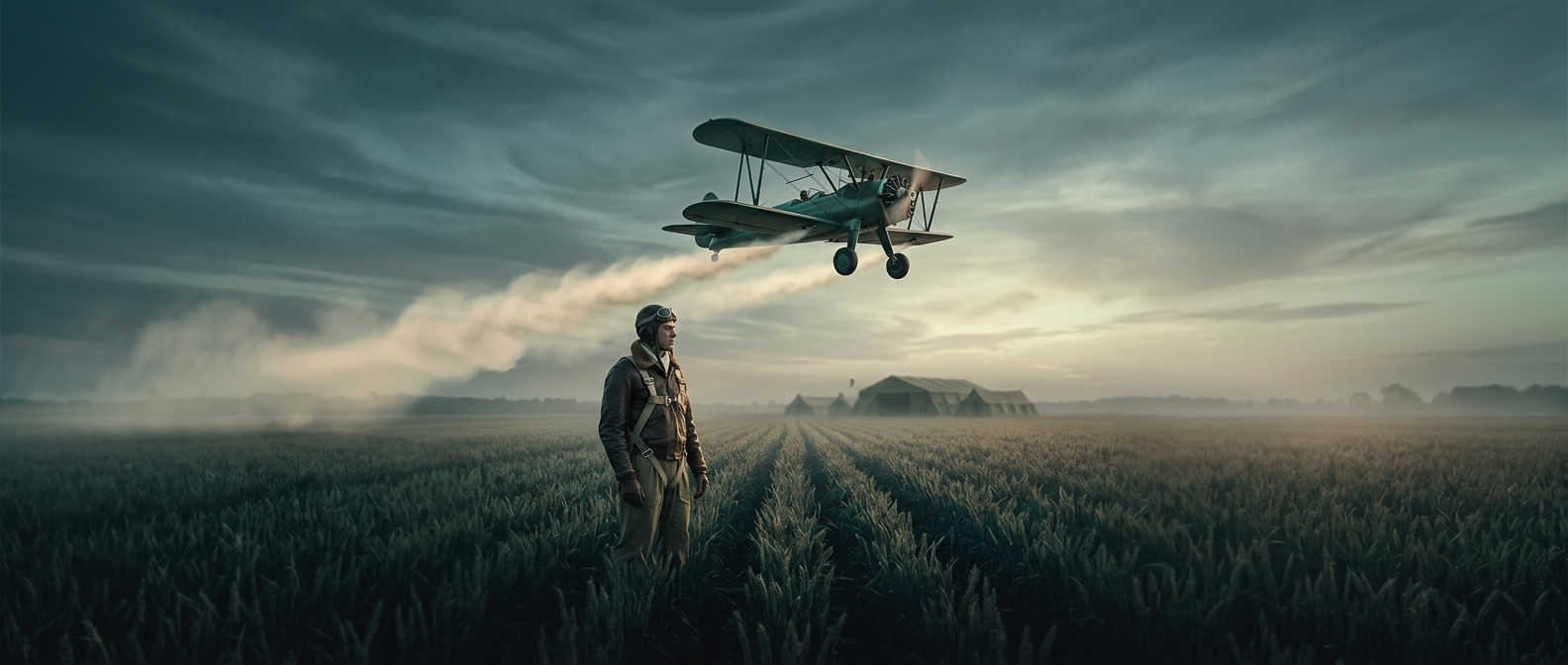
A wartime skill found a new job over orchards
After the Great War, military flying offered few returning pilots a lasting livelihood. Some put their experience to work in a radically different setting: just above farm fields, where a plane could carry insect-killing chemicals across crops. The work became known as crop-dusting, even when the material was sprayed rather than spread as dry dust.
The useful skill was not simply knowing how to fly. Pilots had to keep an aircraft low and steady over uneven ground, then make repeated passes so the treatment reached the crop instead of drifting away. Wartime experience with aircraft and demanding flight conditions gave former military pilots a practical starting point for this specialized work.
Why a plane could help save a harvest
Insects can damage an orchard across many rows of trees, while treating each tree from the ground takes time and labor. A plane could cover a larger area quickly, carrying the chemical over the crop and releasing it as it passed. That made aerial treatment especially valuable when pests threatened a harvest on a short timetable.
For peach growers, the stakes were immediate: insect damage meant fruit that could not be sold. The aircraft did not eliminate pests on its own; its advantage was speed and reach. A former pilot’s low-level passes could put treatment over a threatened orchard before the season’s crop was lost.