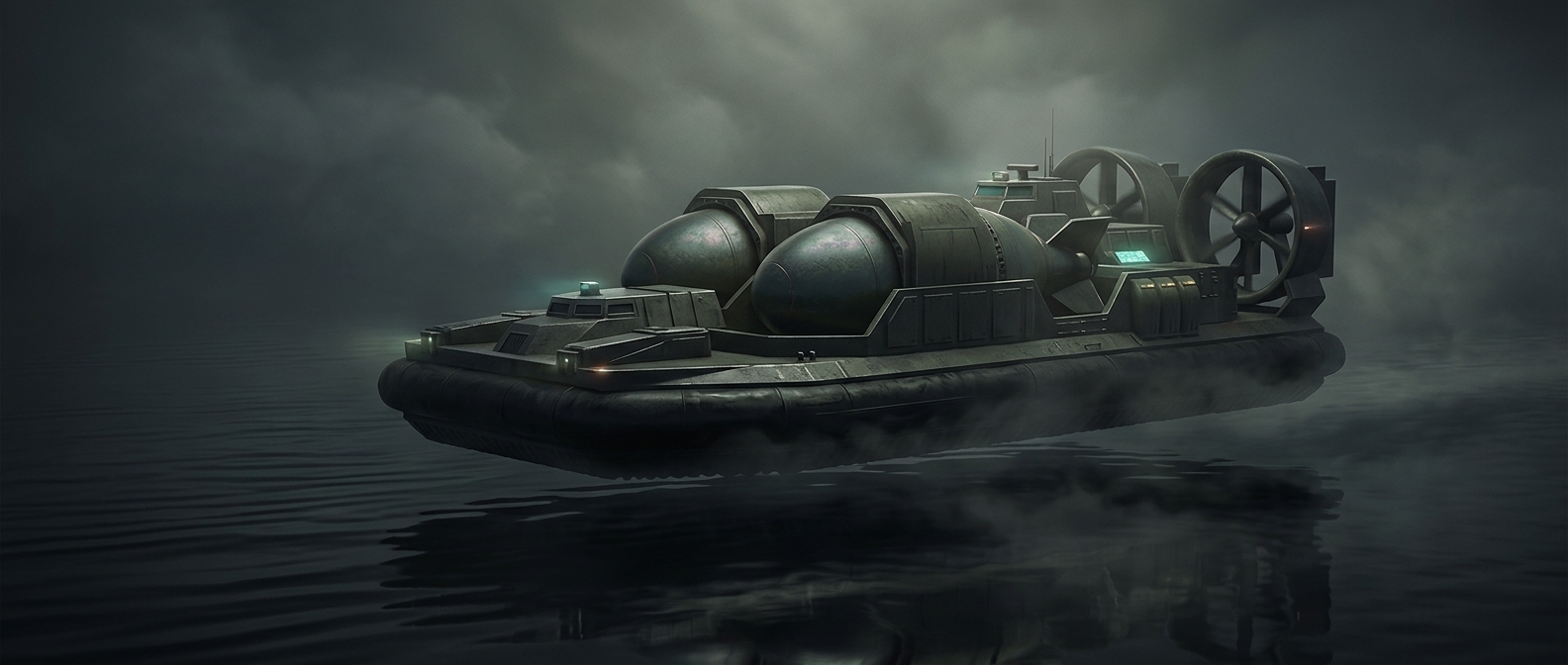
A vehicle for crossing the shoreline
A hovercraft can travel over water and continue onto mud, sand, or ice because it rides on a cushion of air rather than relying on a conventional hull. Fans force air beneath the craft; a flexible skirt around its edge helps contain that cushion. With much of its weight supported by air, the vehicle can cross shallow water and soft ground that would trap or obstruct many boats.
That made the design useful for military transport. A craft could bring troops, supplies, and dangerous cargo—including explosives—straight toward a beach without needing a harbor or a separate landing ramp. The military advantage was access: a shoreline that stopped ordinary boats did not necessarily stop a hovercraft.
Speed came with a noisy tradeoff
The lift and forward thrust depend on powerful fans, which generate conspicuous noise and moving air. That is a poor combination for stealth. A hovercraft may bypass terrain and reach a landing quickly, but its approach is difficult to conceal; carrying explosives does not make it a quiet or covert bomber.
The distinction matters: the craft’s value was in transporting a payload across the water-to-land boundary, not in making the payload invisible. Its loud machinery was part of the same engineering bargain that let it skim over surfaces where a conventional vessel would have to stop.