A checkpoint becomes a wager
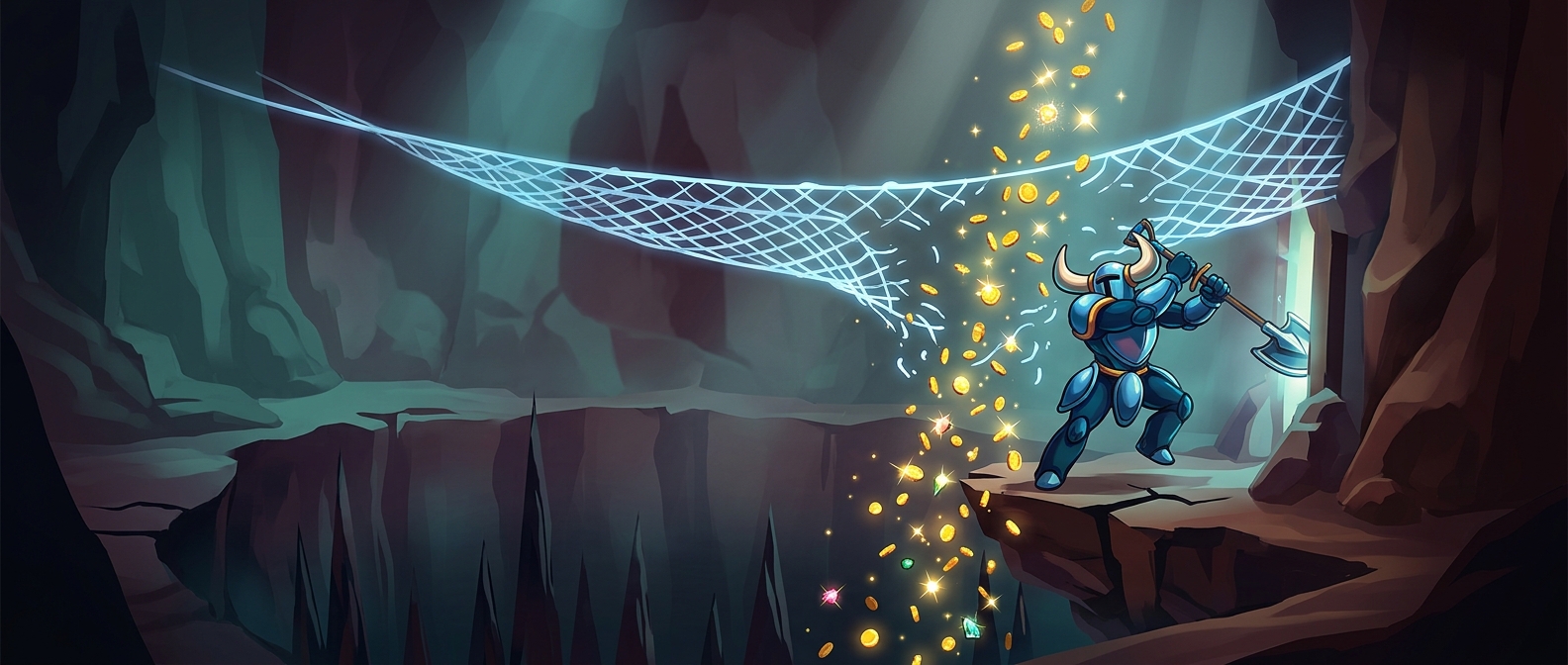
In Shovel Knight, a glowing checkpoint is more than a marker of progress. It is a safety net: after a fatal fall or hit, it determines where the knight returns. The player can smash it instead, turning the post into a burst of gems—the game’s spendable currency.
That creates a choice between two kinds of value. Keep the checkpoint, and a mistake costs less progress. Break it, and gain money that can help buy equipment or upgrades, but make a later death more punishing. The gems are immediate; the lost protection matters only if things go wrong.
Why the choice changes how a level feels
The mechanic gives players control over their own risk. Someone confident in the next stretch can cash in a checkpoint, while someone carrying a lot of progress may prefer to leave it intact. Neither option is simply the “correct” one: the reward is useful precisely because it comes with a real cost.
It also makes a familiar object in a platform game do double duty. A checkpoint usually promises relief after a difficult section; here, it can also tempt the player to give that relief up. A post smashed for extra spending money is gone when the next hazard arrives, so the decision can turn a routine jump into a consequential one.