When the page offers no pause
A paragraph break is more than white space. In modern books, it tells the eye that one unit of thought has ended and another is beginning. In a manuscript that carries on for roughly 10,000 characters without a break, that visual signal disappears. The reader must keep track of the argument across the page rather than rely on a fresh line to mark each turn.
That does not mean the text is necessarily one long sentence, or that every word runs together. It means the writing is not divided into separate paragraphs. Sentences, repeated phrases, and the grammar still provide structure—but the reader has to find that structure inside an unbroken stretch of text.
The reader becomes the organizer
Paragraphing is a navigation tool: it helps readers pause, resume, and locate a passage. Without it, attention has to do more of that work. A reader may need to hold a sentence’s opening in mind until its meaning resolves, notice a shift in subject, and decide where one idea gives way to the next.
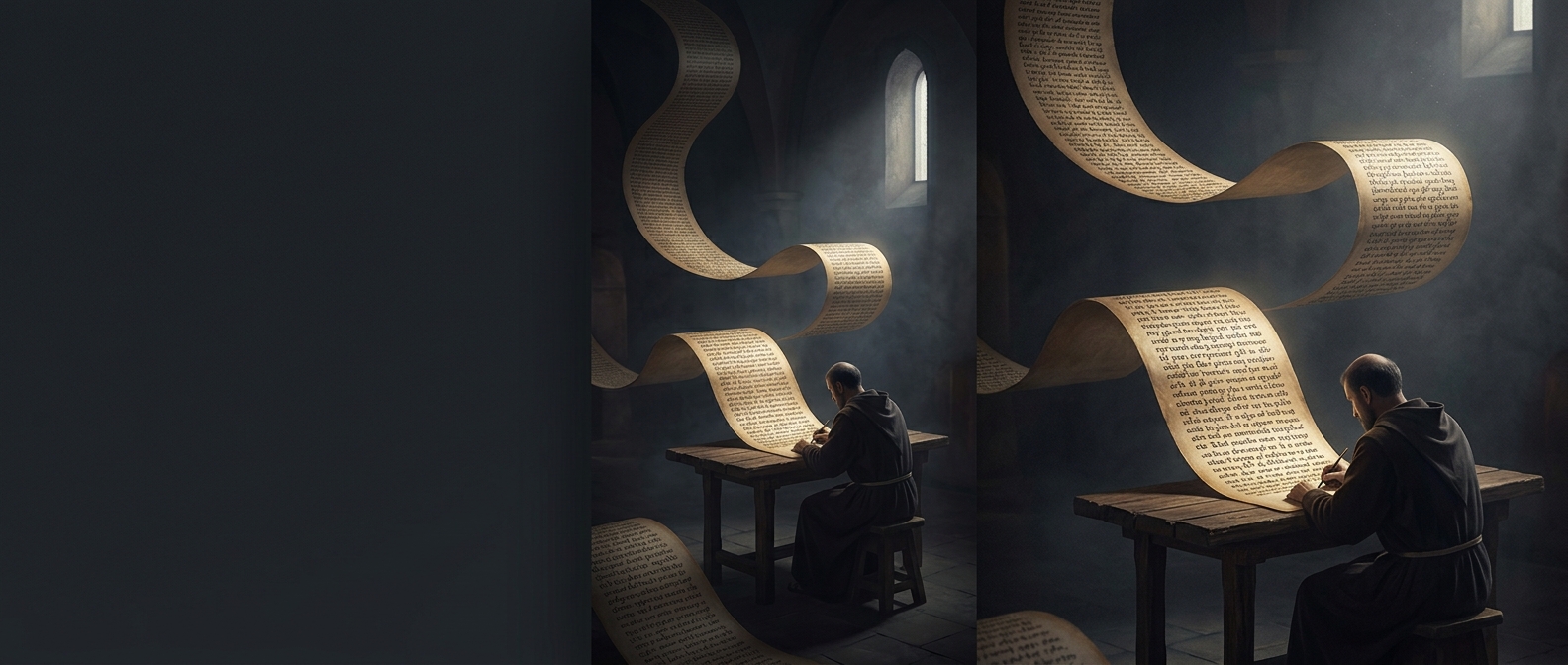
For someone reading today, the scale is striking because modern pages routinely break long passages into manageable visual units. In this manuscript, the missing pauses make the act of reading feel less like moving from one paragraph to another and more like following a continuous path. The test is not simply endurance; it is staying oriented when the page itself provides few landmarks.