Turning a Sound Into a Shape
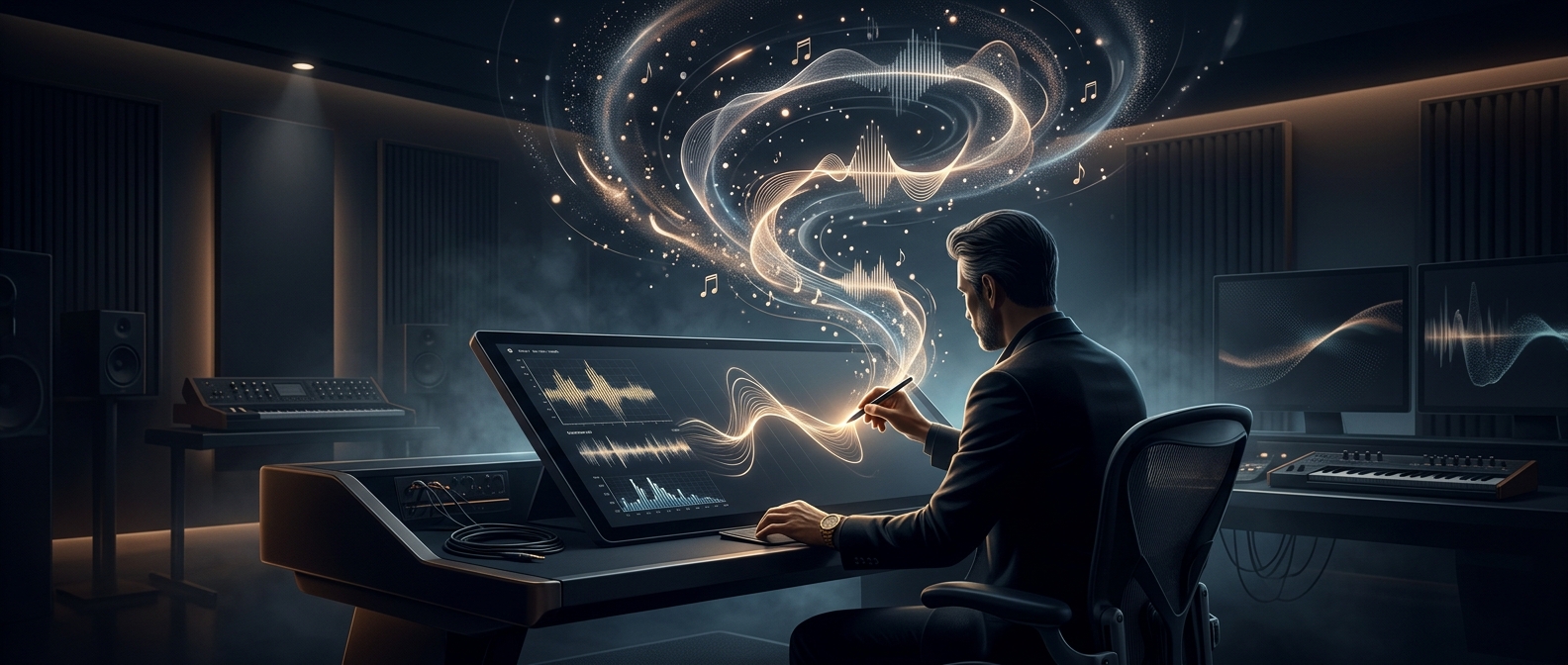
The Fairlight CMI made sound visible in a way most musicians had never encountered. Its screen showed a waveform—the trace of how a sound’s air pressure rises and falls over time. With a light pen, a producer could alter that trace directly, changing the sound’s underlying pattern rather than merely adjusting a knob or choosing a preset.
That mattered because a waveform’s shape affects its tone. A smooth, repeating shape tends to sound pure; sharper or more complicated shapes contain stronger overtones, the higher pitches that give an instrument its distinctive color. Drawing a different shape could therefore produce a new synthetic timbre. The screen was not just a display: it was part of the instrument.
From Recorded Sound to Playable Material
The CMI also sampled sounds: it captured brief recordings as digital data that could be replayed from a keyboard. A producer could turn a sound into something playable, then reshape or arrange it within the machine. This joined two approaches that had often been separate—making tones electronically and working with recorded sound.
There were limits. Early digital memory was costly, so a machine like the Fairlight could not hold vast libraries of long recordings. Its appeal lay partly in making a small amount of digital sound unusually flexible. A short sample or hand-drawn waveform could become the starting point for a striking musical texture.
A New Kind of Studio Decision
The Fairlight changed the producer’s question from “Which instrument should I record?” to “What should this sound become?” That invited experimentation, but it also demanded money and technical curiosity; this was not an inexpensive keyboard casually added to a home setup. Its presence in early-1980s pop studios signaled a shift toward treating sound itself as editable material—something a musician could see, reshape, and perform.