How the plantar fascia helps hold the arch
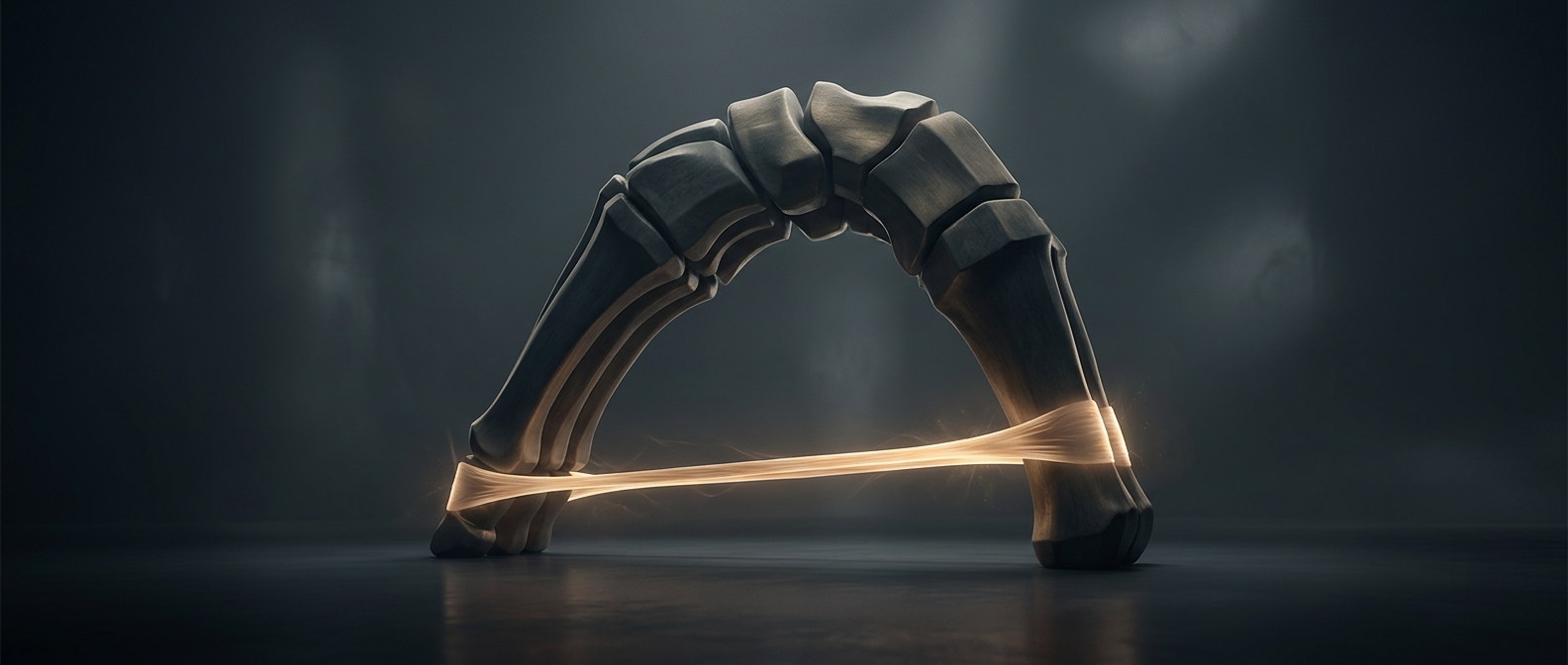
The plantar fascia is a tough sheet of connective tissue stretched along the sole, from the heel toward the toes. As body weight presses down, the arch tends to lengthen and flatten. The fascia resists that stretch, helping the foot act less like a loose stack of bones and more like a springy, tensioned structure.
The band also changes tension as you walk. When the toes bend upward during the push-off step, they pull the fascia tighter around the underside of the foot. This effect, sometimes called the windlass mechanism, draws the heel and front of the foot closer together and makes the arch more rigid. A stiffer foot can then help transfer force into the ground as you move forward.
A team effort with a vulnerable point
The fascia is important, but it does not support the arch alone. The shape of the bones, other ligaments, and muscles in the foot and lower leg all contribute. The fascia’s distinctive role is to link the heel and toes under tension, helping the arch adapt between bearing weight and pushing off.
Repeated pulling where the fascia attaches near the heel can irritate the tissue, causing pain often described as plantar fasciitis. The same band that helps make each step efficient is therefore also a place where accumulated strain can become noticeable—especially when the foot is repeatedly asked to absorb and redirect force.