Enamel’s strength comes with a tradeoff
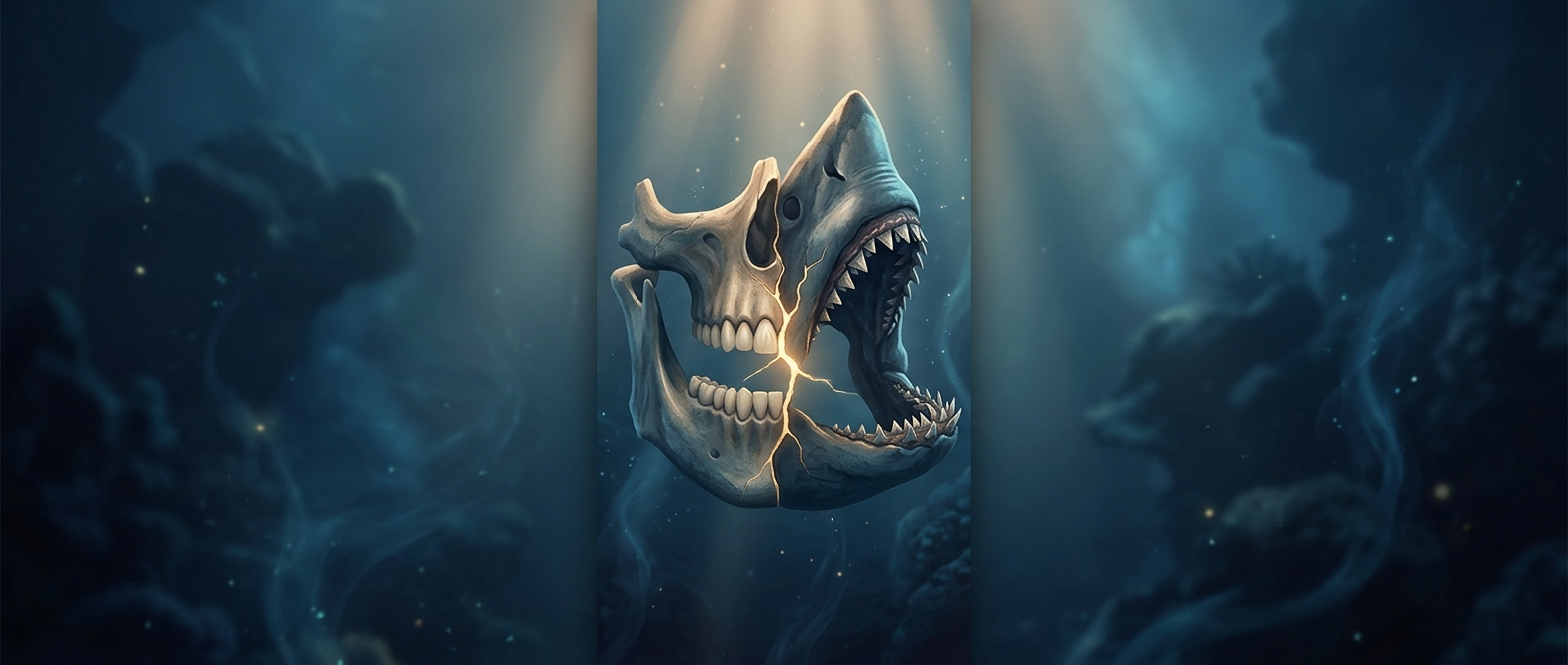
A tooth’s outer shell, enamel, is the hardest tissue in the human body. Its strength comes largely from tightly packed mineral crystals. Great white shark teeth also contain mineral-rich hard tissue, but similar hardness does not mean the teeth are built to recover in the same way.
Enamel protects the softer layers beneath it from the forces of chewing. It is also remarkably limited: once a tooth has erupted, the cells that made its enamel are no longer in place to rebuild that outer layer. Saliva can help repair very early mineral loss on the surface, but it cannot replace enamel that has been physically worn away or broken off.
Sharks replace the whole tooth
A shark’s tooth is part of a conveyor-like system. New teeth develop behind the ones in use and move forward as older teeth are lost. That arrangement lets sharks continually replace teeth without having to regrow the enamel on each individual tooth.
Humans follow a different schedule. Baby teeth are replaced by permanent teeth, but those permanent teeth are meant to last; there is no third set waiting behind them. The contrast is not that shark teeth are invulnerable or human teeth unusually weak. It is that sharks renew the tooth itself, while humans depend on preserving each permanent tooth.
That makes enamel damage consequential: a lost patch does not grow back, so everyday protection—especially limiting repeated sugar exposure and brushing with fluoride toothpaste—helps preserve the hard surface people get only once.