Why incisors can cut with a small bite
The eight incisors—four in the upper jaw and four in the lower—have broad crowns that narrow toward a relatively thin edge. When the jaws close, that edge concentrates pressure on a small area of food. The lower jaw supplies the moving force while the upper teeth provide resistance, letting the edges shear through a bite instead of crushing it all at once.
The effect is useful with foods such as an apple, whose flesh gives way under pressure but may resist a blunt push. Incisors can also take controlled bites from softer foods, where a grinding tooth would bring more chewing surface than the task requires.
A cut the brain can feel
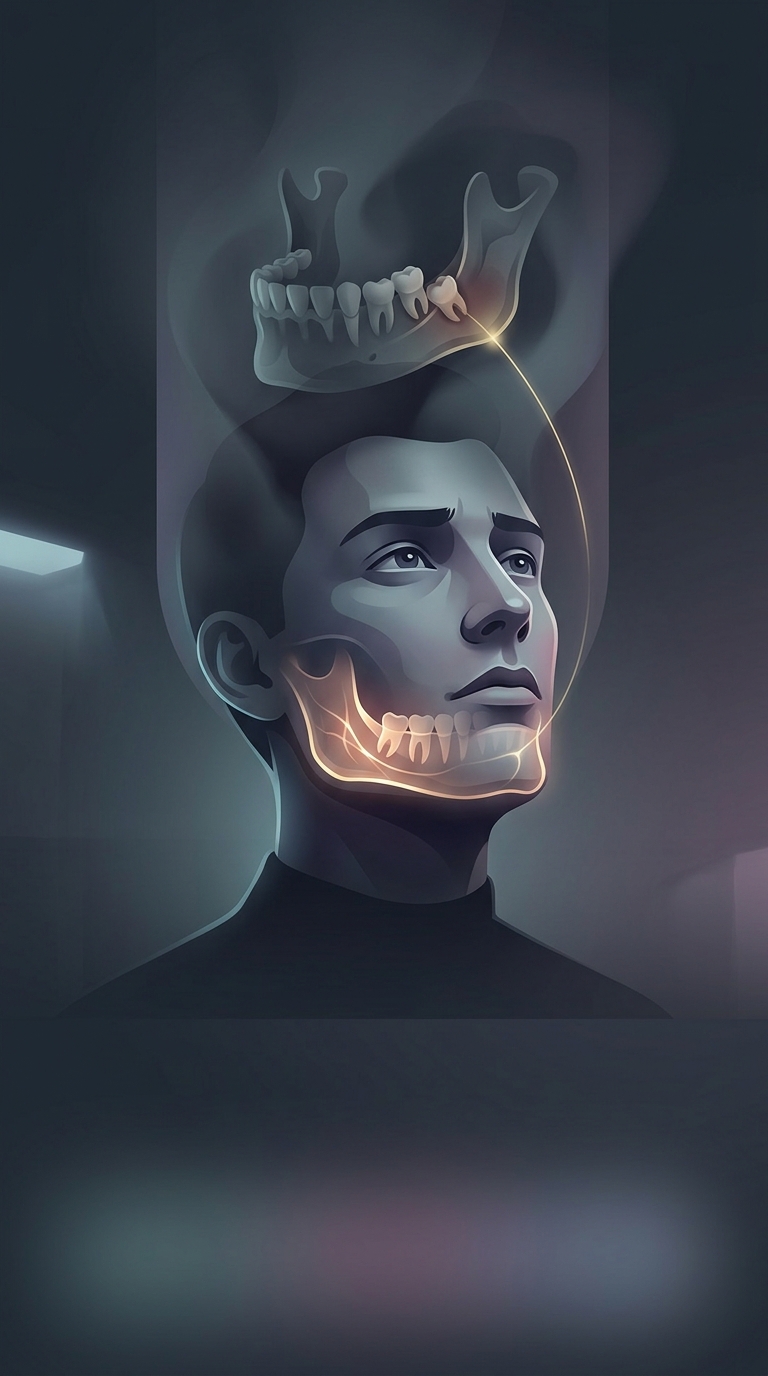
The cutting edge is only part of the system. Each tooth is held in its socket by a thin layer of connective tissue called the periodontal ligament. It cushions the tooth slightly and contains nerves that help sense pressure. That feedback lets the jaw adjust how firmly the teeth meet, helping prevent an unnecessarily hard bite.
Once a piece is cut free, the tongue and cheeks help move it back toward the broader chewing teeth. The division of labor matters: incisors start the bite, while molars provide the wider surfaces needed to break food down further. A clean slice at the front is the first step in a carefully coordinated chain of chewing.