How a roof keeps a railway moving in winter
Snow does not have to bury an entire track to disrupt a train. The vulnerable spots are often the switches—moving sections of rail that guide a train from one track to another. A switch must slide into a precise position; packed snow or ice can jam it or prevent the rails from making proper contact. The train may then be unable to take the route safely.
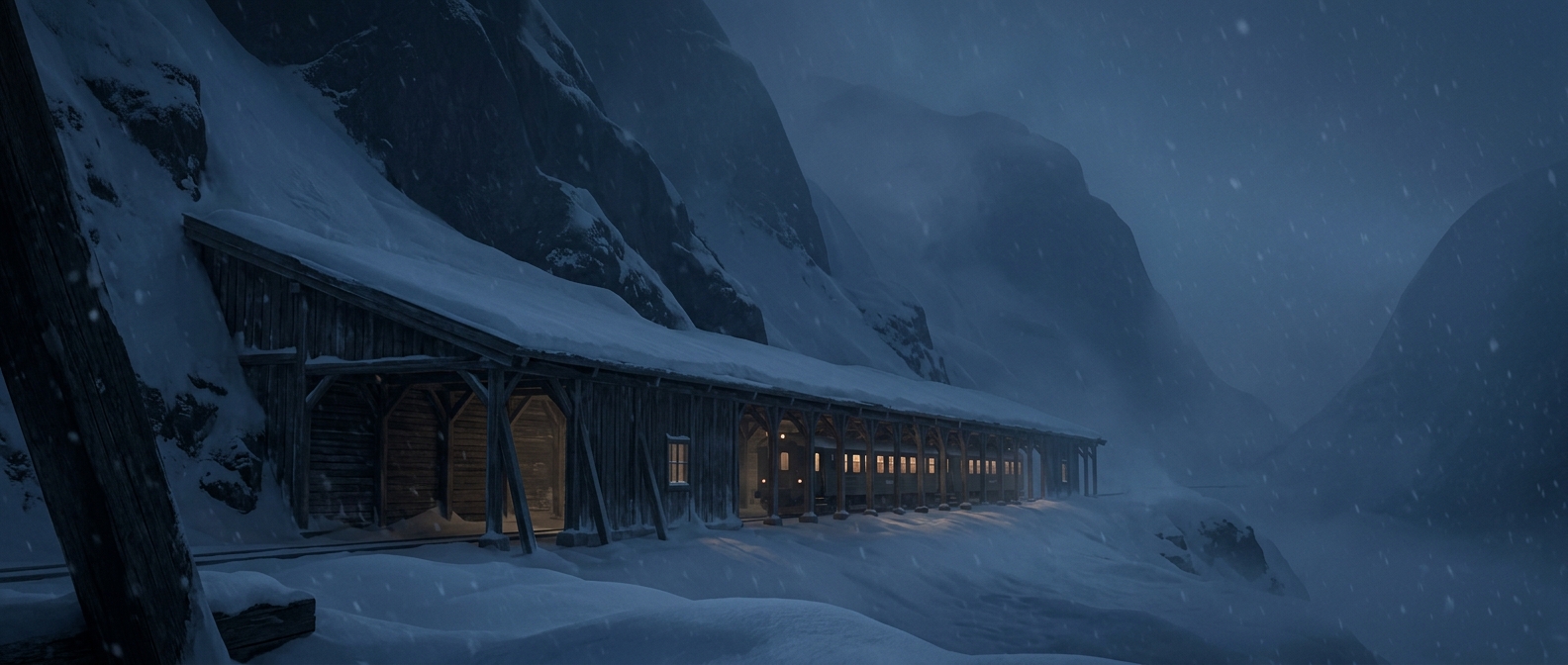
A roofed section acts like a long snow shelter. It blocks much of the windblown snow before it can settle on the rails and moving parts. That matters because wind can drive snow into places where ordinary plowing is difficult, including the narrow gaps around a switch.
From storm clearance to indoor upkeep
Enclosing the track does not make winter maintenance disappear. Crews still need to inspect the rails and switches, clear anything that gets inside, and keep water from collecting and freezing. But the work is less exposed to ongoing snowfall and drifting snow. Instead of repeatedly clearing an open track during a storm, railway staff can focus on maintaining a more sheltered corridor.
The design trades an exposed route for an engineered structure that must itself be maintained. Its practical payoff is at the point where a small obstruction can have an outsized effect: a switch that cannot move can stop a train, while a sheltered, working switch keeps the route available even when snow is blowing outside.