A childhood fall becomes the tournament’s payoff
In the original Tekken, Kazuya’s fight with Heihachi is not simply another grudge match. Heihachi, his father, once hurled him from a cliff as a child. Kazuya survives, grows up, and enters the King of Iron Fist Tournament with a chance to confront the man who tried to destroy him.
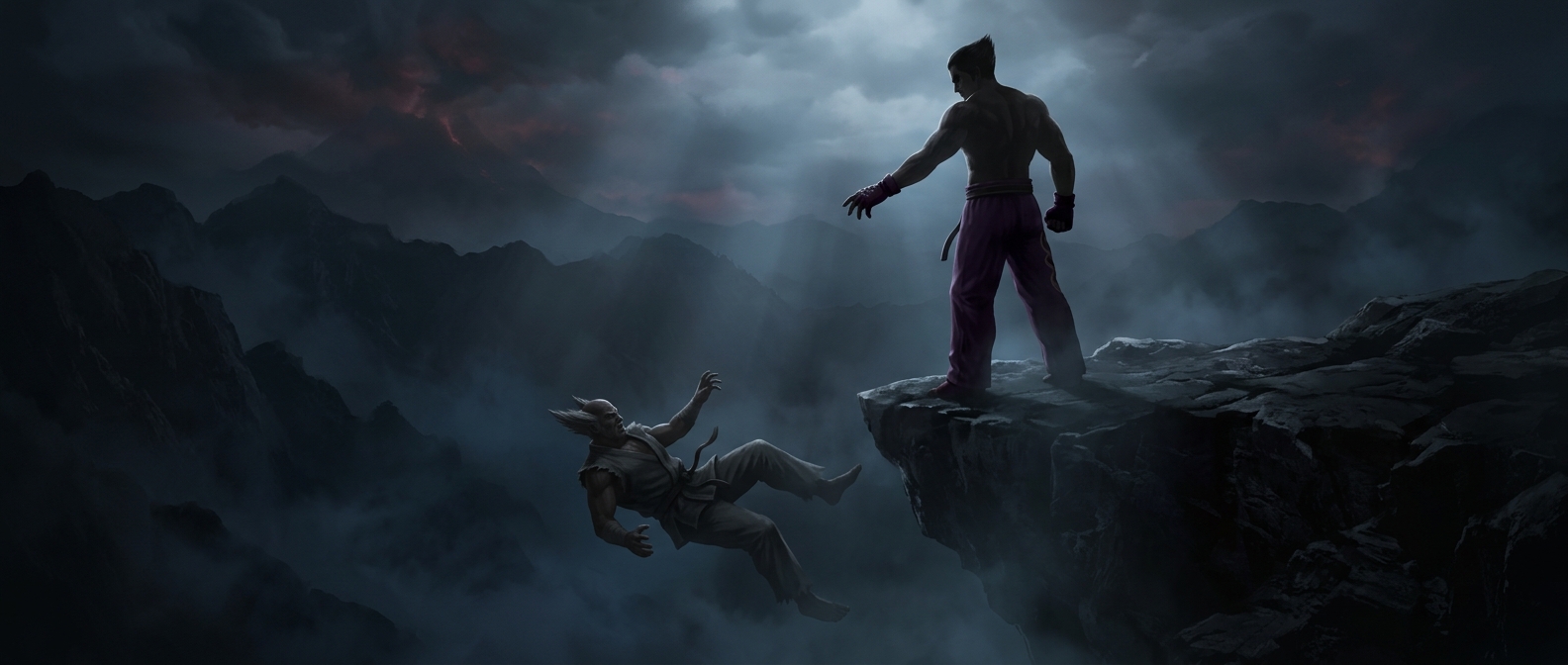
Winning the tournament gives Kazuya more than a trophy: it puts Heihachi within his reach. In the closing scene, Kazuya throws his father from the same cliff. The location makes the revenge unmistakable—the old act is returned, almost exactly, with their roles reversed.
The ending turns a match into a family feud
That reversal is a compact piece of fighting-game storytelling. The tournament supplies a reason for a wide cast of fighters to collide, while Kazuya’s personal goal gives the final bout emotional stakes. The player’s victory then leads directly into a cinematic consequence: the defeated champion is at the mercy of the person he once cast aside.
The mirrored fall also leaves the triumph uneasy. Kazuya has survived and gained power, but his answer to his father’s cruelty is to repeat it. The cliff is not just a dramatic backdrop; it makes the family’s violence feel like a cycle, with one generation’s defining act becoming the next generation’s revenge.