Why an empty chair can feel like a scarce resource
At a resort pool, guests are not just choosing a place to sit; they are trying to avoid losing a desirable option. A shaded chair near the water may be more appealing than one in full sun, and once the best spots appear occupied, guests can no longer count on finding an equally good alternative. That uncertainty makes acting early feel safer—even when the pool is still quiet.
How the race feeds itself
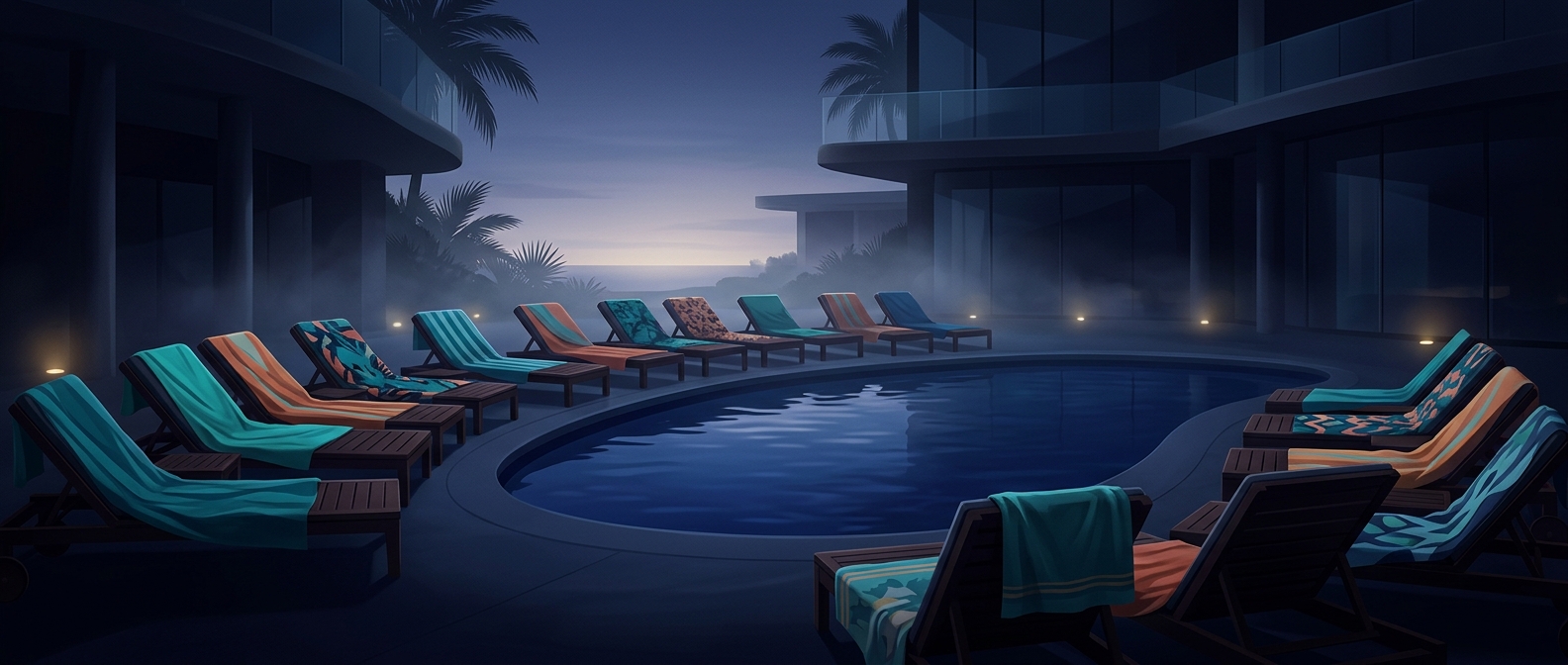
A few guests who arrive early can change what everyone else expects. Later arrivals see towels on chairs and infer that the remaining spaces may soon disappear. They may then come earlier the next day, or reserve a chair as soon as they reach the pool. Each person’s precaution becomes evidence for the next person that there is a shortage.
Psychologists call this scarcity thinking: when something seems limited, its potential loss can loom larger than the effort or inconvenience of securing it. A guest may therefore give up a slow breakfast or an unhurried morning to protect a chair they might not need for hours.
The cost of protecting a place to relax
The ritual can turn a shared leisure space into a competition. A towel marks a claim, but it does not make the chair more comfortable or create more seating; it simply signals that someone intends to use it. Guests who would rather arrive later may feel pressured to join in because waiting carries the risk of having fewer choices.
The irony is that the effort to guarantee a relaxing spot can make the morning feel less relaxing. The chair is valuable not only for where it sits, but because everyone fears being the one who arrives after the best options are gone.