How a Table Sets Its Own Pace
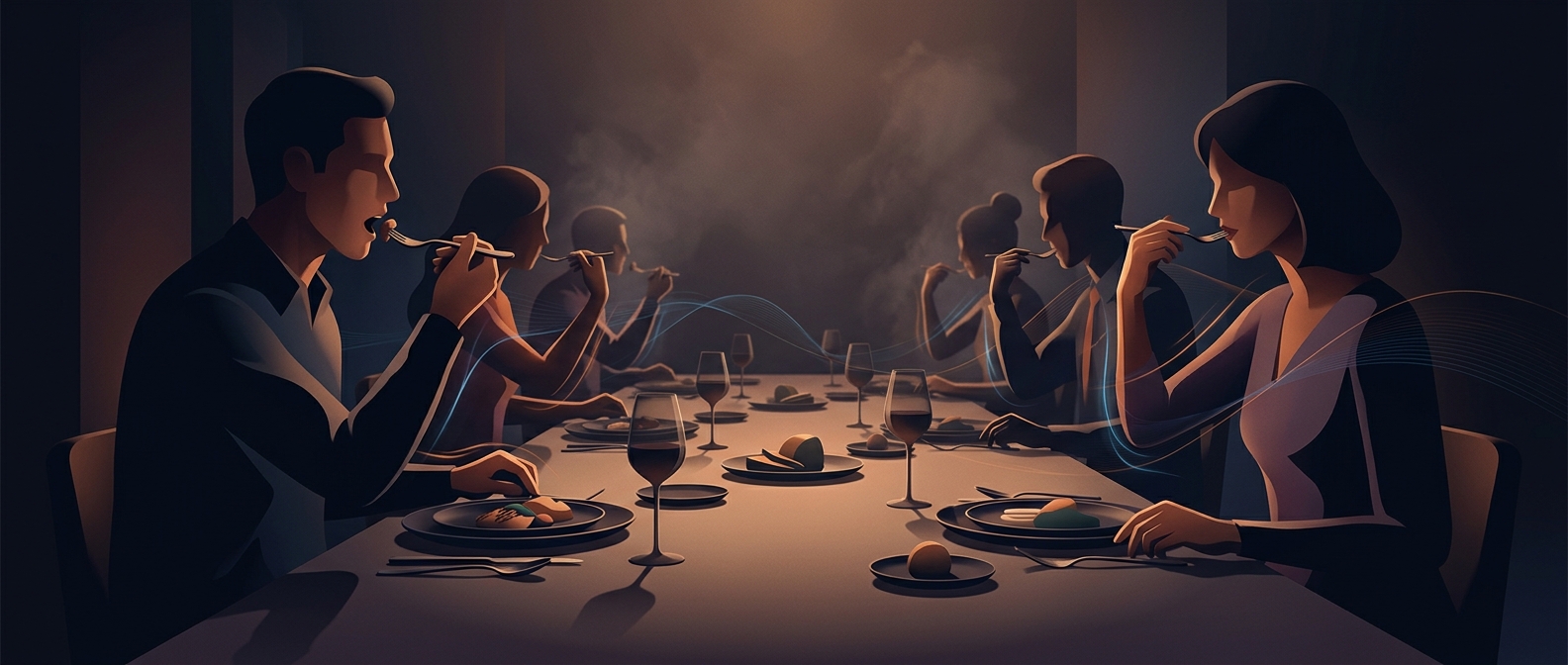
Eating is usually treated as a private act: hunger tells you when to start, and fullness tells you when to stop. But the meal also unfolds in public. When you are unsure how quickly to eat—or simply paying attention to conversation—other diners provide a quiet reference point. Their pauses, bites, and progress through the meal help establish what seems like a normal pace for that group.
The Cue Is Often Subtle
This is a form of social influence called behavioral modeling: people use what others do as a guide for their own behavior. It need not involve a deliberate decision to copy anyone. A diner who notices that everyone is still talking over the first course may take smaller bites or pause longer; when the people nearby speed up, that pace can feel natural too.
The effect is not a rule that everyone eats alike. Hunger, food, conversation, and personal habits still matter. Social cues are simply one input among several, and they can be strongest when a person has no clear reason to follow a particular pace.
Why the Rhythm Matters
Meal speed can shape the experience of eating. A slower table creates more time between bites, while a faster one can make lingering over food feel out of step. That does not mean companions control one another’s appetite; rather, the group can influence the rhythm in which appetite is acted on.
The next time your fork pauses because everyone else has paused, the decision may feel entirely your own. That is precisely what makes the cue easy to miss: a group norm can guide a meal without anyone announcing it.