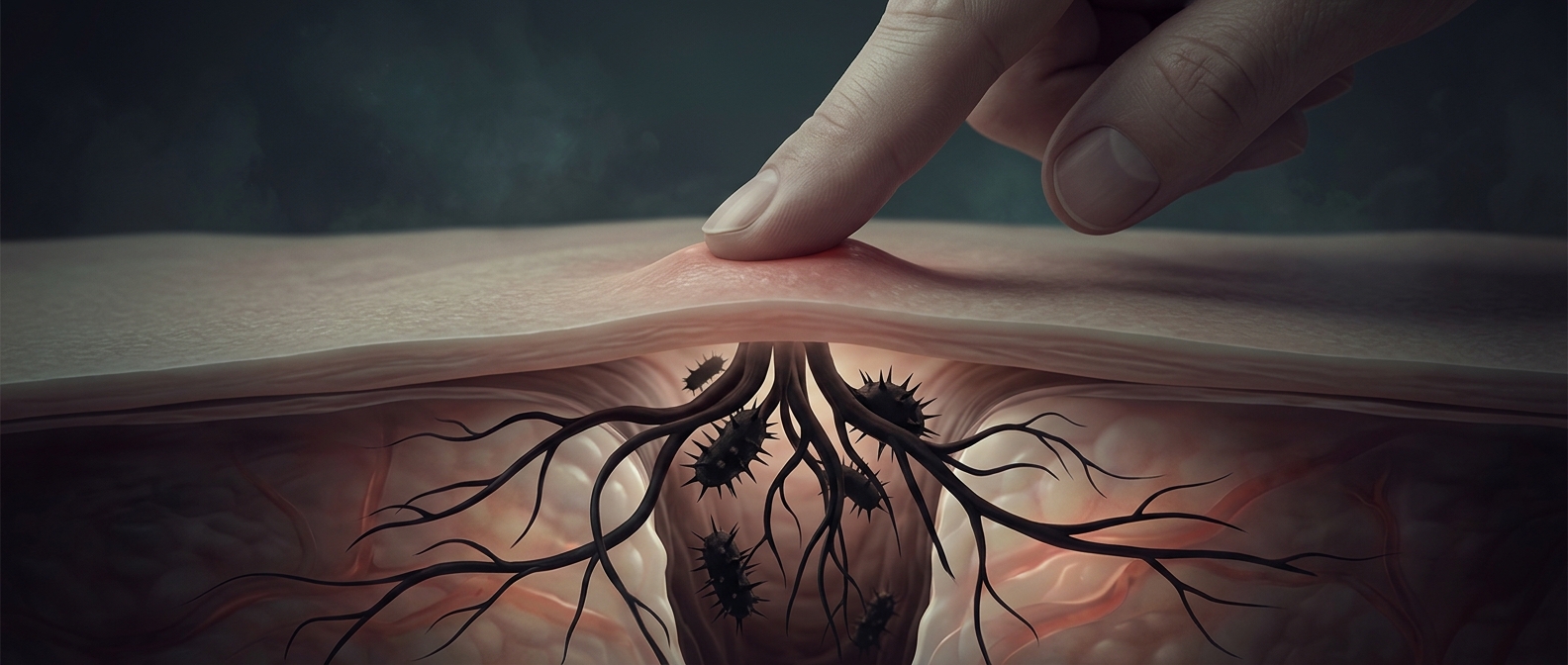
How a blocked follicle can become a deeper wound
Hidradenitis suppurativa (HS) is a long-term inflammatory skin condition that begins around hair follicles, often in places where skin rubs together. A follicle can become plugged and swollen; if its wall breaks, material from inside spills into nearby tissue. The immune system reacts to that injury, creating a painful lump beneath the skin rather than a simple surface blemish.
Why tunnels can form
HS tends to return in the same areas. With repeated inflammation, pockets beneath the skin may connect and develop into tunnels, also called sinus tracts. These channels can hold and release fluid, and healing may leave scars that make the affected tissue less flexible. Friction and pressure can aggravate already tender areas, while the underlying inflammation—not poor cleanliness—is driving the disease.
What the drainage changes
A tunnel can drain unpredictably, so absorbent dressings help protect clothing and manage fluid; they do not remove the inflammation that formed the tract. Because HS can progress from recurring lumps to connected tunnels and scarring, a clinician’s assessment matters, especially when painful bumps keep returning. Recognizing the pattern can lead to care aimed at controlling inflammation before more skin is affected.