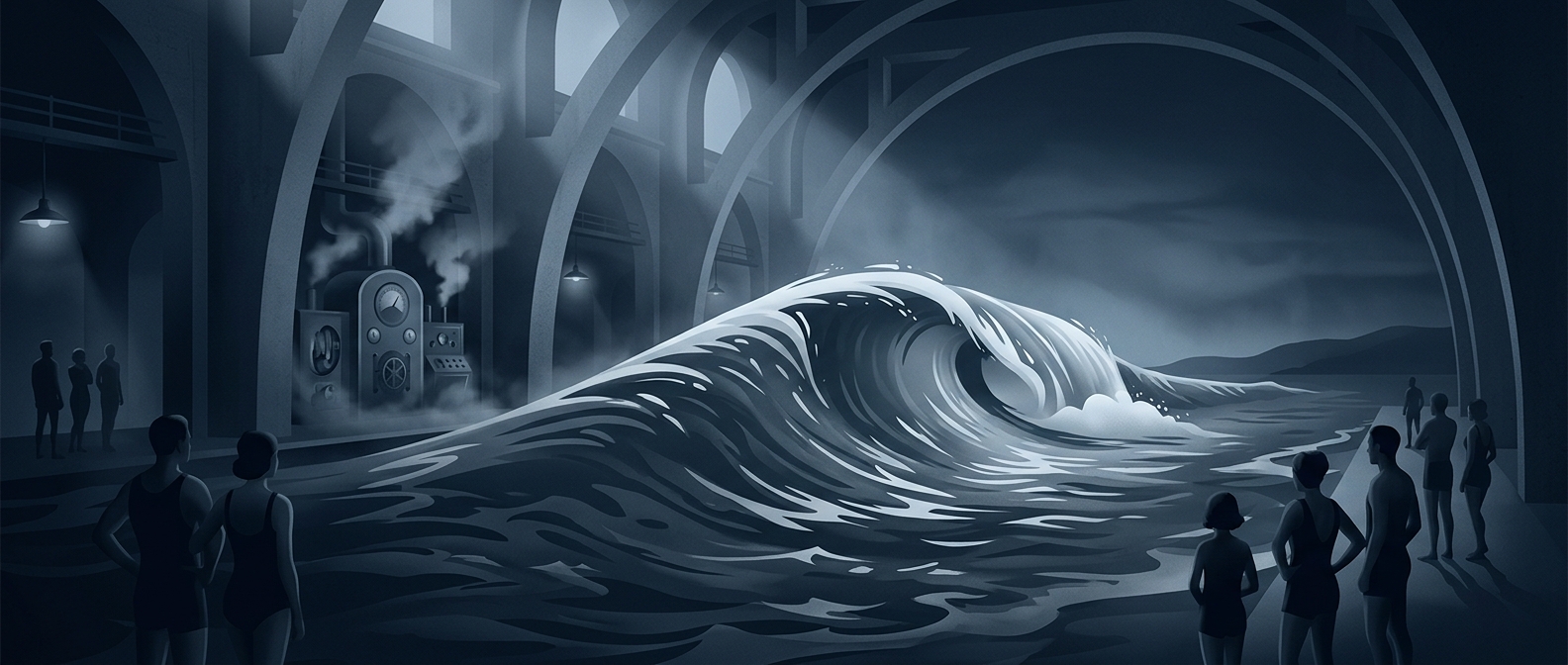
The wave is not a water change
A wave pool can make water look as if it is constantly being refreshed. In reality, the wave mostly moves the same water around. Sunscreen, sweat, skin flakes and other material enter with swimmers, then disperse through the pool rather than disappearing when a wave rolls past.
That matters because a wave pool has to manage both motion and water quality. Its pumps and reservoirs generate waves; a separate treatment system draws water through circulation pipes, removes particles with filters, and returns treated water to the pool. The precise plumbing varies, but the goal is to keep water moving through that cleaning loop while the wave-making equipment does its job.
What chlorine can—and cannot—do
Chlorine disinfects by inactivating many disease-causing germs. It does not instantly erase every contaminant, and it is not a substitute for filtration: sunscreen and other debris still need to be removed from the water. Operators also monitor the water’s chemistry, because disinfectants work effectively only within suitable conditions.
The practical challenge grows with the number of people in the pool. More swimmers introduce more material, so treatment systems and operating routines must keep pace with the load. That is why the clean-looking face of a wave is only part of the story: behind it, circulation, filtering and disinfection have to keep working between sets as well as during them.