A submarine had to surface to send its mail
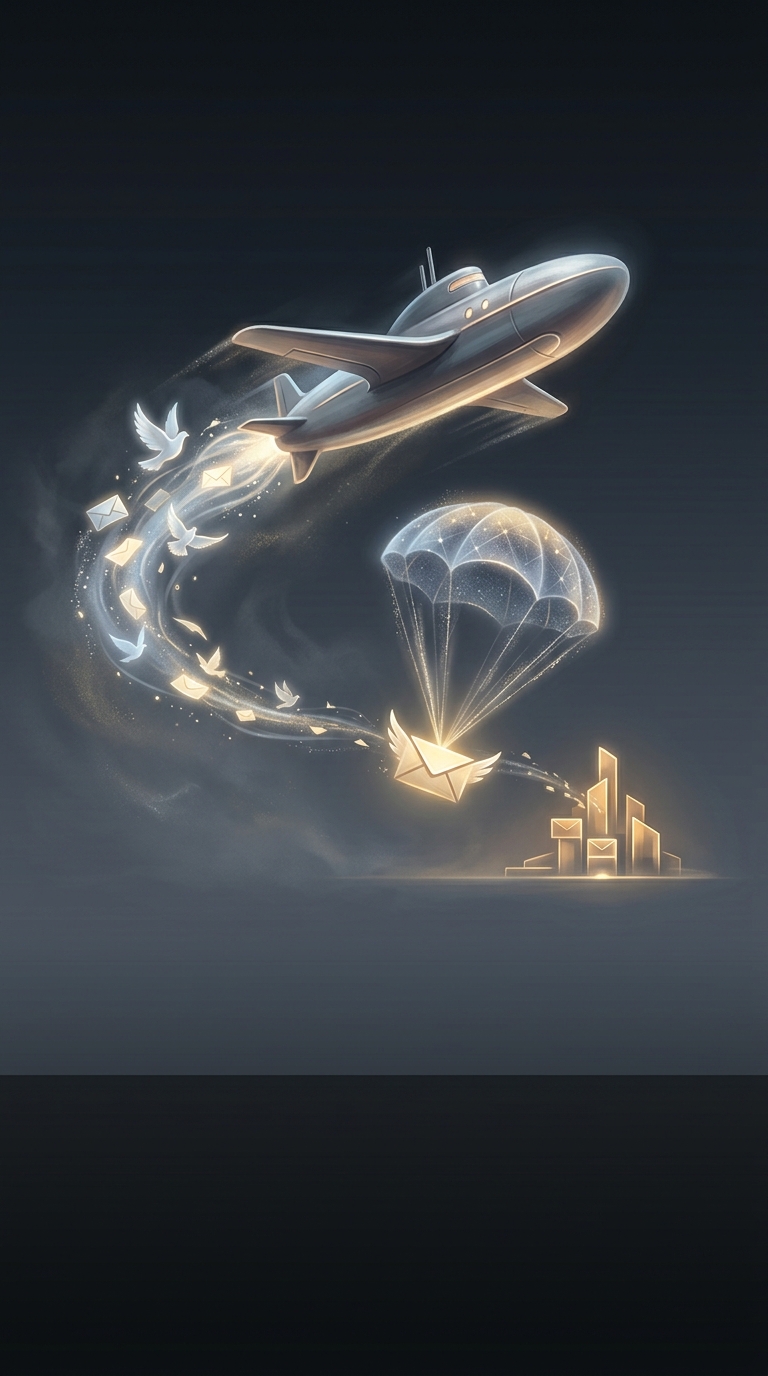
The USS Barbero could not launch a Regulus from underwater. The submarine first surfaced, then fired the missile from a deck-mounted launcher. A solid-fuel booster supplied the initial thrust; once the missile was moving, its turbojet engine carried it through the air toward Florida.
For the June 8, 1959, demonstration, the missile’s usual warhead was replaced by containers holding about 3,000 letters. The destination was the Naval Auxiliary Air Station at Mayport, near Jacksonville. There, the mail could be unloaded and passed into the ordinary postal system.
The route was the engineering challenge
A cruise missile is designed to travel toward a chosen target, not to make convenient stops along a delivery route. Its guidance system had to steer the missile to a military installation where the payload could be recovered. That made the demonstration possible—but also tied “delivery” to a submarine, a missile, a launch site, and a prepared receiving station.
The letters were real mail, but the journey was not a new postal service. The missile’s range and speed solved only one part of the problem: getting a package through the air. Launching and recovering the vehicle required specialized military equipment and coordination, far beyond what ordinary mail needed.
A proof of possibility, not a practical shortcut
Postmaster General Arthur Summerfield presented the flight as a demonstration of how missile technology might transform transportation. Its lasting significance was more modest and more concrete: a weapon system could carry a useful, nonmilitary payload to a designated destination.
The contrast is what makes the event memorable. The letters could continue through familiar postal channels once they reached Mayport; the extraordinary part was everything required to get them there. A submarine surfaced, launched a cruise missile, and turned a military test into a very unusual handoff to the mail system.