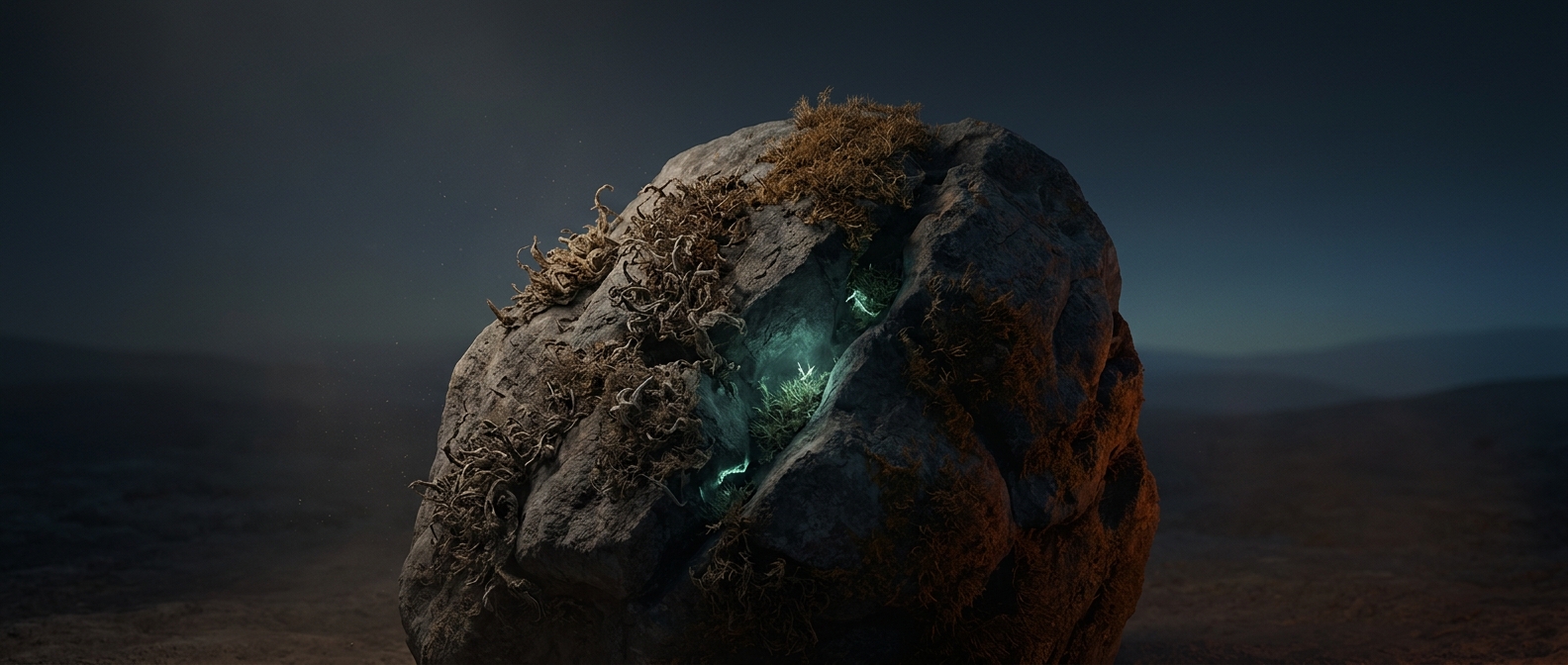
How a tree can grow around a hollow core
A tree trunk is not a solid column of living tissue. Most of its inner wood is dead; the living growth machinery is concentrated in a thin layer called the cambium, just beneath the bark. Each growing season, cambium cells divide and add new wood inward and new bark outward. That is why a tree can keep thickening even when decay has hollowed out its center.
Rot advances from the inside out
Fungi and other decay organisms can enter through wounds, broken branches, or exposed roots and gradually digest wood. The heartwood near the center is especially vulnerable because it is no longer alive and cannot repair itself. If decay stays mostly in that inner wood, the cambium can continue laying down fresh layers around it. The result may be a living trunk that is hollow in the middle but still has a growing outer wall.
This is not the same as saying the tree is unharmed. The trunk’s outer wood carries much of the load, so a hollow tree may remain standing for years, yet be more likely to split or break if decay has weakened too much of that supporting shell. Damage that reaches the cambium can also interrupt growth or kill the tree.
A living shell with limits
As new wood forms, it can partly surround old wounds and decay, but it does not magically replace the lost interior. A tree’s stability depends on how much sound wood remains, where it is located, and how the trunk is shaped—not simply on whether the center is hollow. That is why a tree can keep adding rings around a cavity while its ability to withstand a storm quietly declines.