Duck Hunt’s Duck Could Fight Back
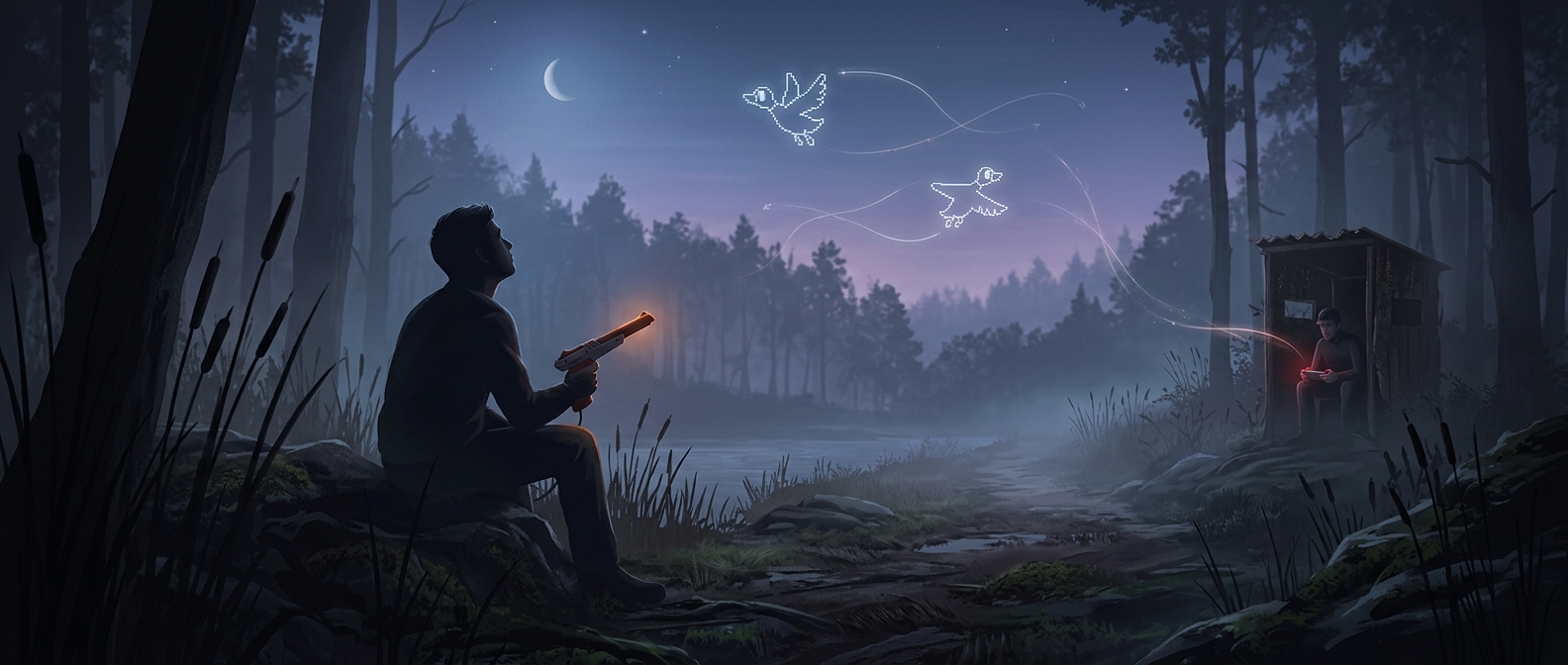
Duck Hunt looks like a contest between a person with a light gun and a computer-controlled bird. But connect a standard NES controller to the second port and a second person can take over the duck’s movement. Instead of merely waiting for the game to send a target across the screen, that player can steer its flight and make the shot harder to line up.
The trick turns a familiar solo game into a small, asymmetric competition: one player aims with the Zapper, while the other controls what the first player is trying to hit. The roles are deliberately different, not two versions of the same task. One tests aim; the other tries to spoil it.
A Simple Controller Changes the Match
The second player does not control the hunter or fire another gun. The controller affects the duck’s flight within the game’s rules, so the bird remains a moving game character rather than a free-floating target. That distinction matters: the challenge comes from reacting to another person’s choices, not from simply increasing the game’s speed or difficulty.
It is a modest feature, but it reveals a clever use of the NES’s two controller ports. A port usually associated with another player could instead give someone control over the opposition. Duck Hunt’s second player is, in effect, the game’s hidden adversary—making the next shot unpredictable because a human is deciding where the duck goes.