A closer look
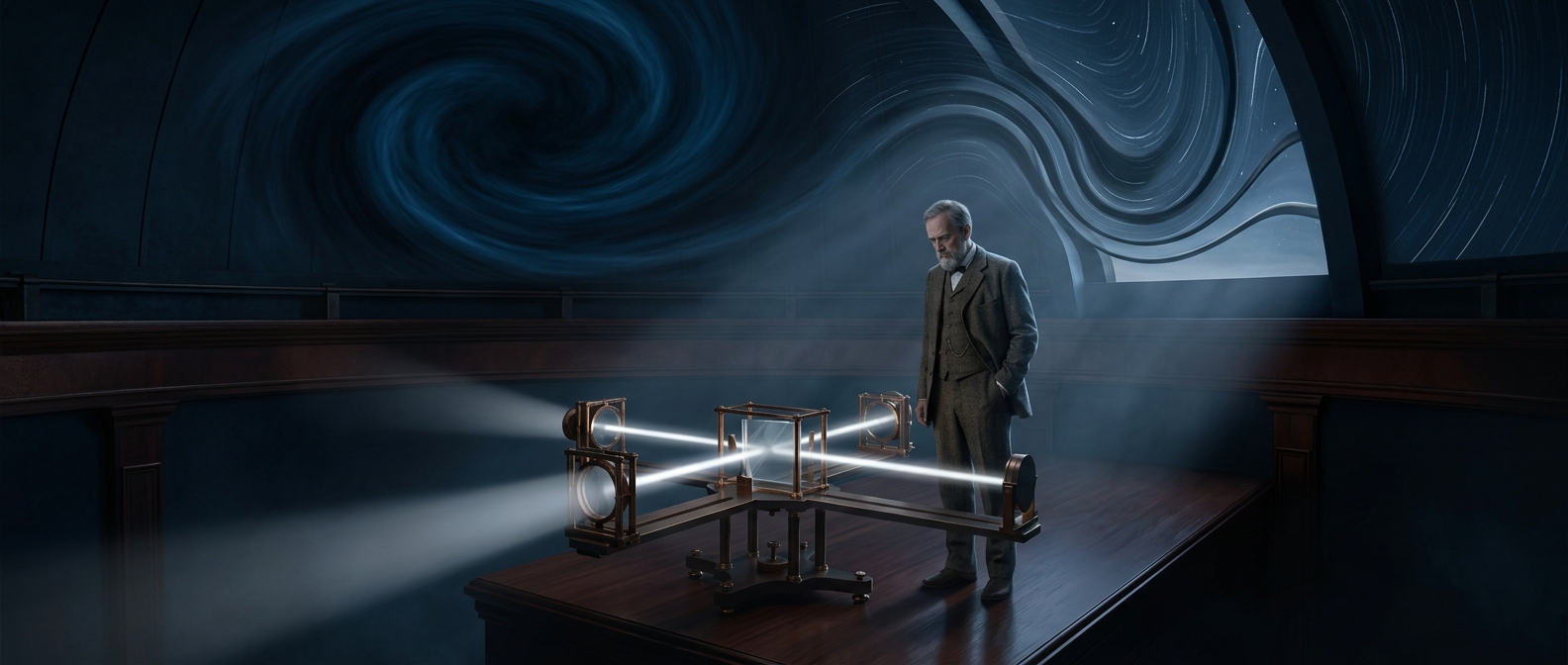
Late 19th-century physicists were obsessed with the 'luminiferous aether,' an invisible jelly they believed filled the universe to let light waves travel. In 1887, Albert Michelson and Edward Morley built a ridiculously sensitive optical rig floating in a pool of mercury to measure the Earth's drag through this aether. They found absolutely nothing. Zero drag. It was a massive, humiliating failure that broke physics, until a young patent clerk named Albert Einstein looked at their null result and realized there is no aether—light just moves at a constant speed regardless of who’s looking. The greatest failed experiment ever.