Paracelsus mixed chemical medicine with elemental spirits
Paracelsus challenged the medieval idea that illness mainly came from an imbalance among four bodily fluids, or humors. He argued that diseases could have distinct causes and that treatment should target the particular problem. That approach encouraged physicians to look beyond balancing the body’s fluids and to use substances—including minerals and chemicals—as remedies.
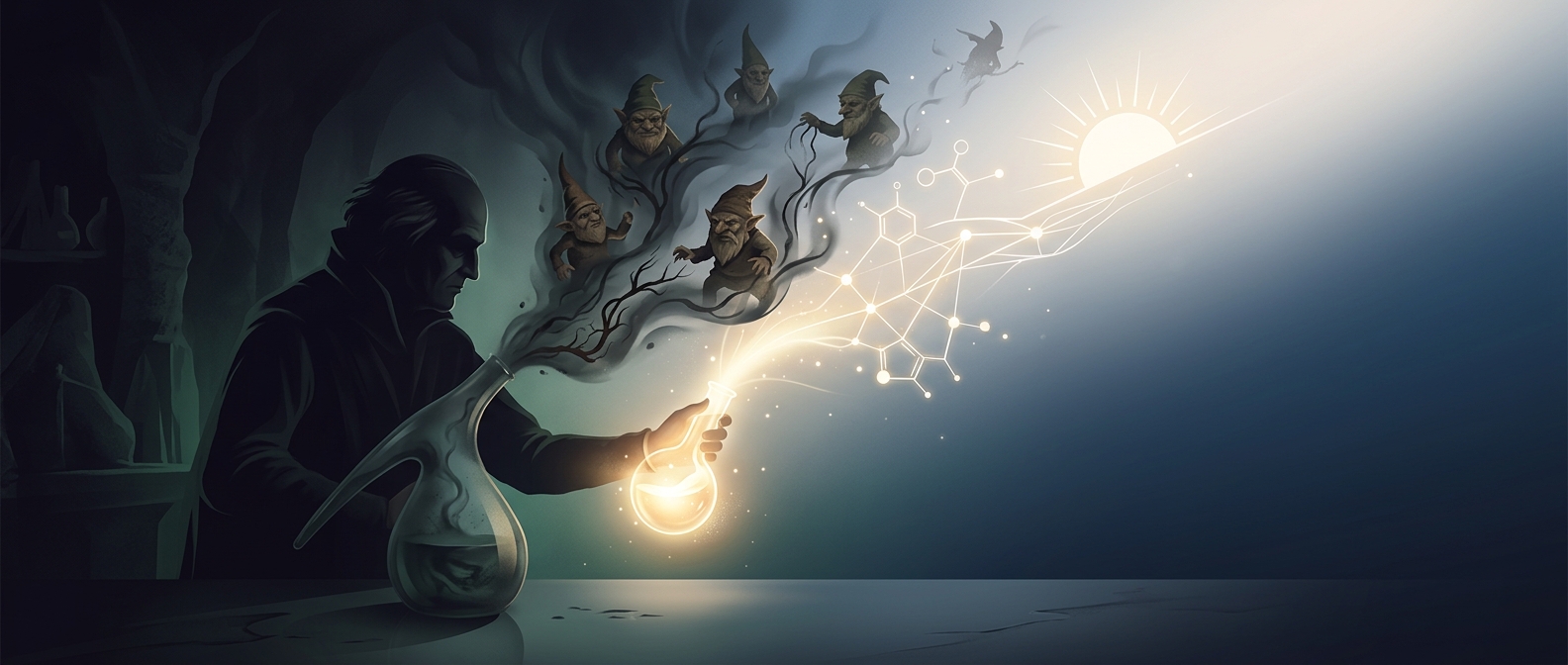
But his account of nature also included beings called elementals: gnomes associated with earth, undines with water, sylphs with air, and salamanders with fire. In his writings, these beings were part of the hidden forces that could affect human life, including the action of poisons. This was not a modern germ theory or a scientific account of infection; it was a supernatural framework woven into his explanations of the body.
Why the contradiction mattered
Paracelsus did not have to get every cause right for his medical ideas to change practice. His emphasis on specific diseases and chemical substances offered a different way to think about treatment, while his belief in elemental spirits reflected the period’s broader effort to explain invisible processes through the mixture of observation, philosophy, and magic.
The tension is the point: a physician could help move medicine away from humoral theory while still explaining illness through beings that modern science does not recognize. His legacy shows that new methods can emerge before the worldview around them has fully changed.