The rear wheels run out of grip first
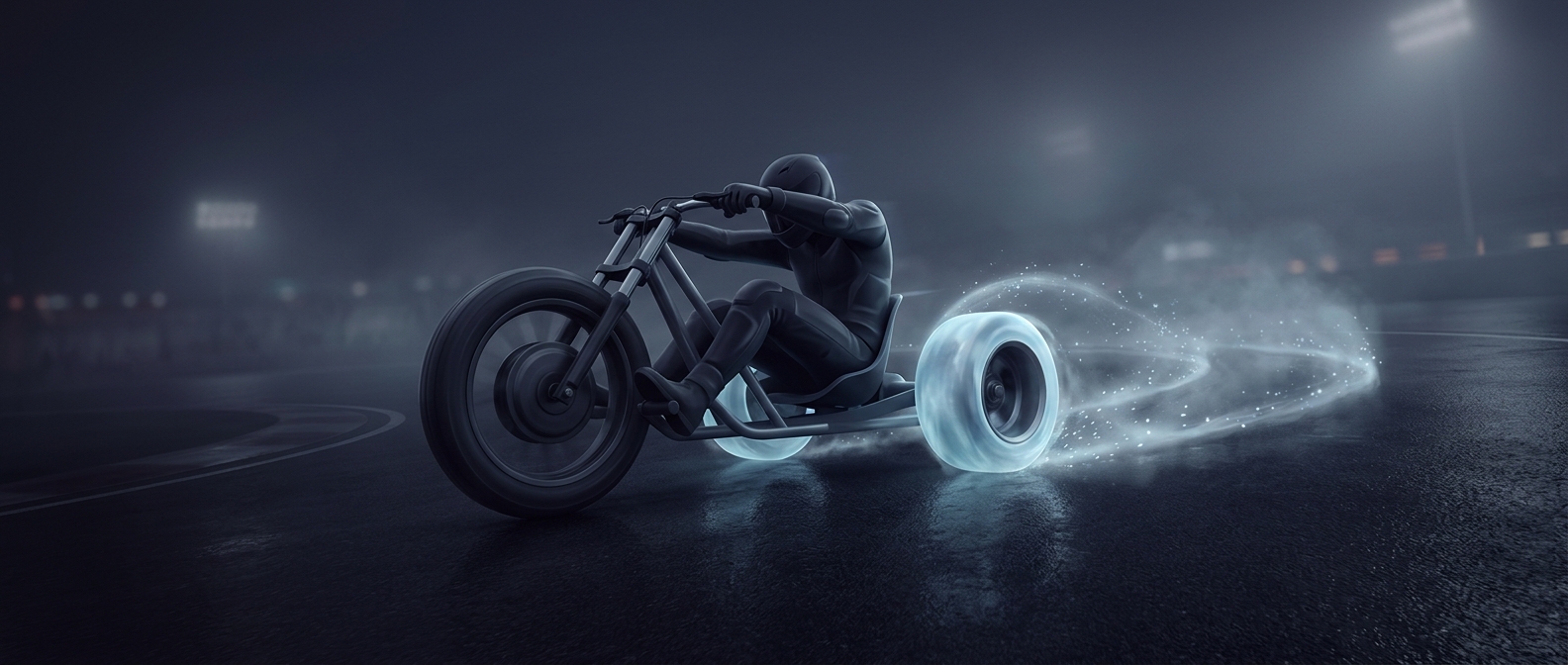
A turn requires tires to push sideways against the ground. That sideways force changes the vehicle’s direction; without enough grip, a tire slides instead. Drift trikes are arranged so the rear wheels lose that contest easily: smooth plastic sleeves reduce the friction between the wheels and pavement, while the front tire remains able to guide the trike.
As the rider turns the handlebars, the front wheel points into the curve and continues to track it. The rear wheels, however, cannot generate enough sideways force to follow the same path. They slide outward, swinging the back of the trike around the front. This sideways angle is what makes the turn look like a drift rather than an ordinary corner.
A balance between sliding and steering
The slide is not simply a loss of control. The rider can influence it by changing steering, speed, and body position. Turn too gently or travel too slowly, and the rear may not swing much; carry too much speed, and the front wheel may no longer hold the intended line. The useful zone is where the rear slips while the front still has enough grip to steer.
That contrast is the trike’s key engineering tradeoff: the rear is made slippery on purpose, but the front must stay predictable. On smooth pavement, the plastic sleeves let the rear wheels glide through a corner with little resistance—until the rider straightens the trike and the wheels line up behind the front again.