Bearings Let the Bars Turn Without Loosening the Bike
A BMX headset is the bearing assembly where the fork’s steering tube passes through the frame. When the rider turns the handlebars, the stem turns that tube and the fork with it. The bearings let the assembly rotate smoothly while keeping it supported under the rider’s weight and the forces of a landing.
The catch is that a conventional brake cable runs from the handlebars toward the frame. Spin the bars repeatedly and the cable winds around the steering tube, eventually pulling tight or interfering with steering. The headset can accommodate the rotation; the cable is the obstacle.
A Detangler Separates the Turning Parts
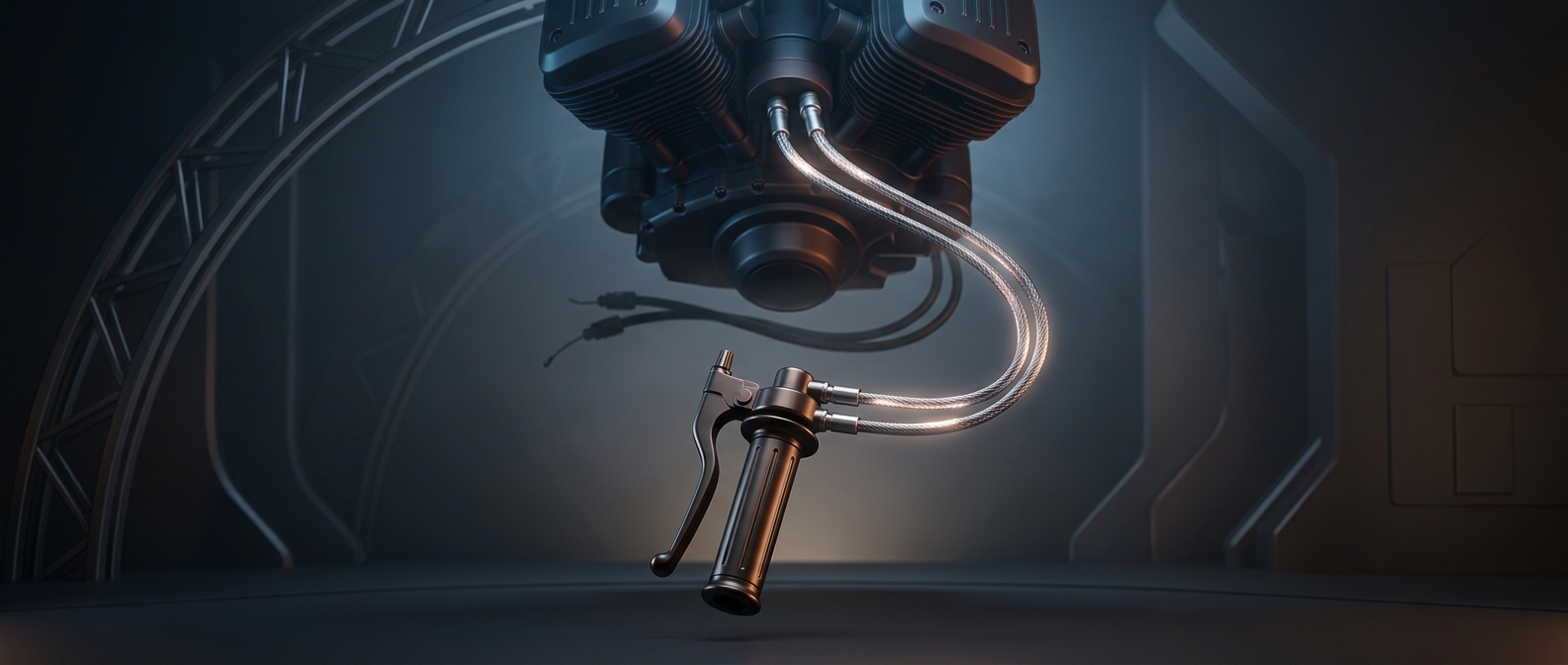
A gyro-style detangler solves that problem with two cable sections and a pair of plates that can rotate relative to each other. The brake lever’s cable connects to the upper plate, which turns with the handlebars. A separate cable runs from the lower plate to the rear brake. As the bars spin, the plates rotate against one another instead of winding the entire brake line around the frame.
Pulling the lever still transmits force through both sections to the brake. The mechanism’s job is to pass that pull across a rotating joint while allowing the bars to keep turning. The headset handles the steering rotation; the detangler keeps the brake connection from being twisted up by it. Together, they let riders complete bar spins without sacrificing a working rear brake—or having to unwind the cables afterward.