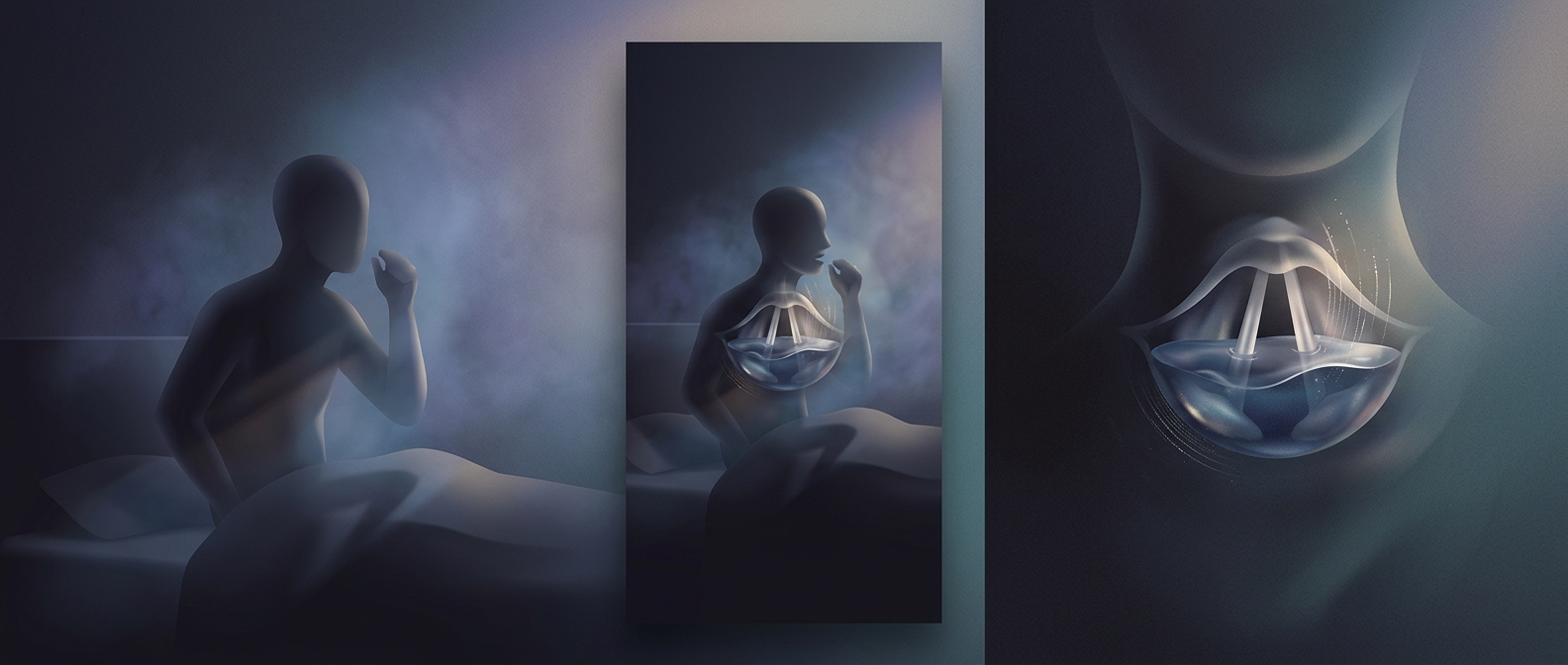
The Voice Begins as a Buzz
Air pushed from the lungs sets the vocal folds vibrating. Their pulses create a sound rich in many frequencies at once, rather like a buzzy, unfinished tone. The throat, mouth, and sometimes nasal cavity then shape that sound before it reaches a listener.
The Vocal Tract Filters Sound
This space behaves somewhat like an acoustic tube, but it is not a rigid pipe: its walls and openings move. The tongue, jaw, and lips change the shape and length of the passage, while the soft palate can open or close the route into the nose. Those changes make some frequencies stronger and others weaker. The strengthened bands are called formants—resonances that help give vowels their recognizable quality.
That is why the same vocal-fold vibration can sound like “ee” or “ah.” The source is broadly similar; the tongue and jaw place the mouth’s resonances in different positions. Speaking also involves more than filtering: the tongue, lips, and other articulators can narrow or briefly block airflow to create consonants such as “s” and “t.”
Small Movements, Different Sounds
The system works through fast, coordinated adjustments. For “ee,” the tongue rises toward the front of the mouth; for “oo,” the lips round and the tongue shifts back. These movements alter the resonances without requiring the vocal folds to produce a wholly different source. In whispered speech, the folds do not vibrate in the usual way, yet the changing vocal-tract shapes still help distinguish many sounds.
The practical consequence is that speech is not simply a note coming from the throat. It is a sound source continually reshaped by a flexible passage—and a small shift of the tongue can change what a listener hears.