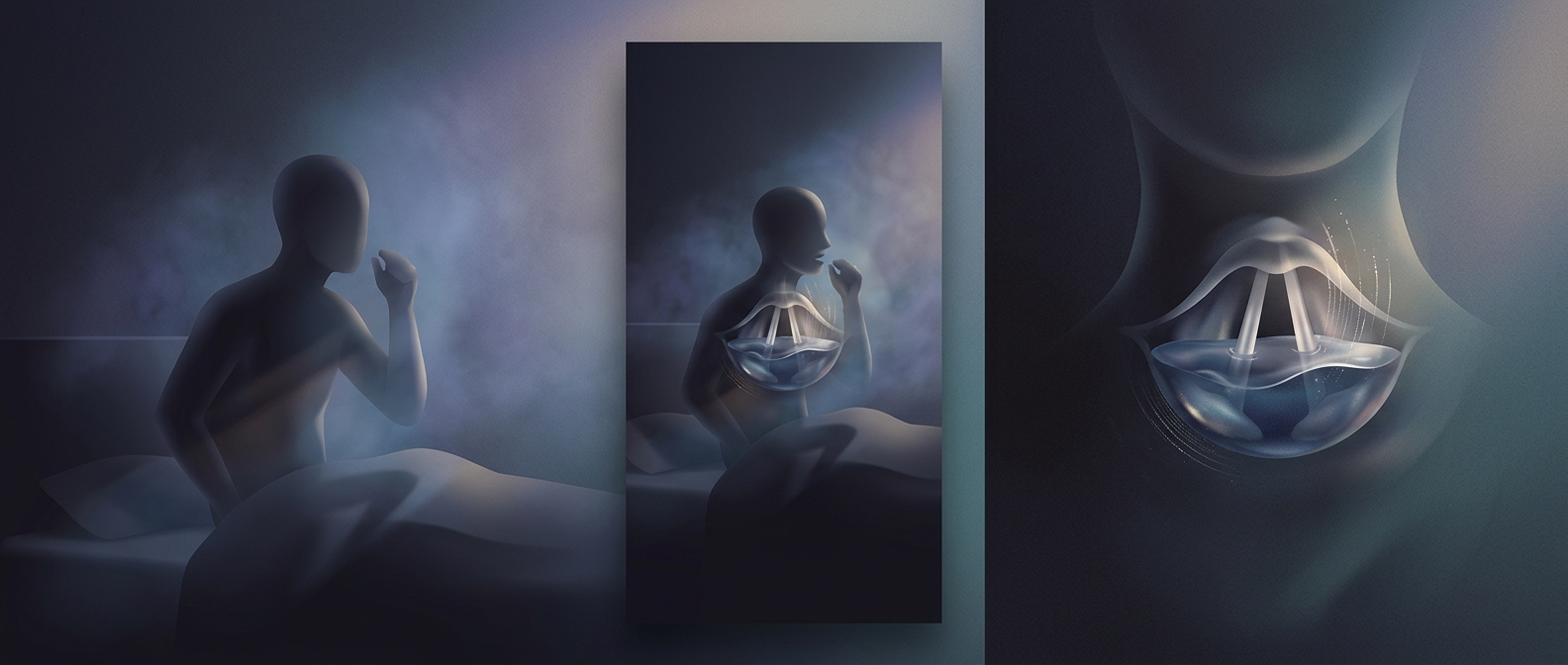
Why a Small Change in the Throat Alters Your Voice
Your voice begins when air from your lungs sets two small folds of tissue in the voice box vibrating. The folds need to meet and move smoothly; their shape and flexibility help determine the sound they produce. If nearby tissue is mildly swollen, the folds may not vibrate or come together quite as evenly, making the voice sound lower, raspier, or less clear.
The First Minutes After Waking
During sleep, you swallow less, and breathing through the mouth can dry the throat. Mucus may also sit on the vocal folds instead of being cleared by ordinary talking and swallowing. These factors can add to the roughness, though they do not affect everyone equally.
Once you are up, swallowing and speaking help move secretions, while drinking can ease dryness. The voice often clears as the throat gets moving again. That brief change is usually a matter of the voice-making tissues working under slightly different conditions—not a permanent change in the voice.