The Other Actor May Be in the Headphones
A voice performance can sound like a conversation even when no scene partner is in the room. In animation, games, and dubbing, performers often record their lines separately so each voice can be captured cleanly and scheduled around different workdays. A director may read the other character’s lines from the control room, or the performer may hear a prerecorded track through headphones. Either way, the exchange has to be built from separate pieces.
That changes the actor’s task. They must respond to the timing, tone, and imagined intention of a voice they may not be able to see. A pause can suggest hesitation; a quick interruption can make a scene feel like an argument. The performer and director work out those choices in the moment, sometimes trying several versions of a line to find one that fits the scene.
Why Record Lines Apart?
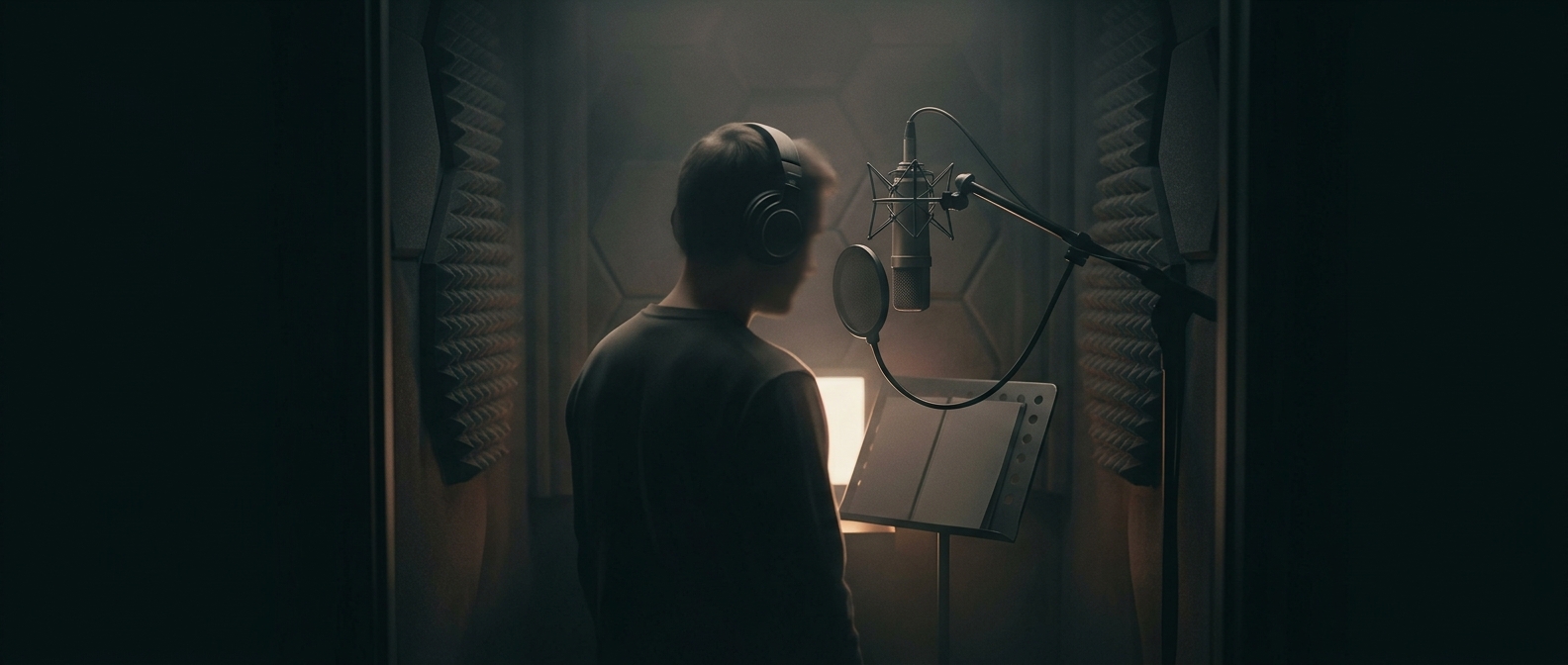
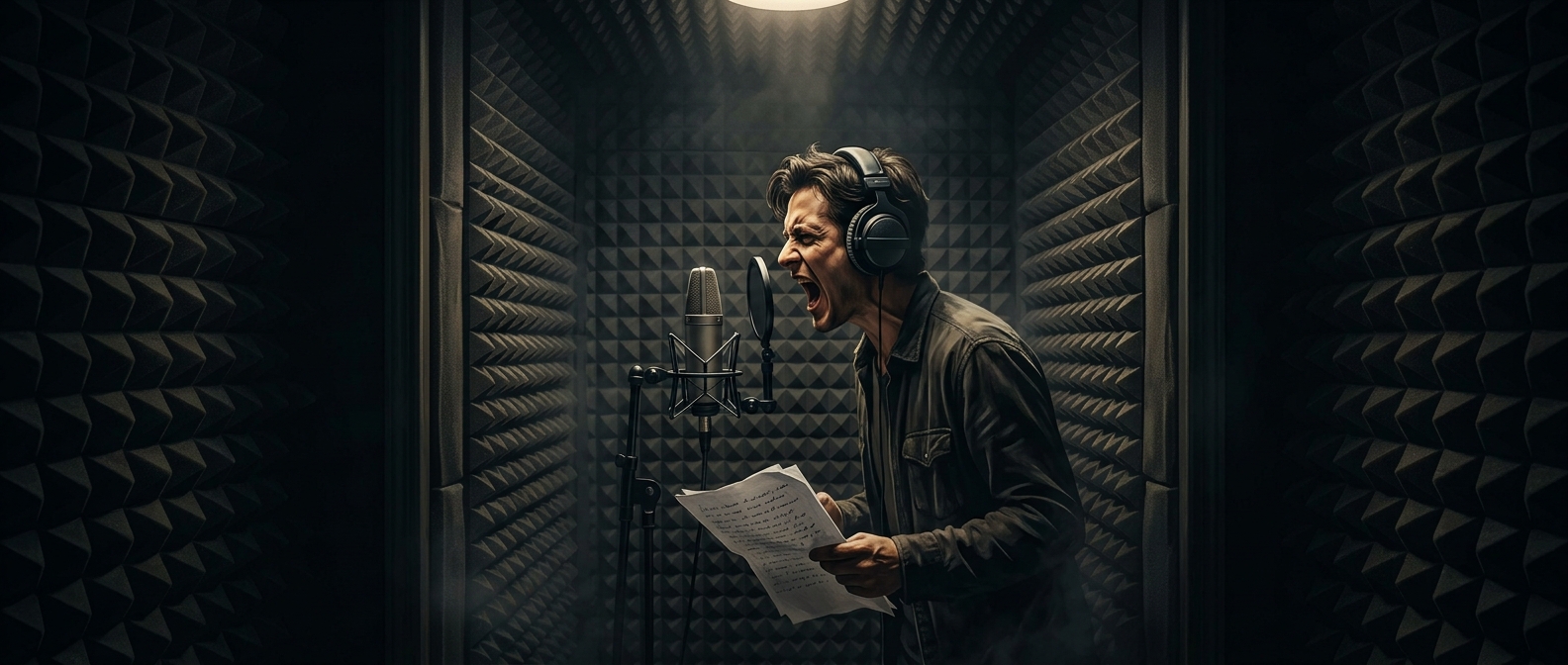
A sound-treated booth limits echoes and outside noise, giving editors a clean recording to shape later. Separate sessions also make it easier to adjust a performance without bringing an entire cast back into the studio. In games, where a character may have many lines for different situations, that flexibility can be especially useful.
The tradeoff is spontaneity. When actors perform together, they can catch each other’s gestures, reactions, and unexpected timing. Recording separately removes much of that immediate feedback. The director helps supply context, and editors later fit performances together—but the actor still has to make an unseen scene feel present.
Building a Shared Moment Later
After recording, editors can trim pauses, combine takes, and place each line against the finished animation or scene. That means a brief exchange may be assembled from performances made at different times, yet it must sound as if both characters occupy the same moment. The booth’s solitude is not just an oddity of the job: it is one of the conditions actors use to create a convincing connection that listeners never hear being assembled.