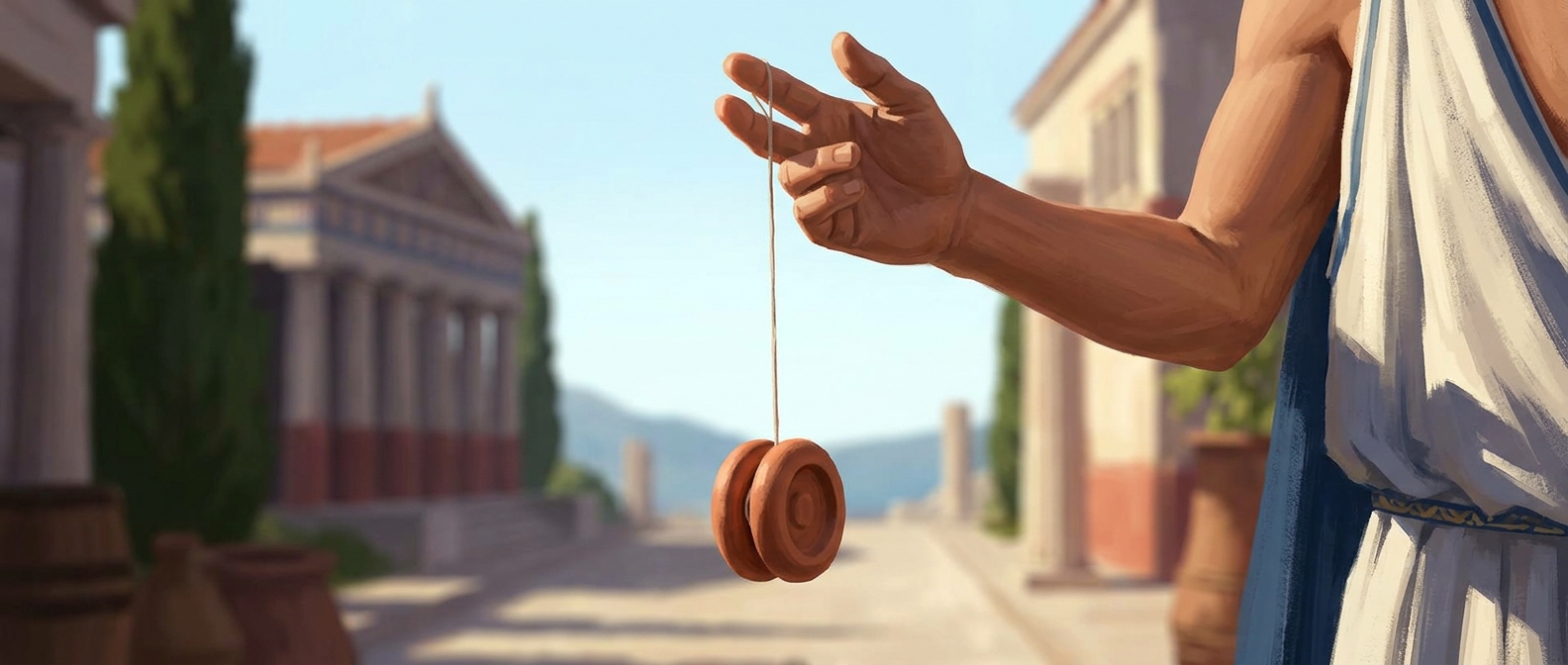
A clay disc on a string
The basic yo-yo trick depends on a simple cycle: the disc unwinds as it drops, then the string winds back around its center as the disc rises. A child can repeat that motion by controlling the string and the toy’s movement. The ancient Greek version used the same broad idea as a modern yo-yo, even though its material made it a much more fragile plaything.
Why clay changed the experience
A fired-clay disc could be shaped into a solid toy, but it could crack or shatter if it struck a hard floor or wall. That made careless drops costly: the toy might not survive the very motion that made it fun. Plastic yo-yos can take far more knocks, while a clay one called for gentler handling and perhaps a softer place to play.
The contrast is a reminder that familiar games do not depend on modern materials. The motion was already possible with a disc and a string; what changed over time was how much rough play the toy could endure.