stackyFACTS
History

Ancient Greeks thought the uterus could wander

HERE’S THE INTERESTING PART

Ancient gynecology was just pure, unadulterated guesswork. Greek physicians, including Hippocrates, genuinely believed that a woman's uterus was an independent, animal-like entity that would literally detach and aggressively wander around the body looking for moisture. If a woman was anxious or sick, the doctor would just tell her that her rogue organ was currently crushing her lungs.

Ancient Greeks thought the uterus could wander
STACKY / History
One discovery leads to another.

Keep exploring facts in this topic.

History →


STACKY FOR IPHONE

A bigger world.
One discovery
at a time.

Keep discovering with Stacky. Interesting facts in an app that is always within reach.

Download on the App Store
ONE MORE DISCOVERY?

Keep exploring

All in this topic →
Ancient Egyptian women used a surprisingly accurate pregnancy test over three thousand years ago that involved urinating on bags of wheat and barley to see if the seeds would sprout.
History

Ancient Egyptian women used a surprisingly accurate pregnancy test over three thousand years ago that involved urinating on bags of wheat and barley to see if the seeds would sprout.

Ancient Egyptian women used a surprisingly accurate pregnancy test over three thousand years ago that involved urinating on bags of wheat and barley to see if…

Discover more
Pythagoras drowned one of his own students just to suppress the existence of irrational mathematical numbers
History

Pythagoras drowned one of his own students just to suppress the existence of irrational mathematical numbers

Your high school geometry teacher conveniently left out the part where math nerds used to operate like a lethal mafia cartel. Pythagoras believed that the…

Discover more
The envoy who claimed Alexander was treated like a god
History

The envoy who claimed Alexander was treated like a god

When Alexander the Great reached India, he sent his cynical philosopher buddy Onesicritus to chat with the local ascetics, or "naked wise men." Onesicritus…

Discover more
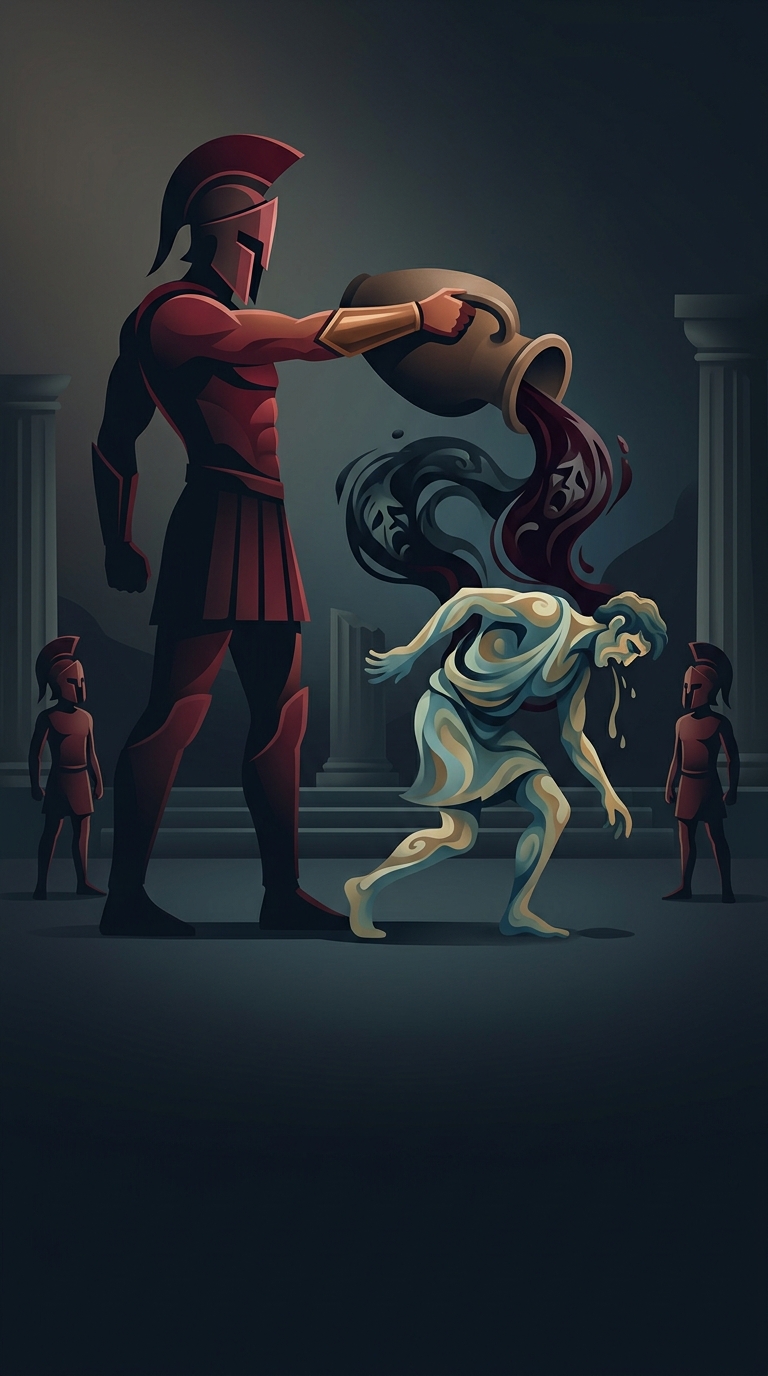
Spartan warriors engaged in institutionalized bullying of their helot slave population by forcing them to get blackout drunk in public to show young Spartan boys how embarrassing intoxication could be.
History

Spartan warriors engaged in institutionalized bullying of their helot slave population by forcing them to get blackout drunk in public to show young Spartan boys how embarrassing intoxication could be.

Spartan warriors engaged in institutionalized bullying of their helot slave population by forcing them to get blackout drunk in public to show young Spartan…

Discover more
History

Venetian authorities forcibly exiled thousands of plague-infected citizens to the isolated island of Lazzaretto Vecchio where overworked plague doctors dumped so many bodies into…

Social distancing in Renaissance Venice involved literal banishment to a plague island. Starting in the 15th century, the city handled outbreaks by forcibly…

Discover more
Ancient historians documented that Alexander the Great's body mysteriously failed to decompose for six days after his death, which modern scientists now believe means he was tragically buried alive.
History

Ancient historians documented that Alexander the Great's body mysteriously failed to decompose for six days after his death, which modern scientists now believe means he was tragically buried alive.

Ancient historians documented that Alexander the Great's body mysteriously failed to decompose for six days after his death, which modern scientists now…

Discover more
StackyMore discoveries in the app
Download on the App Store