Why Clerks Nearly Ended in Bloodshed
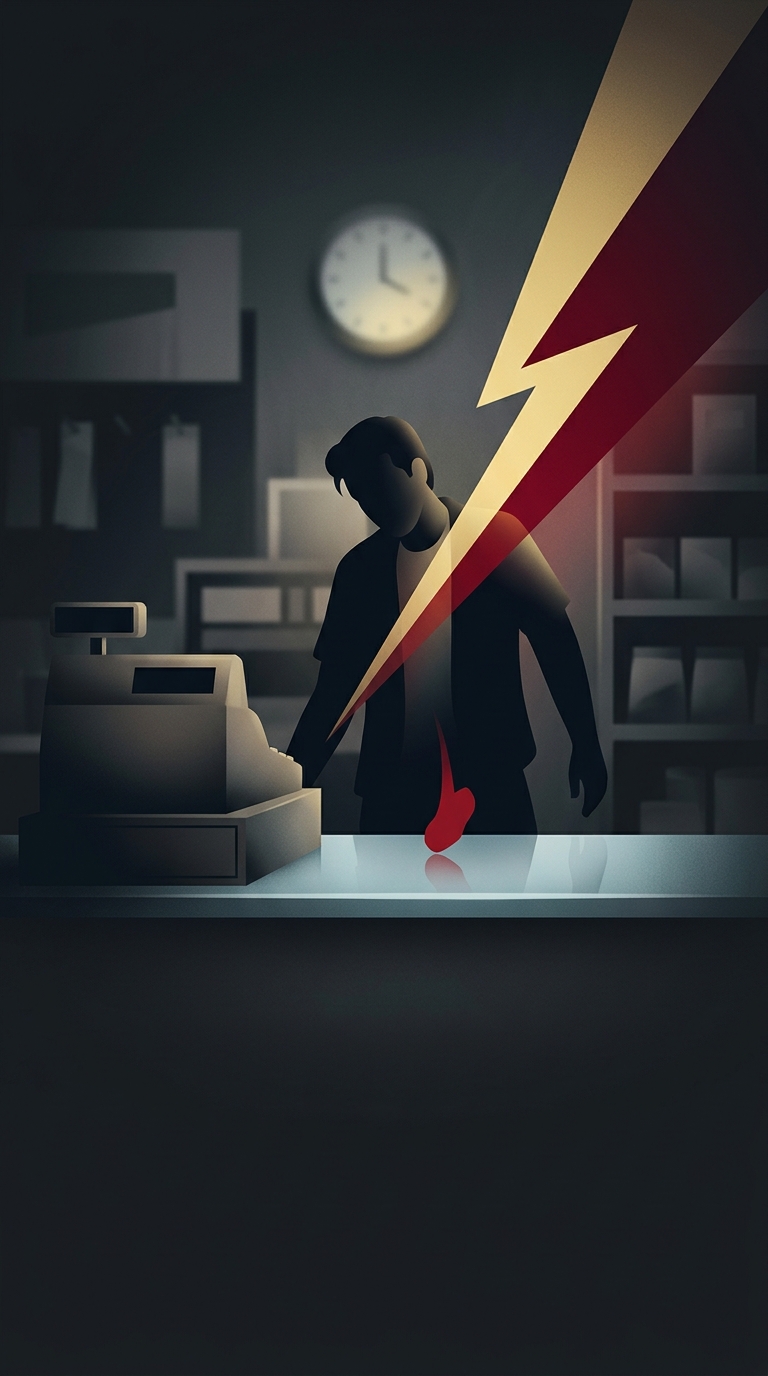
The original ending treated the convenience store not as a harmless backdrop for jokes but as a genuinely bleak workplace. After spending the film listening to Dante complain about a job he never wanted, viewers would see an armed robber enter and kill him. The sudden violence offered no comic escape hatch: the day’s petty frustrations ended in an irreversible tragedy.
The Joke Was the Collision
That ending would have changed the meaning of the comedy that came before it. Clerks draws humor from the gap between Dante’s sense that his life is a disaster and the small, ordinary annoyances surrounding him. A murder would make that gap collapse. His complaints would no longer feel merely oversized; the film would leave viewers with the brutal reminder that catastrophe can arrive in an otherwise routine shift.
The shock also depended on the film’s low-key style. Its black-and-white images and modest setting make the store feel familiar rather than cinematic. A sudden killing in that environment would be disturbing partly because it would break the audience’s expectation that the film’s problems stay small.
A Different Lasting Impression
Cutting the scene kept the ending closer to the film’s everyday comic register. Dante is still stuck, still frustrated, and still convinced he should not have had to work that day—but the story does not convert his bad shift into a death sentence. That choice helped preserve the film’s central tension: life can feel absurdly miserable without turning into a tragedy on cue.