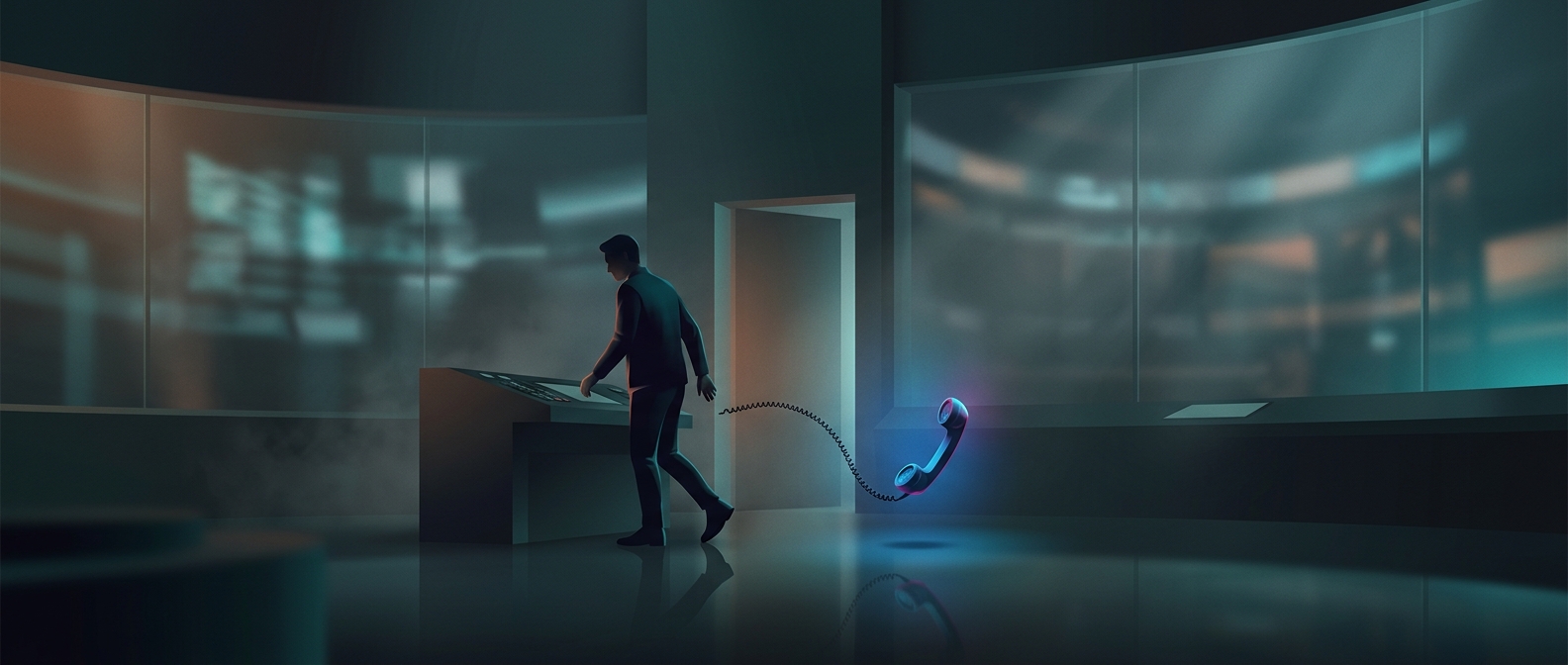
The Hang-Up Is a Scene Cut
A phone call normally works as a two-way exchange: one person speaks, the other reacts, and each response can change what comes next. Ending the call suddenly breaks that pattern. The character who hangs up controls the final beat, while the person left listening—and the audience—has no chance to ask for clarification.
That makes the gesture a compact storytelling tool. A writer can deliver a clue, threat, or confession and then cut straight to the next scene, carrying the unanswered question forward. The silence after the line does narrative work: it gives viewers a moment to interpret what they heard before the story moves on.
Why the Shortcut Can Feel Natural on Screen
On screen, the phone gives the scene a visible ending. The character lowers the receiver or stares at a dead screen; the audience understands that the exchange is over without needing another line of dialogue. A drawn-out goodbye would soften the interruption and spend time confirming something the image already communicates.
The convention also protects the revelation from immediate discussion. If the caller stayed on the line, the other character could challenge the claim, demand evidence, or explain it away. Hanging up preserves uncertainty until the story is ready to resolve it. The abrupt ending is less about how people usually handle a call than about who gets to control the scene’s last word.