A flying-machine sketch became a character silhouette
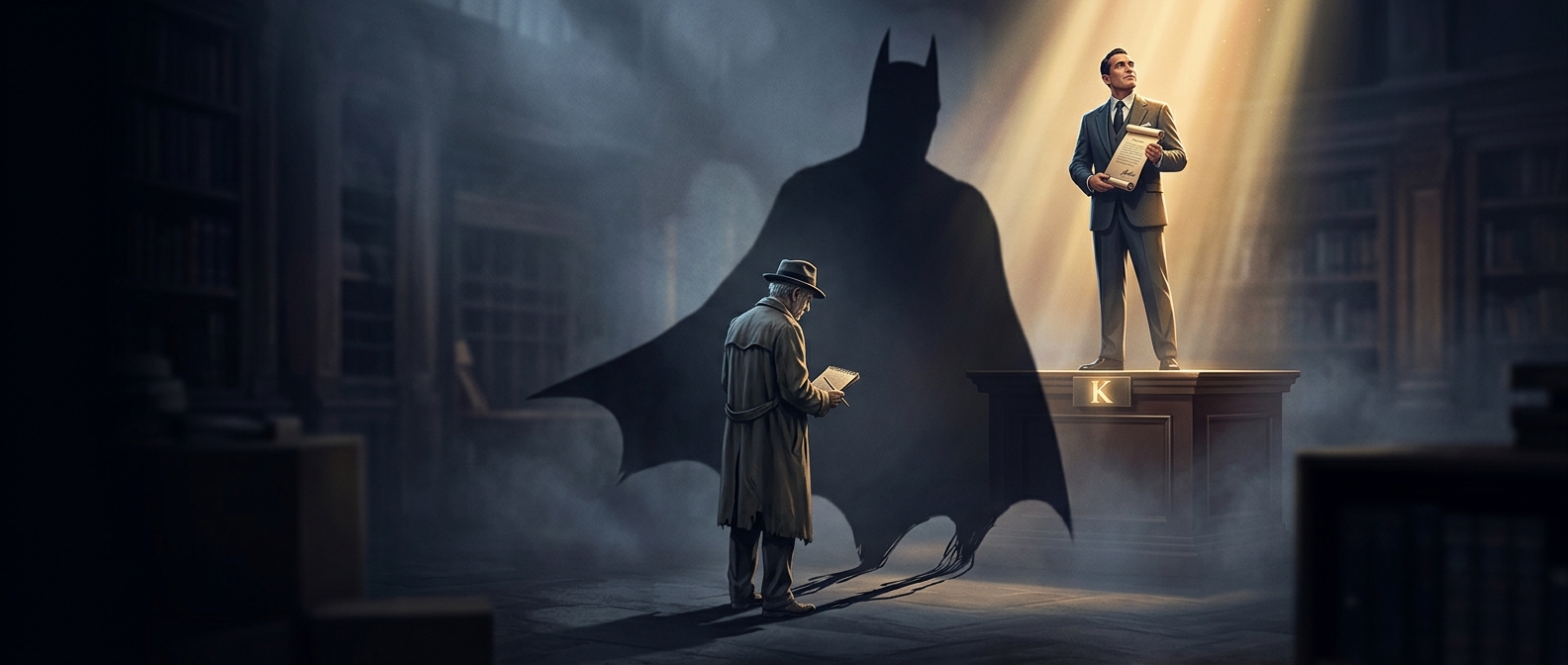
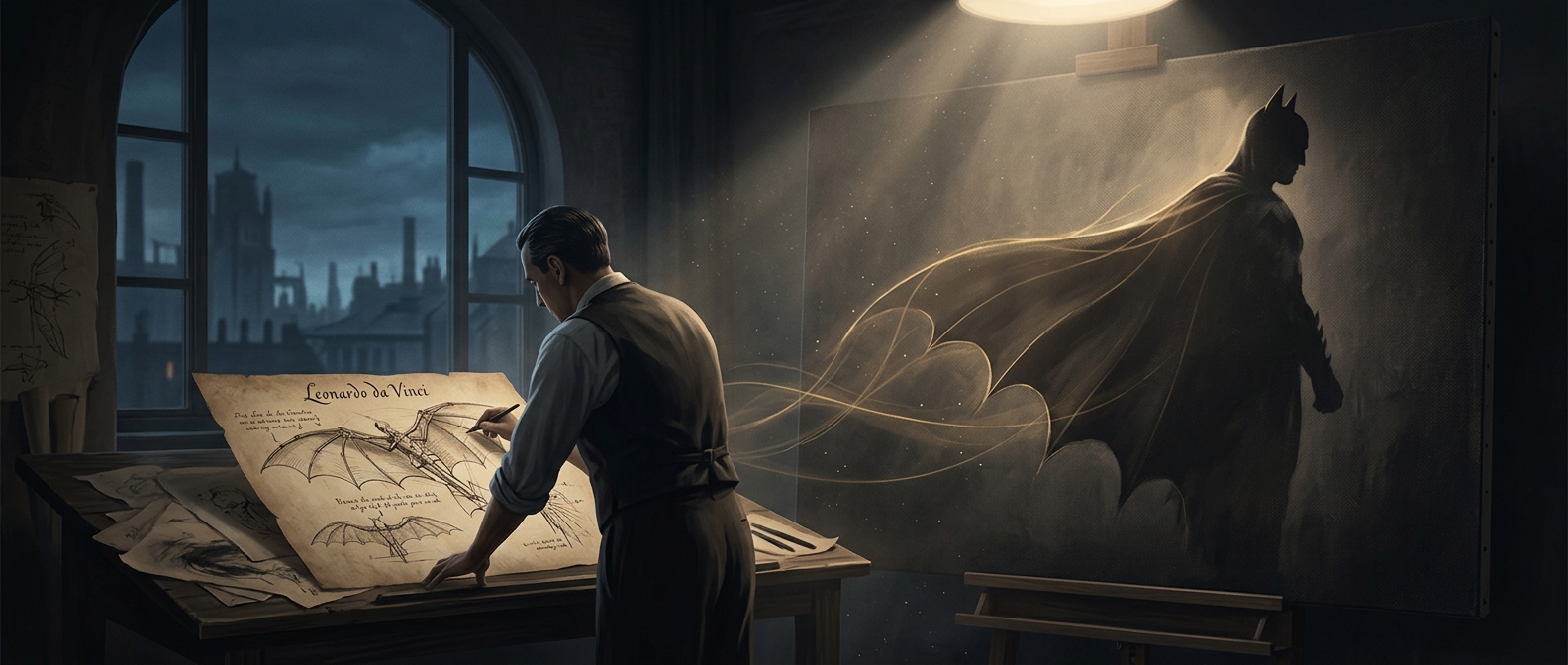
Leonardo da Vinci’s ornithopter was a design for a machine intended to fly by flapping its wings. Its broad, ribbed, scalloped surfaces offered Bob Kane a striking visual idea: a person could look winged without literally taking off. In Batman’s early design, that shape became a cape spread behind him rather than a working set of wings.
The distinction mattered. Superman’s flight was a power; Batman’s cape could suggest flight while keeping him on the ground. It made a standing figure look larger and more mysterious, and its pointed outline echoed the ears and other bat-like features of his costume.
The cape did work a drawing could show
Comics have to communicate quickly in a single image. A cape can change shape from panel to panel: hanging close around Batman in a doorway, then flaring wide as he drops into a scene. That simple change makes his entrance feel dramatic and gives artists a dark shape that can partly hide him against the night.
The da Vinci connection is therefore best understood as a visual borrowing, not a practical blueprint. Batman’s cape did not make the original character fly; it let artists imply the possibility of wings while preserving the human, unpowered hero Kane wanted to distinguish from Superman. A sketch of a machine for flapping through the air became a costume detail whose real force was how it moved across the page.