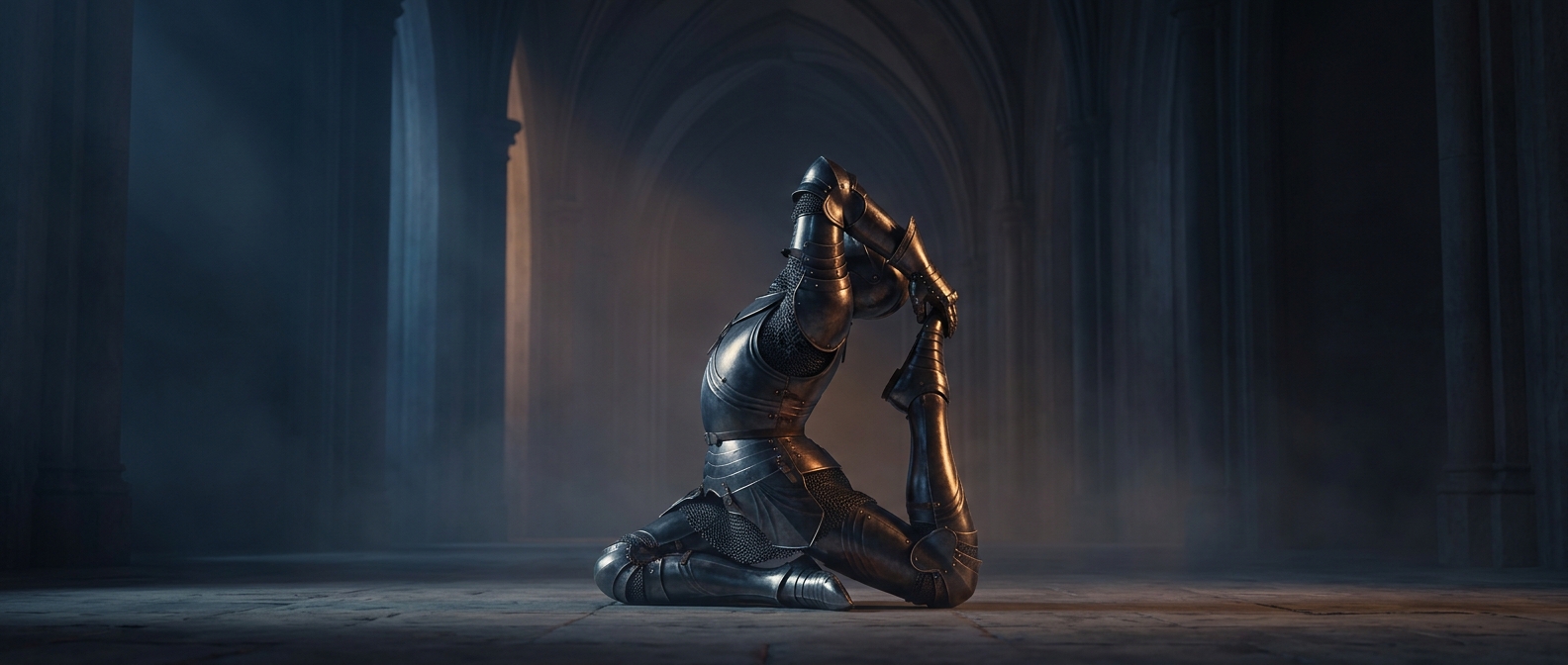
Why an Armored Fighter Needed Flexible Joints
Armor protected a knight by covering the body with plates, but it was not meant to lock the wearer in place. Hinged sections at the elbows, knees, and other joints let the limbs bend. Even so, moving in armor demanded deliberate control: a fighter had to reach, turn, crouch, and recover balance while carrying protective equipment that resisted quick, awkward movements.
Combat manuals’ advice to stretch reflects that practical problem. Flexibility helped a fighter move through a useful range without straining or being stopped by tight muscles. It was not a modern workout routine transplanted into the past so much as preparation for actions that fighting required. A stiff shoulder could limit a weapon swing; restricted hips or knees could make a change of stance harder.
Armor Was Equipment, Not a Substitute for Training
A suit of armor could distribute its weight across the body, but it still altered how a person moved. The wearer needed practice coordinating footwork and weapon handling with that extra load. Stretching addressed one part of readiness: keeping joints and muscles able to move freely enough to make those practiced actions work.
That detail complicates the familiar image of the knight as a lumbering figure who could barely bend. Armor imposed constraints, but fighters trained around them—and manuals treated bodily mobility as something to maintain. The practical test was whether a knight could move when the moment demanded it.