A dissolved ore can conceal more than one metal
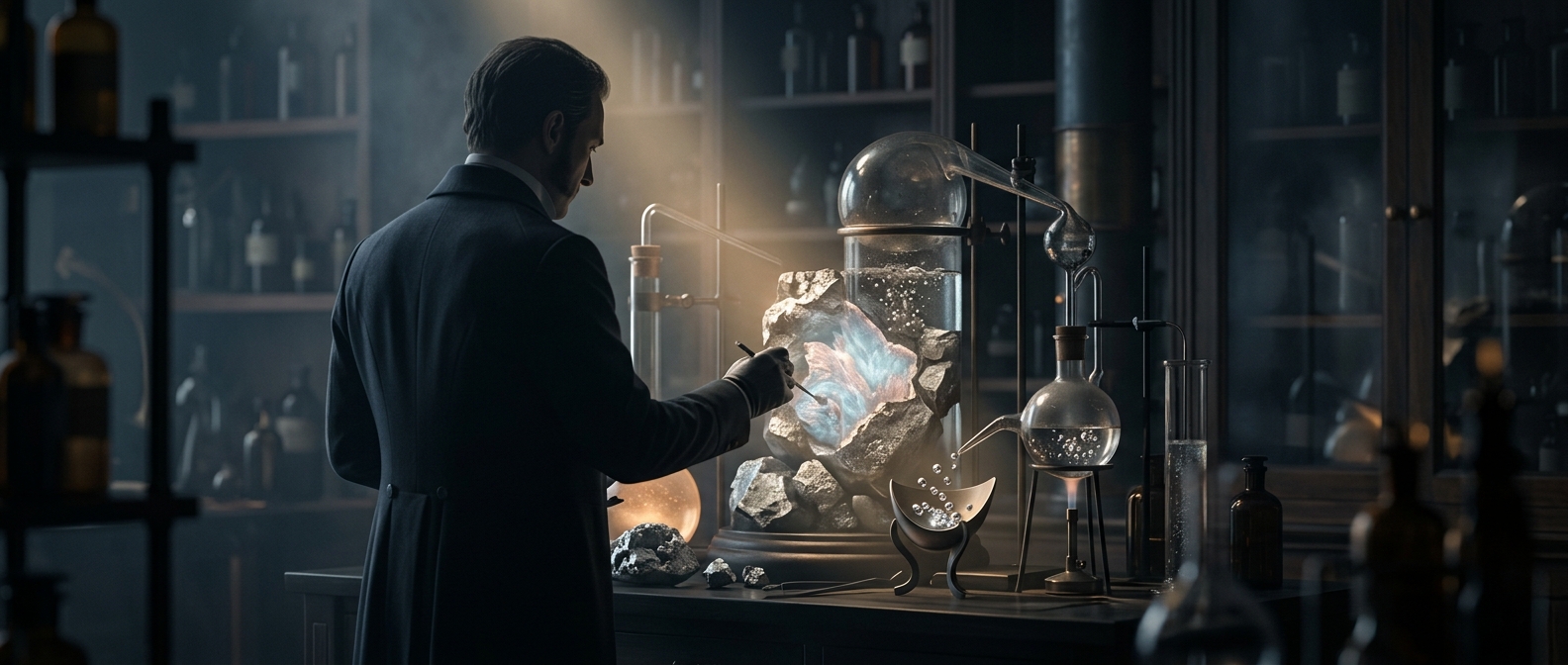
Platinum ore is a mixture, not a pure substance. When Wollaston dissolved a sample in a strong acid mixture, several metals entered the liquid as charged particles. The challenge was to separate them: each metal had to be coaxed into a form that could be removed without carrying the others along.
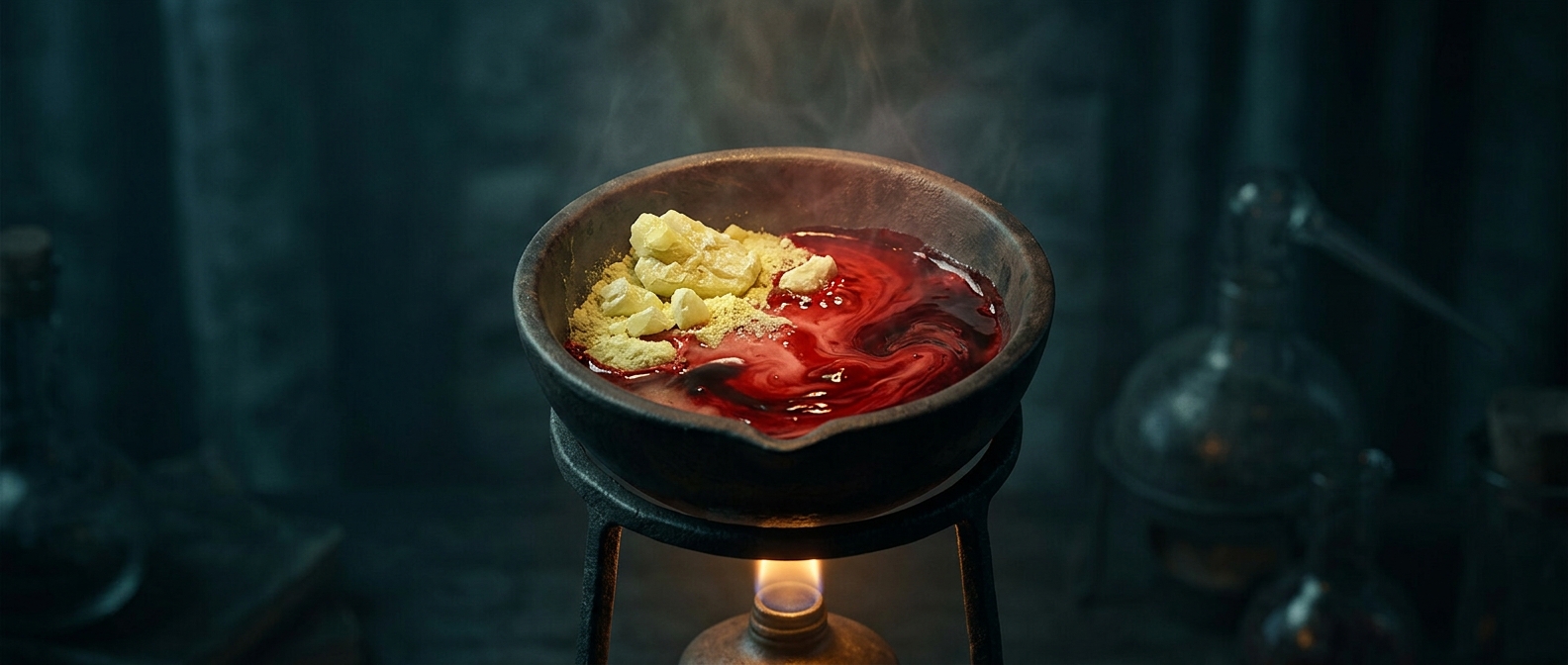
That is what precipitation does. A chemical reagent reacts with a dissolved substance to make an insoluble solid, which can then be separated from the liquid. After platinum was removed from the solution, Wollaston found that another metal could be drawn out of what remained. Its different behavior—and the metal recovered from it—showed that this was not merely an impurity in platinum, but a distinct element.
The separation made the discovery visible
A trace of an unknown metal dissolved among familiar ones is difficult to recognize. Once separated, it can be examined on its own: its appearance and chemical reactions can be compared with those of known materials. Wollaston’s key insight was therefore not just that the leftover liquid contained something unusual, but that the substance could be isolated and shown to have its own identity.
The element became known as palladium. The episode illustrates how chemistry can reveal a hidden constituent by turning differences in solubility—the tendency of substances to dissolve—into a practical sorting method.
An anonymous test of the metal
Wollaston initially offered palladium for sale without identifying himself as its discoverer. That made the metal, rather than a famous name, the center of attention: anyone assessing it had to judge the material itself. The path from dissolved ore to saleable metal depended on a sequence of separations, but the final proof was tangible—a substance that could be handled and tested apart from platinum.