How a Fan Turns Hot Glue Into Cobwebs
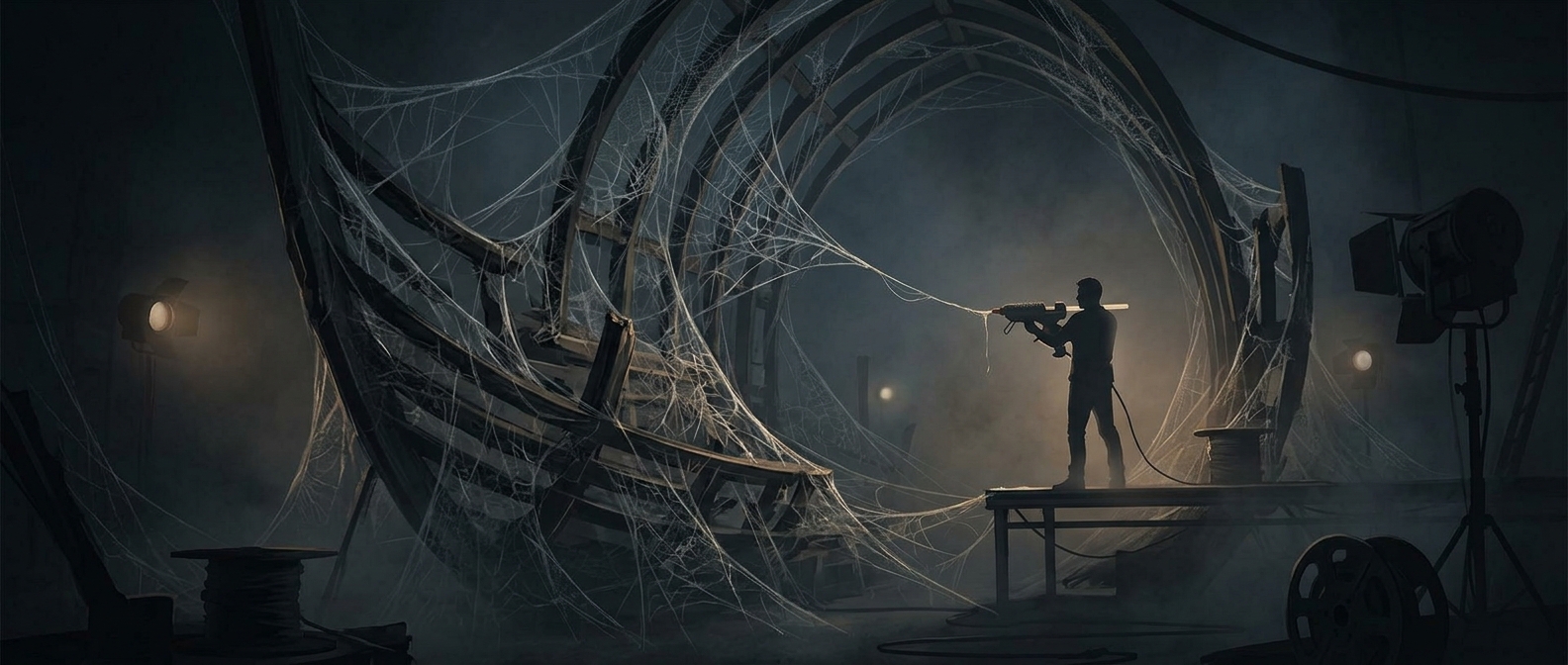
Hot glue normally leaves a thick bead because it is pushed from the gun in a steady stream. To make webbing, a decorator draws out a small amount of molten glue and lets moving air pull it into a thinner thread. As the glue travels away from the nozzle, it stretches; cooling then firms the filament in place.
The fan does not sculpt a finished web by itself. Its airflow catches the glue and carries the strand toward nearby surfaces, where it can snag and stick. The result is a loose filament rather than the tidy line a glue gun would leave if pressed directly onto a prop.
Building an Old, Neglected Look
A convincing web is less about making a perfect pattern than about controlling unevenness. The decorator can vary where strands land and let some cross or sag, so the covering feels accidental rather than woven. Repeating the process across corners and objects creates a scattered network, while fine strands read as delicate residue instead of heavy glue.
That lightness is the key visual trick: the fan stretches the glue before it sets, turning a bead into wispy strands. Against a room’s edges and clutter, those strands suggest cobwebs accumulated over time—even though they were made moments earlier.