How a sacred shape became repeatable
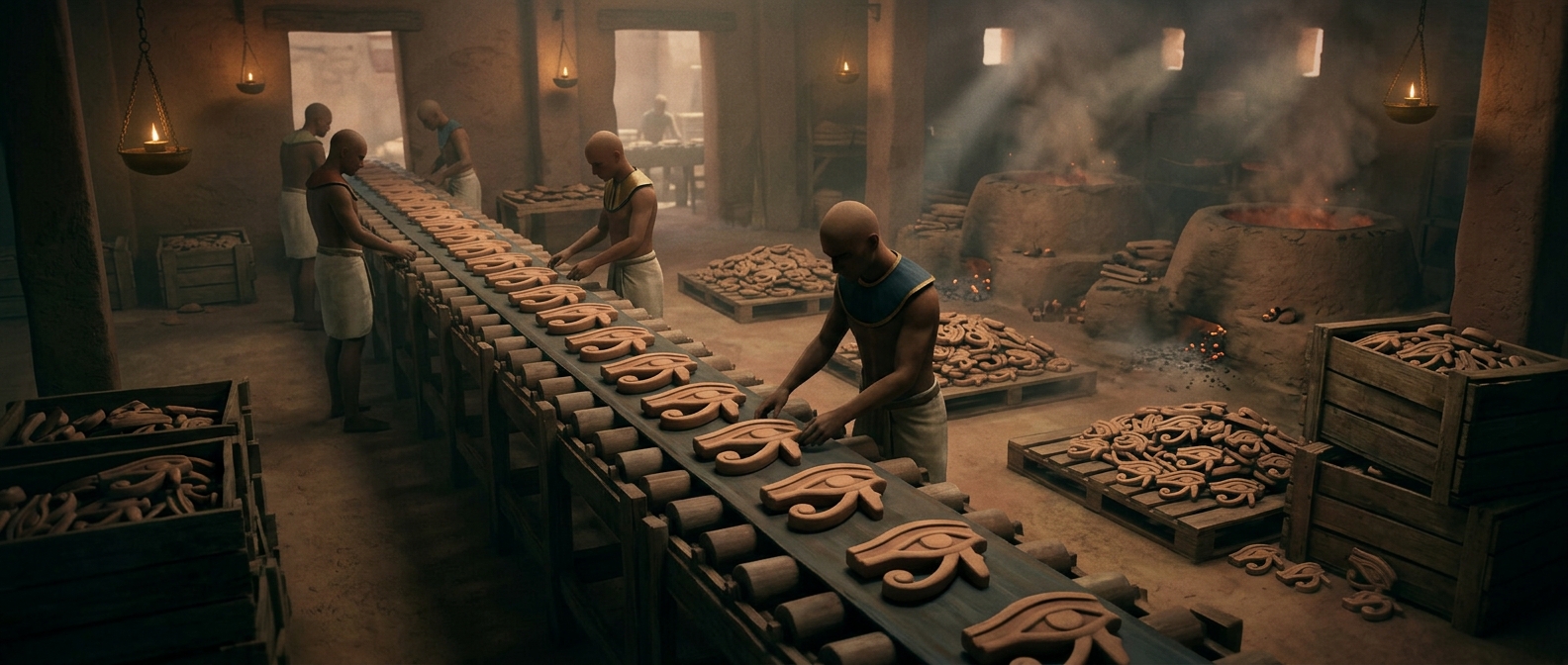
An amulet did not have to be carved by hand from a rare stone to carry religious meaning. Egyptian workshops could press faience—a glossy material made mainly from ground quartz or sand—into molds. When fired, the surface developed a glasslike glaze, often blue or green. A mold made it possible to produce many similar scarabs or Eye of Horus designs without shaping every detail from scratch.
That was workshop production, not an industrial factory in the modern sense. The process still required skilled work: preparing the material, filling molds, firing pieces, and finishing or attaching them for use. But standardized shapes made protective objects more repeatable and easier to produce in quantity.
The symbol mattered more than the uniqueness
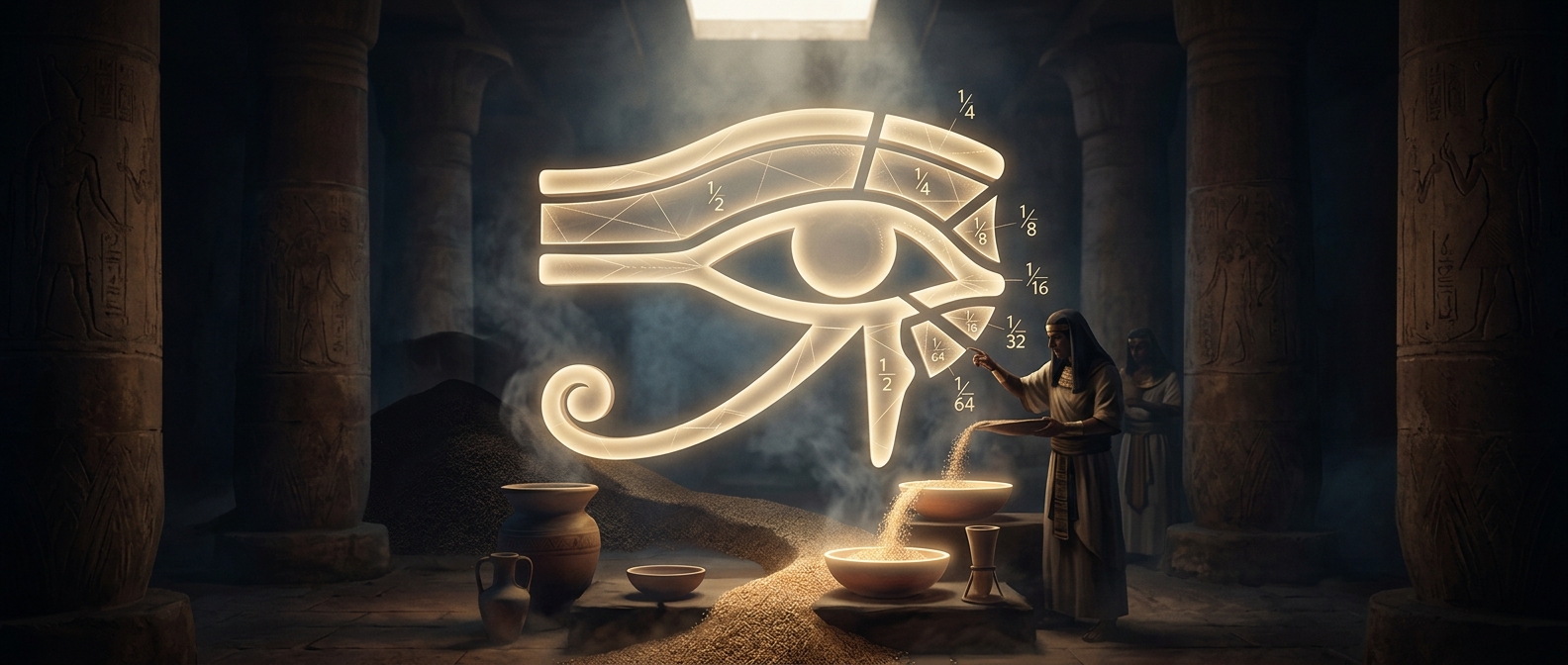
A scarab evoked renewal and regeneration, while the Eye of Horus was associated with protection and restored well-being. Their significance came from the symbols and the beliefs surrounding them, not from each amulet being a one-of-a-kind sculpture. A familiar, recognizable form could serve its purpose even when many examples looked alike.
That makes the comparison to souvenirs useful only up to a point. These objects could be produced as accessible goods, but they were not merely decorative trinkets: people wore amulets or placed them with the dead as protective objects. Repeatable manufacture helped make sacred imagery part of everyday life.