Why the Heart Mattered Beyond the Body
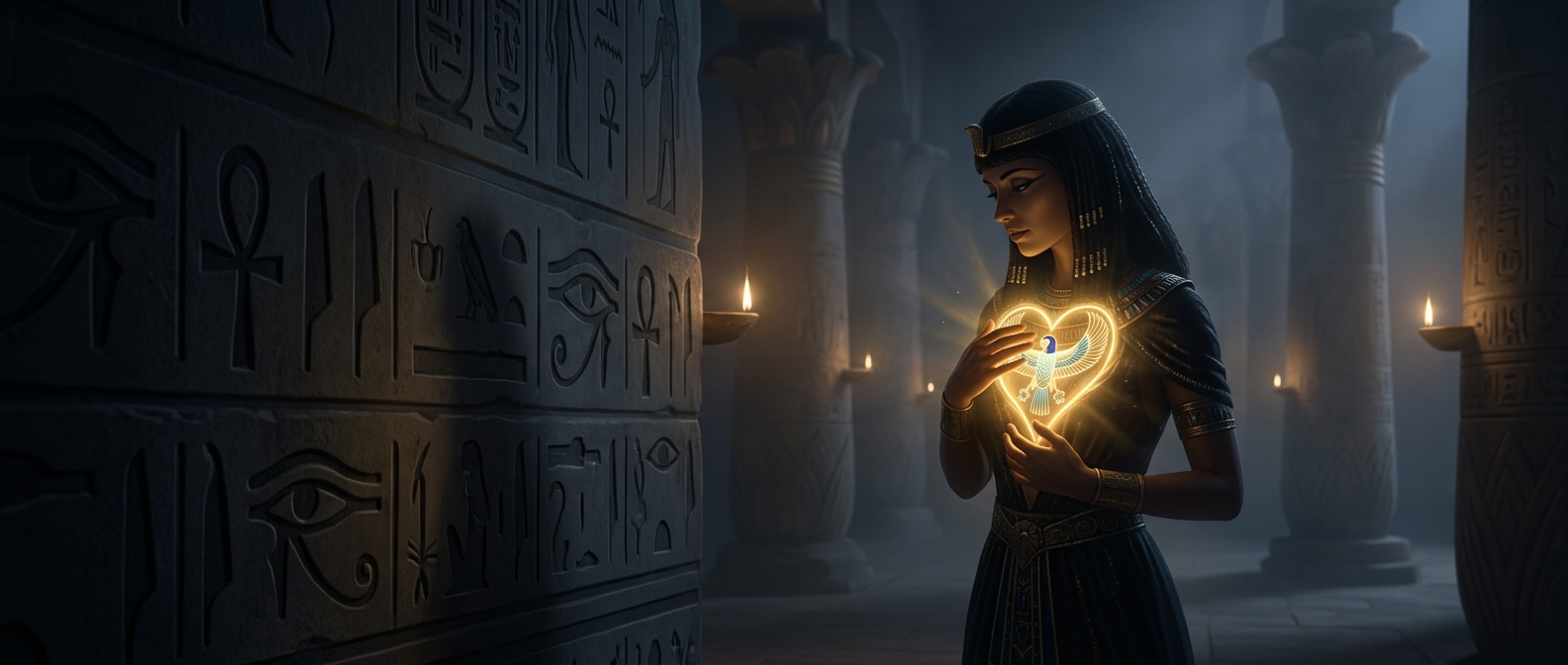
For ancient Egyptians, the heart was more than a pump. It was understood as the center of a person’s inner life: thought, memory, intention, and feeling. The brain, by contrast, did not carry the same spiritual importance. That difference shaped what embalmers preserved for the afterlife.
Keeping the heart in the body helped preserve the deceased person’s identity for the next world. In Egyptian belief, a person needed more than an intact corpse to live again after death; the body and its vital parts had to remain available to the person’s spiritual existence.
The Heart’s Final Test
The heart also had a role after burial. In the judgment of the dead, it was weighed against the feather of Ma’at, the principle of truth and right order. A heart that balanced with the feather showed that its owner had lived rightly and could enter the afterlife. The image made the heart a record of a person’s choices, not merely a container of emotion.
That belief gave preservation practical religious meaning. Removing the brain did not threaten what Egyptians considered the person’s essential moral and mental self; losing the heart could. The organ left inside the mummy was the one expected to testify to who the deceased had been.