A guide assembled for one journey
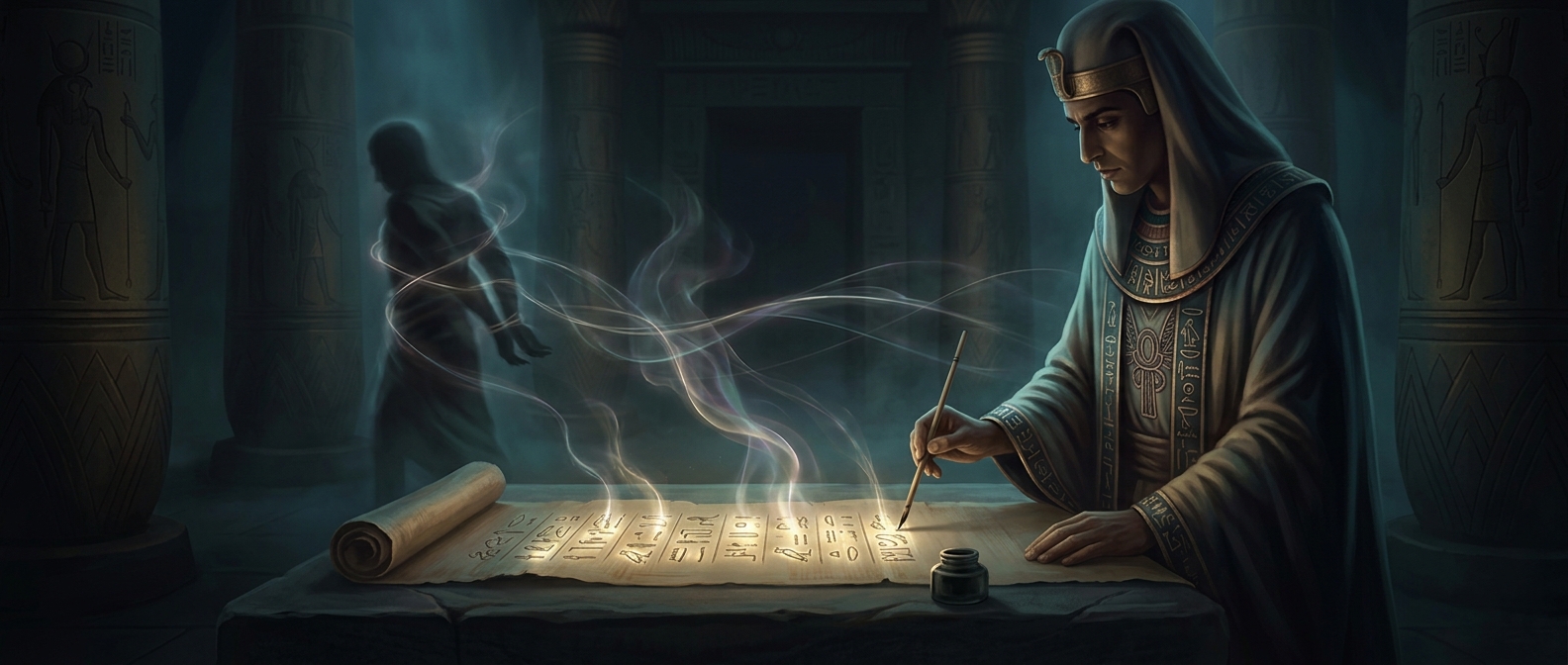
The “Book of the Dead” was not one fixed book with a standard sequence. It was a collection of ancient Egyptian funerary texts, copied onto papyrus and prepared for particular people. A buyer’s scroll might include spells, ritual instructions, and images intended to help its owner meet the demands of the afterlife.
That made each scroll less like a universal scripture than a customized guide. The underworld was imagined as a place with routes, hazards, gates, and powerful beings. A spell could give the dead person words to say or knowledge to claim when confronted by one of them. The text did not merely describe a destination; it was meant to help its owner act within it.
Why words mattered after death
In Egyptian religious thought, a person’s survival after death depended on more than preserving the body. The dead had to pass through a series of spiritual challenges, including judgment, and reach a continuing existence among the gods. Funerary spells were practical tools within that belief system: knowing the right name or reciting the right formula could establish identity, request passage, or ward off danger.
The scroll’s contents could vary because the journey was imagined through many different episodes, and no single set of texts was required for every tomb. Wealthy clients could pay scribes to produce a papyrus for them, making these manuscripts evidence of both religious hope and access to skilled labor. Some were prepared with spaces where an owner’s name could be added, turning a copied text into a personal possession.
A map made of instructions
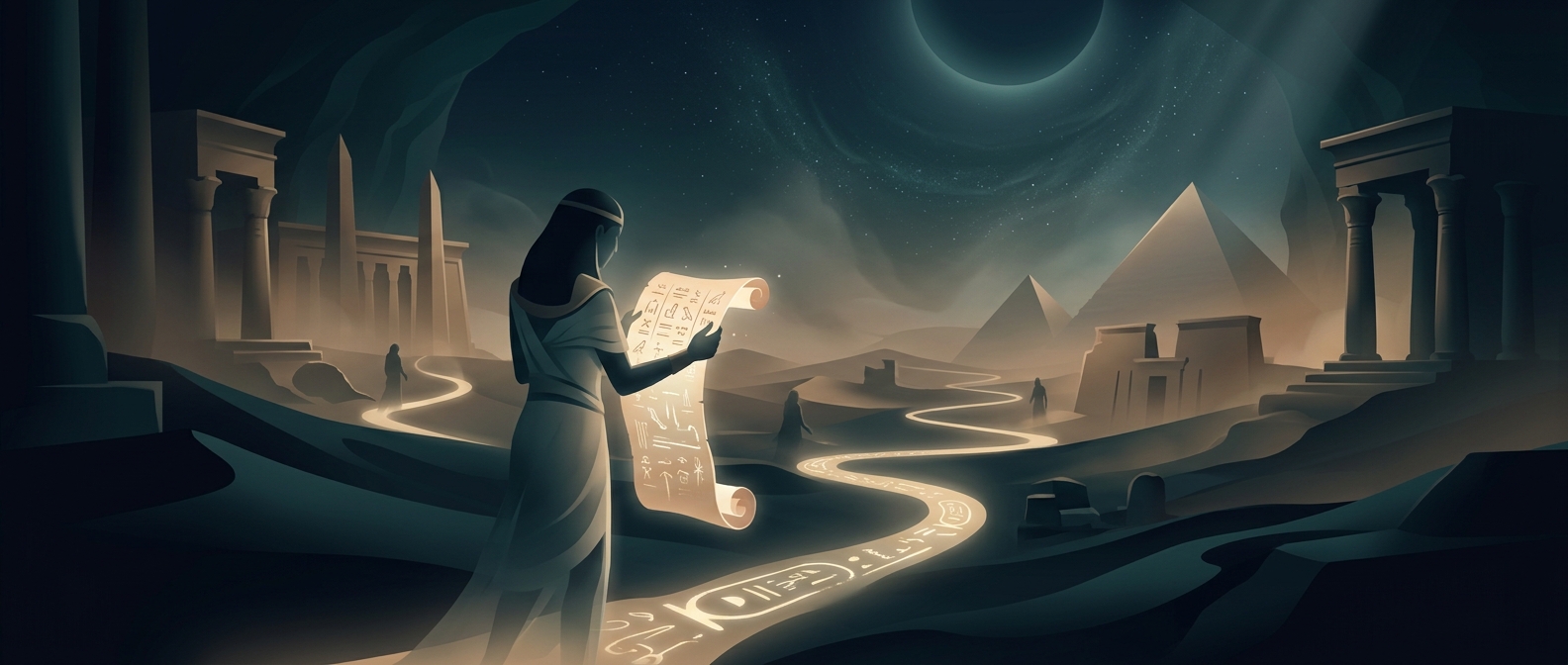
Calling the scroll a map is useful so long as the comparison is understood: it did not chart roads in the modern sense. It offered a route through ritual language, images, and remembered encounters. Its most striking feature is how concrete the afterlife could feel to its users—not an abstract promise, but a journey for which a person could be equipped, spell by spell.