A Name Was More Than a Label
In ancient Egyptian thought, a person’s name—the ren—was bound to that person’s identity and continued existence. Remembering and speaking a name helped keep its owner present in the world of the living and in the afterlife. A name was therefore not just a convenient way to identify someone: it was something that could be protected, preserved, or attacked.
Turning a Name Into a Target
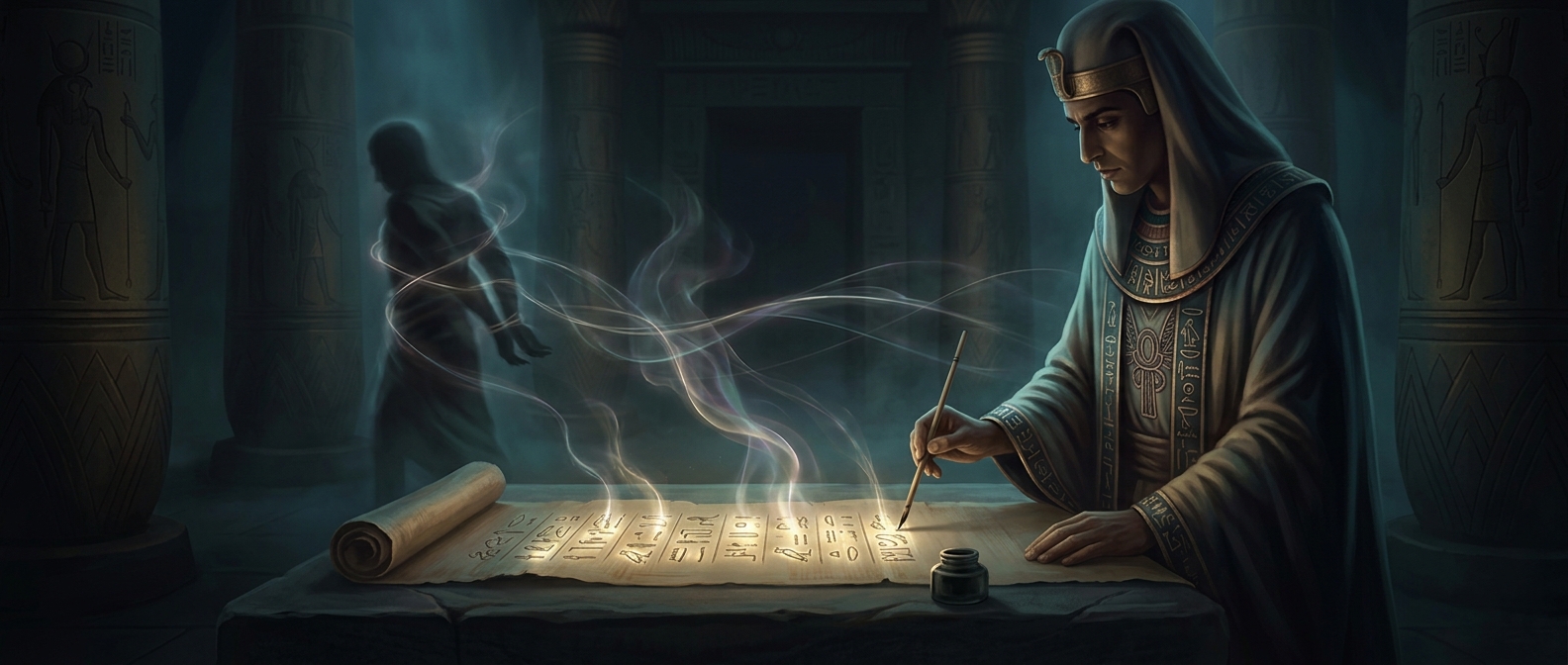
That idea gave written names a role in rituals aimed at enemies. In so-called execration rites, names of hostile people or groups could be written on pottery, figurines, or other objects. The object stood for the named target. Breaking it enacted the target’s defeat, while burial or other ritual treatment could mark the threat as contained.
The damage was understood symbolically and magically, not as ordinary physical injury. If a person’s identity was bound to the name, then attacking the written name could be a way to attack the person’s power or influence. The act made an unseen danger tangible: a name could be scratched into a surface, then that surface could be smashed.
Why the Ritual Mattered
The same concern with names shaped practices meant to preserve them. Egyptian monuments and tombs carried names so that people would continue to be remembered; deliberately erasing a name could threaten that continuity. In this worldview, writing was not merely a record of a ritual. It helped make the ritual work.
A broken pot bearing an enemy’s name thus joined two ideas: the name carried part of the person, and destroying its vessel could symbolically weaken its owner. The power lay in treating identity as something that could be acted upon—not only spoken about.